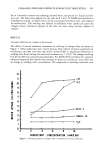
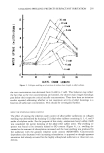
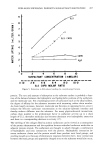
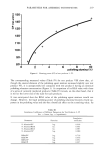
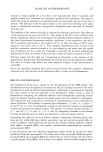
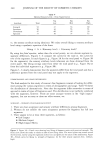
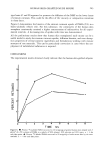
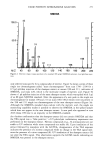
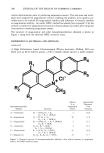
COLLAGEN SWELLING PREDICTS SURFACTANT IRRITATION 201 for ca 5 seconds to remove any adhering tritiated water, and placed in a liquid scintilla- tion vial. The films were digested in the vials with 1 ml 2 N NaOH and dissolved in scintillation cocktail, acidified with 0.25 ml concentrated perchloric acid, and analyzed for radioactivity. The swelling was defined as milliliters water uptake per gram dry collagen (ml/g). Statistical analysis of the data was done using one-way analysis of variance. RESULTS COLLAGEN SWELLING BY VARIOUS SURFACTANTS The effects of various surfactant treatments on swelling of collagen film are shown in Figure 1. These surfactants were chosen because their relative irritation potentials are well known, and they vary from very mild to severe (Table I). Significant differences in swelling were found among the surfactant treatments (p 0.05). The collagen swelling by LAS and SLS was concentration-dependent. For AEOS-3EO and Tween 20, apparent substrate saturation had already been attained at these test conditions, since there was no change in swelling with concentration. The magnitude of swelling correlated with 12 II n LAS $L$ AEOS -3 • o T•EEN- 20 o- c/ o o o o o o H20 I i I I I 0 2 4 6 8 I0 SURFACTANT CONCENTRATION (mMOLAR) Figure 1. Swelling response of collagen film to treatment by various surfactants.

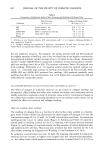
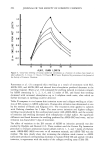
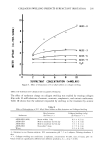
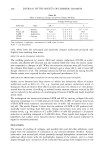
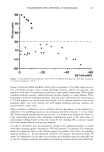
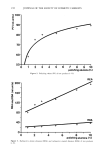
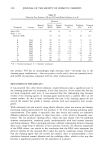
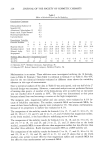
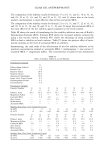
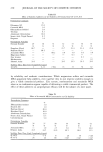
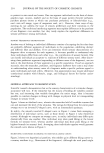
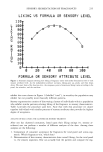
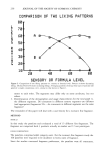
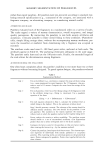
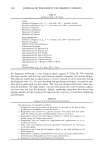
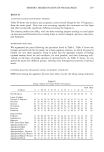
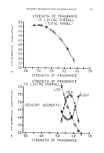
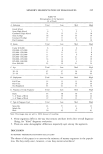
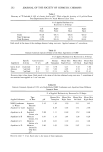
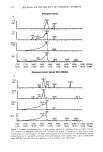
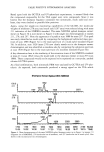
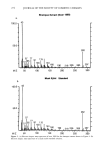
202 JOURNAL OF THE SOCIETY OF COSMETIC CHEMISTS Table I Comparison of Surfactant-Induced Skin Irritation and Swelling of Collagen Film Skin Irritation Collagen Swelling (ml/g) Surfactant (In Vivo) (+) (In Vitro) (+ +) LAS Severe within 1 day 10.8 + 0.1 (a) SLS Severe within 1 day 10.2 - 0.1 (a) AEOS-3EO Mild to moderate by 5th day 4.4 ___ 0.1 (b) Tween 20 None after 5 days 2.6 ñ 0.1 (b) Water -- 1.6 ñ 0.1 (c) +, Irritation in vivo.' Human subjects, 10% concentration, pH 7, 2 to 3 subjects, Duhring chambers, 5 days, reported by Tavss (6). + +, Collagen swelling test conditions: 2 replicates, concentration 10 mM, time 24 hours, pH 7.0. Values which are significantly different have different symbols (a, b, c) (p 0.05). the test surfactant irritancy. For example, the strong irritants LAS and SLS produced the highest amounts of swelling, and in fact we found that at the highest concentration they produced substrate volume increases of up to 10 times its dry volume. Ammonium laureth-3 sulfate (AEOS-3EO) is considered a moderate irritant and produced consider- ably less swelling than LAS or SLS. The nonionic surfactant Tween 20 produced very little swelling. Putterman et al. (3) reported similar results for isolated stratum cor- neum, i.e. a relatively high amount of swelling was produced by SLS and LAS, while AEOS-1EO and AEOS-3EO produced less swelling. LAS produced markedly more swelling than SLS at low concentrations, but at the higher test concentrations, SLS and LAS produced comparable results. RELATIONSHIP BETWEEN SURFACTANT STRUCTURE AND SWELLING ACTIVITY The effect of changes in surfactant structure on the extent of collagen swelling was determined. Alkyl sulfates and alkyl ether sulfates are widely used surfactants and are ideally suited for a systematic study of structure versus activity. Incremental changes in the carbon chain number (increasing lipophilicity) or the ethylene oxide content can be studied for effects on irritation and collagen swelling. EFFECT OF CARBON CHAIN NUMBER The swelling of collagen film as a function of alkyl carbon chain number in a homolo- gous series of alkyl sulfates was determined for chain lengths C8 through C 16 over the concentration range of 2 to 30 mM. At 10 mM concentration and above, the maximum swelling activity was at 12 carbon atoms (Figure 2). Robbins and Fernee (5) reported a similar peak in swelling activity for the C12 homolog with human stratum corneum (Figure 3), and Choman (4) reported similar swelling maxima in human abdominal skin and epidermis-free calf skin. Maximum skin irritation has been reported for the C12 alkyl sulfate homolog by Kligman and kVooding (7) and Imokawa et al. (8,9). At surfactant concentrations less than 10 mM, the homolog responsible for maximum swelling activity occurred at higher chain lengths and was concentration-dependent, i.e. the carbon chain which produced maximum activity increased from C12 to C16 as
Purchased for the exclusive use of nofirst nolast (unknown)
From: SCC Media Library & Resource Center (library.scconline.org)