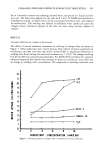
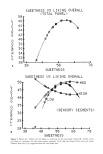
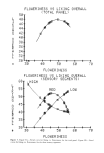
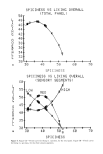
j. Soc. Cosmet. Chem., 37, 233-247 (July/August 1986) Sensory segmentation of fragrance preferences HOWARD R. MOSKOWITZ, Moskowitz/_Jacobs, inc., Valhalla, New York Received November 8, 1985. Presented at the Annual Scientific Meeting of the Society of Cosmetic Chemists, New York, December 5-6, 1985. Synopsis This paper illustrates a method by which one can segment consumers into distinct segments of individuals showing different fragrance preferences. By testing various in-market fragrances and prototype fragrances "blind," and instructing panelists to profile these fragrances on a variety of acceptance and sensory charac- teristics, one can uncover the underlying segments. This study reveals three segments--a low impact segment, a medium impact segment (likers of sweet and floral notes), and a high impact segment (likers of spicy, heavy fragrances). The procedure also illustrates how the same sensory attribute generates quite different patterns of acceptance, depending upon the sensory segment. INTRODUCTION Of all the senses, our senses of smell and taste are most pervaded by individual differ- ences in liking (1). Smells that one person likes another person might dislike very much. Indeed, to many researchers the variation in acceptance of a fragrance from one person to another is sufficient cause to abandon the search for regularity in olfactory perception and hedonics (1-3). Much of what we know about smell comes from psychophysics, the study of sensory processes (4). Traditionally, psychophysicists have preferred to study well-defined model systems, such as pure chemicals (5,6). Even with these model systems, the vari- ability of hedonics emerges (7-9). However, there exists relatively little in the psycho- physics and sensory research which points to generalities in odor likes and dislikes. We know that people like the smell of roses and hate the odor of carbon bisulfide, but there are precious few generalities (10). The literature on odor hedonics and individual differences is equally barren when we look in the perfumery and cosmetics literature. For one, most researchers working for private companies cannot publish the results of their research (11). Second, there has been little in the way of a general approach to inter-individual differences in percep- tions. Perfumers recognize these differences and live with them. They develop fra- grances to fit target demographic or psychographic segments. Presumably these con- sumer segments should exhibit fragrance preferences. That assumption remains to be tested, however. THE CONCEPT OF SEGMENTATION Over the past twenty years marketers have increasingly recognized that the consumer world does not comprise a monolithic structure with identical preferences governing each consumer. Rather, there are segments in this group, with each segment presumed 233

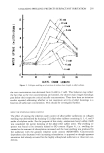
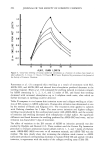
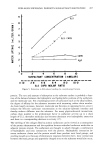
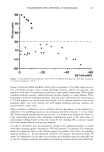
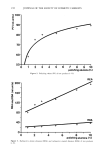
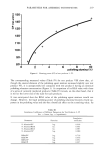
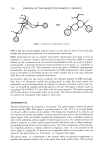
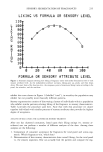
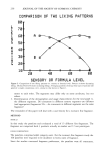
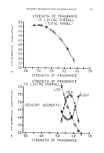
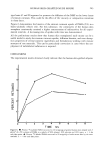
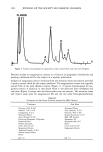
234 JOURNAL OF THE SOCIETY OF COSMETIC CHEMISTS to possess its own needs and wants. One can segment individuals on the basis of demo- graphics (age, income, market) and on the basis of usage pattern (favorite perfume), purchase pattern (stores at which one purchases perfumes), or lifestyle/values (e.g., one's own self image, types of magazines read, etc.). However, these ways of seg- menting do not address the issue of sensory preferences and their variations in the population. The traditional marketing segments may explain differences in the purchase of one fragrance over another, but they rarely explain the significant differences in sensory preference .,among individuals. SENSORY PREFERENCES SEGMENTATION Another way of looking at individual differences consists of accepting the fact that there are probably different segments of individuals in the population, exhibiting distinct and different likes and dislikes. If we can determine which sensory characteristics of a fragrance drive acceptance for each segment, it becomes possible to understand why these individuals differ from each other (e.g., the contribution of sensory factors). One can classify individuals as acceptors vs. rejectors of different sensory notes. After discov- ering these preference segments (responding to different notes of the fragrance), one can look at the distribution of these segments in a specific population. If such an approach succeeds, then the researcher, perfumer, and fragrance marketer have come a step closer to understanding what sensory notes of a fragrance make a specific perfume appeal to some individuals and repel others. (However, this segmentation may require additional correlational analysis with lifestyle, usage, and biological factors for further under- standing). GENERAL APPROACH TO SEGMENTATION Scientific research demonstrates that as the sensory characteristics of a stimulus change, acceptance will vary. If the researcher has the luxury of holding all variables constant but one, and increasing that variable throughout the entire range, then it becomes possible to correlate changes in liking with changes in physical level (or corresponding changes in sensory level). Figure 1 shows an idealized curve, wherein the researcher held all variables constant but one and increased the level of the stimulus. The ratings for liking from the entire panel average out to an inverted U-shaped curve, with an intermediate optimum. In reality, the smooth inverted U-shaped curve in Figure 1 comes from averaging a distribution of individual curves, such as those shown in Figure 2 (also theoretical curves). Although we compute an average curve, in reality individuals may differ quite dramatically from one another. One individual may show peak liking at the lowest formula (or sensory) level, whereas another individual may show peak liking at the highest formula (or sensory) level. Averaging these individuals together would generate the smooth curve shown in Figure 1. SEGMENTING CONSUMERS ACCORDING TO INDIVIDUAL LIKING CURVES Figure 2 shows two hypothetical panelists, who exhibit quite different liking curves vs. a sensory attribute (e.g., fioweriness of the fragrance). Although the total panel might
Purchased for the exclusive use of nofirst nolast (unknown)
From: SCC Media Library & Resource Center (library.scconline.org)