252 JOURNAL OF THE SOCIETY OF COSMETIC CHEMISTS order to obtain photographic images defining the areas where radioactive substances were located. Measurement of stratum corneum uptake by spreading and stripping. Application methodology. In this technique, following complete healing animals were prepared for transdermal study by first anesthetizing with hexobarbital sodium (90- 100 mg/kg). A specific area of the human skin graft was outlined by means of templates which had been cut to various sizes. Test and control preparations were then administered in the amount of 5-10 }xg/cm 2 and spread uniformly over the marked area. Similar tests were performed on marked sections of the mouse's own skin. Fluid samples were measured by micropipers, whereas viscous fluids or semisolid dosages were measured gravimetrically on a 5-place electronic balance (Merrier, Model AE 163). In order to prevent any disturbance of the treated area, the animals were restrained in standing position by placing the feet through appropriately spaced holes in a plastic device. The test materials used in the experiments were mainly selected components of the Natural Moisturizing Factor (NMF) (Kolmar Laboratories, Inc.). In addition to the investigation of the single components of the Natural Moisturizing Factor (NMF) such as lactic acid, alanine, and urea, a radiolabeled NMF condensate was synthesized in our laboratory using 14C-labeled glutamic acid (New England Nuclear) and an unlabeled sugar. The formulation of the Natural Moisturizing Factor (Aqualizer E J) was reported earlier (17). Its main component is the NMF condensate which is a polymerization product of amino acids like glutamic acid, alanine, and glycine with aldehyde sugars like glucose. The polymerization reaction resulting with NMF condensate is known as the Maillard reaction and can be shown as follows: R - NH 2 3- O = C -- C - R'--- R - N = C - C - R' + H20 I OH OH 14C-labeled glutamic acid was the only labeled component of the condensate. This product had an activity of 0.88 p•Ci/g. However, in order to simulate the commercially available natural moisturizing factor (Aqualizer E J) (Kolmar Laboratories, Inc.), the condensate was further mixed with 14C-labeled glycine, alanine, urea, glucose, and lactic acid (New England Nuclear) to give an activity of 20 p•Ci/g. Controls were prepared in an identical manner except that non-radioactive chemicals were included into the formulation. Preliminarily, both NMF condensate and NMF were tested for stratum corneum uptake from 1% to 10% w/v aqueous solutions. To facilitate uniform spreading, 0.01% w/v sodium dodecyl sulfate (Mallinckrodt, USA) was added to these solutions in a few instances. Later the radiolabeled Aqualizer was included in four different types of cos- metic bases in 1% to 10% w/v ratio to investigate their effects on the penetration of the NMF. The results from 10% concentrations are given in this paper due to low levels of radioactivity in strippings using 1% concentrations. The general formulations of the cosmetic bases used can be summarized as follows: Base A.' This was an w/o-type cream. It contained petrolatum, lanolin, mineral oil, branched chain esters, PEG stearate, polysorbate 60, sorbitan stearate, trierhanoi- amine, carhomer, propylene glycol, and water.

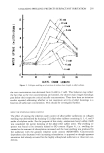
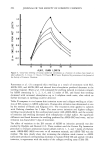
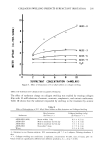
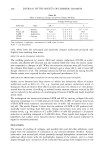
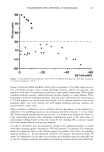
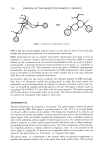
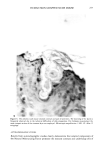
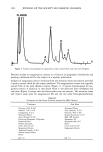
HUMAN SKIN GRAFTED NUDE MOUSE 253 Base B: This was an w/o-type cream. It contained branched chain esters, carbomer, polysorbate 60, triethanolamine, glycerine, and water. Base C: This was an o/w-type lotion. This emulsion contained branched chain esters, carhomer, decyl oleate glycerine, and water. Base D: Base D was also an o/w-type lotion. Its main constituents were branched chain esters, carhomer, polysorbate 20, ethylene glycol, butylene glycol, and water. Para amino benzoic acid (PABA) (ICN Chemical and Radioisotope Division) studies were initiated simultaneously to measure its penetration kinetics in the stratum cor- neum. Tape-stripping analyses Optimization of the number of strippings of the mouse and the transplant skins was determined by use of a phase-contrast microscope (Nikon, Nippon, Kogaku [USA] Inc.) after each series of strippings. Twenty strippings appeared to be sufficient to remove both mouse and human stratum corneum. The rate of removal of stratum corneum was also determined. This was done by cutting surgical tape (Minnesota Mining and Manufacturing, Blenderin Surgical Tape) into precisely measured pieces. Each piece was weighed accurately to the fifth decimal place. The skin was serially stripped with sections of tape, and the tapes were reweighed to determine the quantity of stratum corneum adhering to the tape. The efficiency of tape-stripping techniques was assessed by applying a known amount of radiolabeled chemicals to a marked area of the human graft in the same manner as '% Figure 1. Athymic nude mouse grafted with human skin behind left front leg (6 months post-grafting).
Purchased for the exclusive use of nofirst nolast (unknown)
From: SCC Media Library & Resource Center (library.scconline.org)