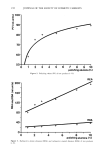
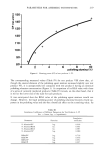
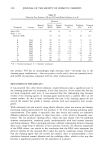
PARAMETERS FOR ASSESSING TOOTHPASTES 213 In a publication by Baxter eta/. (33) the enamel and dentin abrasions as well as clini- cally determined cleaning values for 5 calcium carbonate toothpastes are quoted. The authors ascertained with high correlation coefficients that the cleaning effect is linearly proportional to dentin abrasion. If on the basis of these data one calculates the regres- sion for the correlation of cleaning effect to enamel abrasion, one also arrives at a linear dependence with equally good correlation coefficients. The relationship to dentin abrasion was probably preferred because in another series of measurements, in which the pastes were tested with different cleaning agents, no posi- tive correlation between cleaning power and enamel abrasion became evident. This result could, however, be explained by the fact that the various cleaning agents rough- ened or polished the tooth enamel to different degrees and thereby also influenced the cleaning effect. References to such effects can be found in a publication of Wilkinson (26). These unanswered questions make it appropriate to carry out new investigations into the dependence of cleaning effect on enamel and dentin abrasion using cleaning agents or cleaning systems which do not roughen the enamel but polish it as well as possible. MATERIALS AND METHODS ENAMEL AND DENTIN ABRASION Enamel and dentin abrasion values are defined as the amount or relative amount of enamel or dentin removed from a tooth crown or root by means of an abrasive denti- frice. Abrasion values do not contain information about the profile of the abraded sur- face. The enamel and dentin abrasion values were determined in the conventional manner on radiolabelled tooth enamel (REA values) or on tooth roots (RDA values) according to the method of the American Dental Association (24). In all of the measurements, the test slurries were compared with a reference slurry containing 10 g of calcium pyrophosphate abrasion standard suspended in 50 ml of 0.5% carboxymethylcellulose. The RDA (REA) value of this mixture was arbitrarily taken as 100. The measurements were carried out by Missouri Analytical Laboratories, St. Louis, MO. SCRATCHING EFFECT The scratching value (SV) in this paper is defined as the percentage that a test dentifrice increases the roughness of enamel, whereby 0.040 •m is zero and 0.200 •m is - 100%. The more negative the number, the greater the scratching effect of the tooth- paste. In order to measure the scratching effect on tooth enamel, a surface-measuring appli- ance, Perthometer S5P with the RHTF 50e measuring head, was used. The measuring appliance was equipped with a fixture device for a form, by means of which the mea- suring plane of the preparation could be adjusted and shifted with the aid of two mi- crometer screws. This made it possible to scan identical measurement paths before and

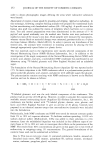
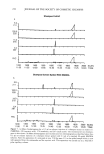
214 JOURNAL OF THE SOCIETY OF COSMETIC CHEMISTS after treatment. In order to evaluate the scratching values, each average value of 5 measurements of roughness depth over a length of 1.5 mm at intervals of 0.1 mm was used for calculations. In each case, 4 incisors extracted for orthodontic reasons were embedded flat, labial side upwards, in a form. The surfaces of the teeth were then polished with standard tooth- paste I (Superpolish, Hawe Neos, Switzerland) and a rotating brush until the average roughness depth (RaI) of the surface amounted to approximately 0.040 [xm. After pol- ishing, the teeth were then brushed for two hours in a toothbrushing machine equipped with a medium brush (Broxodent 2000) at a load of 50 g on the brush head using a suspension of 10 g toothpaste in 10 ml water in each case. The teeth were then rinsed under running water to remove the toothpaste, dried, and the roughness measured once again (RAP). In order to eliminate biological variation as much as possible, a standard silica tooth- paste II (roughening standard) which produced an average roughness depth (Rail) of approximately 0.200 [xm was also used in each of the tests. The following sandwich procedure was adopted, the teeth being repolished at the beginning of each measure- ment: 1. Measurement (M1) Standard toothpaste II 2. Measurement (M2) Test toothpaste A 3. Measurement (M3) Test toothpaste B 4. Measurement (M4) Standard toothpaste II 5. Measurement (MS) Test toothpaste C 6. Measurement (M6) Test toothpaste D 7. Measurement (M7) Standard toothpaste II Block 1 ß Block 2 The teeth were employed until the roughness of the enamel layer changed significantly after brushing with standard toothpaste II compared with its previous measurement. As soon as a single tooth of the set was no longer usable, all four teeth were rejected. The evaluation of results was carried out in each case for a block of four toothpastes. The scratching value (SV) for standard toothpaste II was set at - 100. The scratching value for test toothpaste A, for instance, was then calculated according to the following for- mula: SV = - (RAP^ - RaI) X 200 (RalI- RaI) m + (RalI- RaI)•4 POLISHING EFFECT The polishing value (PV) is defined as the percentage that a test dentifrice reduces the roughness of enamel, whereby 0.200 [•m. (standard toothpaste II) is zero and 0.040 [•m (standard toothpaste I) is 100%. The more positive the number, the greater the polishing effect of the toothpaste. The polishing values were determined with basically the same procedure as the scratching value. At the outset of each measurement the teeth were treated with stan- dard toothpaste II. After toughening, the toothpastes were tested according to the same
Purchased for the exclusive use of nofirst nolast (unknown)
From: SCC Media Library & Resource Center (library.scconline.org)