SANGUINARINE ANALYSIS BY HPLC 281 sion module, a Model 440 detector with a 280-nm filter, and a Hewlett Packard Model 3390 reporting integrator. A 5-CN 10-• Radial-Pak column (5-mm I.D. X 100-mm) (Waters Associates) was used for the separation of the alkaloids with a mobile phase containing 84:16 (v/v) methanol:water with 5 X 10⁻³M triethylamine and phosphoric acid, pH 5.6. The separation was carried out at a pumped flow rate of 0.5 ml/minute. The sanguinarine was monitored at 280 nm. STANDARD SOLUTIONS Pure sanguinarine was obtained as bright orange-red needles from sanguinaria extract by an aqueous alcoholic extraction process and crystallization from methanol, and pu- rity was determined by elemental analysis, melting point, and thin layer chromatog- raphy (TLC). Theory--C, 65.31: H, 3.84: O, 17.40: N, 3.81: C1, 9.64. Actual-- C, 64.97: H, 3.97: O, 17.03: N, 3.81: C1, 9.60. Melting point 279-281øC: reported (8) 273øC. TLC single orange spot methylene chloride:hexane:methanol (85:10: 5). The material gave the expected NMR. A standard solution of pure sanguinarine chloride was made in methanol. (Standard solutions of other benzophenanthridine alkaloids comprising sanguinaria extract were similarly made from the purified alkaloids.) Two drops of phosphoric acid were added per 250 ml methanol to acidify the system. Oral rinse and dried rhizomes required a standard solution of 20 mg pure sanguinarine/250 ml methanol. Toothpaste and san- guinaria extract required a standard solution of 20 mg pure sanguinarine/500 ml meth- anol. SAMPLE PREPARATION Dried rhizomes. The dried rhizomes of Sanguinaria canadensis (bloodroot) were ground to a 60-mesh size. A 35-cc syringe was fitted with a 3-in length of 3/8 tygon tubing and control clamp. Some glass wool was placed in the bottom of the syringe and packed down. Approximately V2 of untreated sea sand (Mallinckrodt) was poured on top of the glass wool and 1.00 g of ground bloodroot was quantitatively transferred on top. Fif- teen ml of methanol acidified with 0.5% citric acid was added and allowed to stand for 1V2 hours. The control clamp was released and the methanol allowed to drip into a 50-ml edenmeyer flask. When the liquid level in the syringe became low, it was topped up with the methanol until 50 ml was collected in the flask. The 50 ml of extract was quantitatively transferred to a 500-ml volumetric flask and diluted to volume with methanol. An aliquot was injected into the HPLC and the percent of sanguinarine in the rhizomes calculated. Sanguinaria extract. Sixty mg of sanguinaria extract obtained from the extraction of bloodroot rhizomes were quantitatively transferred to a 500-ml volumetric flask and diluted to volume with methanol followed by four drops of phosphoric acid. An aliquot was injected into the HPLC instrument and the percent of sanguinarine with respect to the other alkaloids calculated based on the molar extinction coefficient (= 39,300) of sanguinarine. In this way the other alkaloids were expressed as sanguinarine equiva- lents. Toothpaste. The contents of a single tube of toothpaste were emptied into a beaker and stirred to ensure a uniform sample. Three g of the toothpaste were weighed into a 50-cc

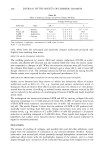
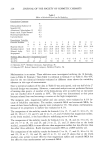
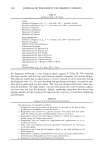
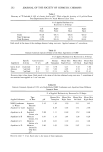
282 JOURNAL OF THE SOCIETY OF COSMETIC CHEMISTS disposable centrifuge tube. Thirty pieces of reagent grade lead shot were added and approximately 20 ml of methanol acidified with 5% citric acid (w/w) added. The tube was capped, vortexed for one minute, and centrifuged for five minutes at 2500 RPM. The cap was rinsed with the acidified methanol into the centrifuge tube and the super- natant liquid decanted into a 100-ml volumetric flask. Vortexing and centrifugation was repeated two times with 15 ml and 20 ml acidified methanol and the supernatant liquids transferred to the volumetric flask. The centrifuge tube cap was rinsed with the acidified methanol into the centrifuge tube, then decanted into the volumetric flask. (Complete transfer was checked by means of a long-wave UV light where fluorescence remaining in the residue left after decantation was indicative of incomplete transfer. If fluorescence was present the centrifugation and vortexing steps were repeated.) The combined rinsings in the volumetric flask were diluted to volume with methanol. Samples were injected into the HPLC and the •g of sanguinarine per gram of tooth- paste calculated. Oral rinse. No preparation was required to analyze the oral rinse. Samples were injected directly into the instrument and •xg of sanguinarine per ml of oral rinse calculated. STANDARD CURVE Standard solutions of sanguinarine of 10, 15, 20, and 25 •xl were injected into the HPLC and a regression analysis of sanguinarine chloride versus the area under each peak made. A correlation coefficient of 0.9998 or better was necessary before the curve was used. REPRODUCIBILITY Rhizomes. Reproducibility of the method was determined by taking a single sampling of full intact rhizomes and splitting into three lots. Each lot was treated in accordance with the above method. Reproducibility of the method was determined to be ___ 0.3% (Table I). Sanguinaria extract. A single lot of sanguinaria extract was divided into six portions. Each portion was analyzed according to the above method. Reproducibility of the method was determined to be + 0.3% (Table I). Oral rinse. Six bottles from a single production lot were each analyzed by direct injection into the HPLC to give a method reproducibility of +-0.1% (Table I). Toothpaste. Three tubes of an experimental toothpaste similar to the formula in Table III but without silica were each analyzed in triplicate according to the above procedure. The reproducibility of the method was determined to be + 1.2% (Table I). Table I Table of Reproducibility Sample Source No. of HPLC Runs Reproducibility Rhizome 3 -+ 0.3 % Sanguinaria Extract 6 -+ 0.3% Oral Rinse 6 -+ 0.1% Toothpaste 9 _+ 1.2%
Purchased for the exclusive use of nofirst nolast (unknown)
From: SCC Media Library & Resource Center (library.scconline.org)