PARAMETERS FOR ASSESSING TOOTHPASTES 223 (49) (5O) (51) (52) (53) (54) G. K. Stookey, T. A. Burkhard, and B. R. Schemehorn, In vitro removal of stain with dentifrices,J. Dent. Res., 61, 1236-1239 (1982). P. C. Kuklin and H. B. G. Robinson, How abrasive need a dentifrice to be? J. Dent. Res., 27, 501-506 (1948). G. van Huysen and T. M. Boyd, Cleaning effectiveness of dentifrices, J. Dent. Res., 31, 575-581 (1952). R. R. Lobene, Effect of dentifrices on tooth stains with controlled brushing, J. Amer. Dent. Ass., 77, 849-866 (1968). W. B. Davis and D. A. Rees, A parametric test to measure the cleaning power of toothpaste, J. Soc. Cosmet. Chem., 26, 217-225 (1975). O. P. Sturzenberger, Clinical cosmetic tooth cleaning study with dentifrices containing phosphates. Report of the American Dental Association Collaborative Stady (Presented at the meeting of the ADA-FDI Dentifrice Function Committee, September 14-15, London, 1978). (55) W. B. Davis, Cleaning and polishing of teeth by brushing, Community Dent. Oral Epidemiol., 8, 237-243 (1980). (56) G. B. Winter, J. J. Murray, and L. Shaw, "Cosmetics and Dental Health," in Cosmetic Science, M. M. Breuer, Ed. (Academic Press, London, 1978), Vol. 1, pp 1-37. (57) W. B. Davis, "The Cleaning, Polishing and Abrasion of Teeth by Dental Products," in Cosmetic Sdence, M. M. Breuer, Ed. (Academic Press, London, 1978), Vol. 1, pp 39-81. (58) G. Franz, Untersuchungen iiber die Wirkung von Zahnpasten auf Kunststoffe, Dtsch. zahniirztl. Z., 29, 459-465 (1974). (59) G. Franz, Abrasionswirkung von Zahnpasten nach Putzversuchen im Mund, Dtsch. zahniirztl. Z., 37, 890-895 (1982). (60) Food and Drug Administration, Establishment of a monograph on anticaries drug products for over- the-counter human use proposed rulemaking, Federal Register, March 28, 1980. (61) M. Eriksen and H. Nordb6, Extrinsic discoloration ofteeth,J. Clin. Periodont., 5, 229-236 (1978). (62) T. Sonju and G. R611a, Chemical analysis of the acquired pellicle formed in two hours on cleaned human teeth in vivo. Rate of formation and amino acid analysis, Caries Res., 7, 30-38 (1973). (63) A. C. Juriaanse, "Phosphoproteins and the Function of the Pellicle," in Dental Plaque and Surface Interactions in the Oral Cavity (Information Retrieval, London 1980), pp 313-318. (64) W. P16ger and H.-J. Kliippel, Chemisorption an Apatit, Pelliclebildung und Mineralisationsvor- giinge in vitro und in vivo, Kariesprophylaxe, 4, 129-137 (1982). (65) A. Bennick, G. Chau, R. Goodlin, S. Abrams, T. Tustian, and G. Madapallimattam, The role of human salivary acidic proline-rich proteins in the formation of acquired dental-pellicle in vivo and their fate after adsorption to the human enamel surface, Archs. Oral Biol., 28, 19-27 (1983). (66) W. B. Davis, The function of toothpaste components. The Windsor Seminar 1981 on toothpaste standards with special emphasis on abrasion. Hygienekomiteen DTF, Council of Public Dental Health, Danish Dental Association (1982).

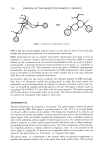
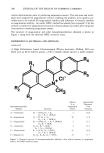
j. Soc. Cosmet. Chem., 37, 225-231 (July/August 1986) Acid stable dibenzylidene sorbitol gelled clear solid antiperspirant formulations: I T. SCHAMPER, M. JABLON, M. H. RANDHAWA, A. SENATORE, and J. D. WARREN, Shulton Research Division, American Cyanamid Company, 697 Route 46, Clifton, N•I 07015. Received December 4, 1985. Synopsis The stability of clear, solid antiperspirant formulations gelled with dibenzylidene sorbitol was investigated. It was found that the choice of glycol or alcohol solvent had a minor effect on product stability. A major enhancement of stability was achieved by incorporating acetamide MEA, methenamine, or zinc acetate, alone or in combination, as stabilizing agents. Using these materials, products have been prepared that are stable for over a year at 45 ø C. INTRODUCTION Antiperspirant formulators have been trying to prepare clear solid antiperspirants with the aesthetic application properties of stearate gelled alcohol/glycol stick deodorants for many years. The advantages of the stearate stick deodorant application aesthetics are clarity, ease of application, cool and refreshing feel on application, lack of powdery residue, and non-greasy feel. However, the known chemical incompatibility of the acidic antiperspirant salts with sodium stearate prevents the successful formulation of products. In addition, neutral or basic aluminum salts, although compatible with so- dium stearate, are known not to produce highly efficacious products. The publication of US patents 4154816 (1) in 1979 and 4346079 (2) in 1982 by Roehi (assigned to Naarden) discloses the possibility of producing a clear solid antiperspirant with the aesthetics of a deodorant. Roehl's patents describe the gellation of glycols containing acidic aluminum antiperspirant salts with dibenzylidene sorbitol (DBS) to give clear solid antiperspirant formulations. DBS (Figure 1) is not a new chemical. Thomas and Sibi reported the condensation product of benzaldehyde and sorbitol in 1926 (3). The structures of the three condensa- tion products between benzaldehyde and sorbitol (mono: 2,4-benzylidene sorbitol di: 1,3:2,4-dibenzylidene sorbitol (DBS) and tri: 1,3:2,4:5,6-tribenzylidene sorbitol) were reported in the 40s and 50s (4-10). The thermodynamically unfavored 2,4:3,5- dibenzylidene sorbitol was reported in the 60s (11, 12). Kinetic data on the condensa- tion reaction was also reported in the 60s (13, 14). A NMR paper (15) in 1976 dis- closed the solution structures of the di and tri benzylidene sorbitols. DBS is an excellent gelling agent for organic solvents. Numerous patents have been issued for products utilizing this feature. DBS is an unusual gelling agent because it is a relatively small, compact neutral molecule with a molecular weight of 358 daltons. This contrasts to the high molecular weights of the usual polymeric gelling agents. 225
Purchased for the exclusive use of nofirst nolast (unknown)
From: SCC Media Library & Resource Center (library.scconline.org)