200 JOURNAL OF THE SOCIETY OF COSMETIC CHEMISTS for this assay. We developed a convenient method to quantitatively determine swelling and to predict the irritancy of anionic surfactants by measuring the uptake by the collagen film of tritiated water from a treatment solution. The swelling response of collagen film was used to study the relationship between surfactant structure and activity, and how surfactants swell and disrupt the three di- mensional structure of protein substrates. The method has been used routinely by our laboratory to evaluate the irritation potential of liquid detergent and soap products. MATERIALS AND METHODS CHEMICALS 3H-H20 was obtained from New England Nuclear (Boston, MA) and was used to pre- pare working stock solutions of 5 X 10⁷ dpm/ml by dilution. Radioactivity was mea- sured with a Beckman LS-6800 liquid scintillation spectrometer using Aquasol-2 (New England Nuclear) scintillation cocktail. Linear dodecylbenzenesulfonate (LAS), am- monium lauryl sulfate (ALS), ammonium laureth-3 sulfate (AEOS-3EO), ammonium laureth-6 sulfate (AEOS-6EO), ammonium laureth-9 sulfate (AEOS-9EO), and sodium hexadecyl sulfate were obtained from Vista (Conoco, Saddlebrook, NJ). Sodium octyl, decyl, dodecyl, tetradecyl sulfates, and dodecyltrimethyl ammonium bromide (DTAB) were obtained from Eastman Chemicals (Rochester, NY). Cocamidopropyl betaine (CAPB) was obtained from Miranol (Dayton, NJ). Tween 20 (Polysorbate 20, a mixture of laurate esters of sorbitol and sorbitol anhydrides) was obtained from ICI Americas (Wilmington, DE). COLLAGEN FILM Collagen film supplied by Helitrex Inc. (Princeton, NJ) was prepared from bovine deep flexor (Achilles) tendon. While the precise treatment is proprietary to Helitrex, key elements are as follows. The tendon collagen was purified by enzymatic treatment and salt extraction to remove contaminating non-collagenous proteins and lipids. The film was cast from an acid dispersion, neutralized with ammonia, and then subjected to a cobalt-60 radiation dose of 1.0 Megarad. When collagen film is produced as a medium for tissue culture purposes, it is sterilized with radiation doses of 2.5 Megarad. Con- trolled radiation treatment produces crosslinking in collagen, resulting in changes in physical properties. We studied collagen samples subjected to varying radiation doses and found the 1.0 Megarad treatment to produce the optimum swelling response and membrane integrity. PROCEDURE Samples of collagen film were cut into 1.27 • 1.27 cm (0.5 • 0.5 inch) squares and each square was placed in a 20-ml screw cap vial and weighed (ca 10 mg). Each piece of film was treated with 10 ml solution containing the test surfactant in 0.1 mM phos- phate buffer, pH 7.0, and enough tritiated water to give 1 • 105 dpm/ml. The solu- tions containing the film pieces were incubated at 50øC for 24 hours. The collagen film was then removed from solution with tweezers, rinsed in a liter of deionized water

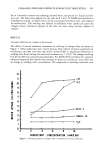
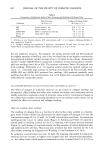
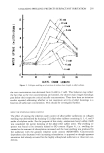
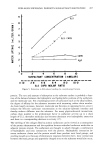
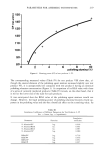
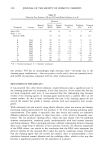
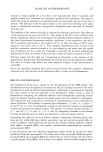
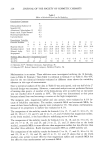
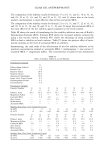
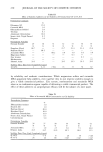
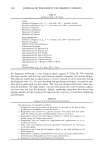
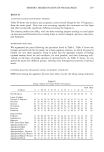
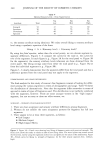
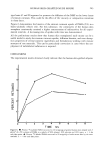
COLLAGEN SWELLING PREDICTS SURFACTANT IRRITATION 201 for ca 5 seconds to remove any adhering tritiated water, and placed in a liquid scintilla- tion vial. The films were digested in the vials with 1 ml 2 N NaOH and dissolved in scintillation cocktail, acidified with 0.25 ml concentrated perchloric acid, and analyzed for radioactivity. The swelling was defined as milliliters water uptake per gram dry collagen (ml/g). Statistical analysis of the data was done using one-way analysis of variance. RESULTS COLLAGEN SWELLING BY VARIOUS SURFACTANTS The effects of various surfactant treatments on swelling of collagen film are shown in Figure 1. These surfactants were chosen because their relative irritation potentials are well known, and they vary from very mild to severe (Table I). Significant differences in swelling were found among the surfactant treatments (p 0.05). The collagen swelling by LAS and SLS was concentration-dependent. For AEOS-3EO and Tween 20, apparent substrate saturation had already been attained at these test conditions, since there was no change in swelling with concentration. The magnitude of swelling correlated with 12 II n LAS $L$ AEOS -3 • o T•EEN- 20 o- c/ o o o o o o H20 I i I I I 0 2 4 6 8 I0 SURFACTANT CONCENTRATION (mMOLAR) Figure 1. Swelling response of collagen film to treatment by various surfactants.
Purchased for the exclusive use of nofirst nolast (unknown)
From: SCC Media Library & Resource Center (library.scconline.org)