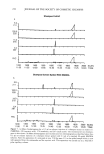
294 JOURNAL OF THE SOCIETY OF COSMETIC CHEMISTS ations in particle size and structure seen in abrasive raw materials are also seen in the freeze/fractures of the finished products. The long-term chemical stability and biocidal efficacy of the preservative Kathon CG in com- mercial shampoos and conditioners Robert M. Silverstein, Ph.D., Helene Curtis, Inc., 4401 W. North Ave., Chicago, IL 60639 To validate the long-term antimicrobial efficacy of the preservative Kathon CG ©, marketed samples of shampoos and conditioners were tested periodically for three years. Kathon was quantitated by gas chromatography, and biocidal activity was mea- sured by multiple challenges of a mutant microbial isolate from unpreserved product. Over 250 samples from fifty products were stored for up to three years. More than 90% of all samples con- tained at least 75% of the original Kathon CG and showed full biocidal activity. Most failures were random and had no obvious explanation. Therefore, Kathon CG is chemically stable and biologically ac- tive in these products for up to three years. Chemical- and photo-bleaching of brown and red hair Leszek J. Wolfram and Linda Albrecht, Clairol Re- search Laboratories, Stamford, CT 06922 The color of mammalian hairs is mainly due to the presence of discrete granules of melanin pigments which are inroduced into the keratinized cyto- plasmic protein during the process of fiber forma- tion. The melanins fall into two chemically distinct classes--eumelanin derived from enzyme oxidation of DOPA and pheomelanin formed from 5-S-cys- teinyl DOPA. The eumelanin is found in black and brown hair while the pheomelanin is the red hair colorant. Using the technique of reflectance measurement, we have been following the changes in hair color that are attendant upon bleaching of hair with H202 or upon exposure to sunlight. Our data sug- gest that pheomelanin is more resistant than eume- lanin to chemical or photo-degradation, a finding which is strongly corrobrated by a parallel series of in vitro experiments with the isolated pigments. We have also observed marked shifts in the hue of the bleached tresses and have proposed an explanation of these in terms of changes in physical and spectral characteristics of the melanin pigment. SESSION H PACKAGING Design versus engineering: USA, Europe, and the Far East Bernard P. Braun, Package Works, Inc., 17 Ove- ridge Lane, Wilton, CT 06897 Each country has its own expertise in the field of packaging. The progress of design and engineering aspects of this discipline do not always go hand-in- hand. Having traveled and worked with many com- panies in countries all over the world, I will try to present my own interpretations of the capabilities of each as a comparison with the others. For those who have not had the opportunity to ex- perience this comparison first hand, this will be an interesting opportunity to discuss these issues. Modern methods of characterizing packaging materials used in cosmetic packaging Thomas J. Ambrosio, Ph.D., Schering-Plough, 2000 Galloping Hill Road, Kenilworth, NJ 07033 Cosmetic and pharmaceutical packaging share many common objectives. Customer satisfaction, regula- tory compliance, and corporate image are important for both drugs as well as cosmetics. In order to as- sure satisfactory shelf life and overall package integ- rity, stability studies must be supplemented with good analytical support. Modern analysis proce- dures that incorporate state-of-the-art techniques for characterizing individual packaging materials or total systems are available for use in house or by commerical testing laboratories. A survey of some of these fundamental areas of qualitative and quan- titative measurement will be made along with ex- amples of applications. Data and information gen- erated from measurements using instrumental methods of analysis can form the basis for pack- aging specifications, vendor agreements, and certi- fication programs. In the pharmaceutical industry this type of work has proven to be cost effective by moving projects along faster, reducing production down time, and avoiding drug recalls. Aerosol packaging for cosmetic products: An overview John J. Sciarra, Ph.D., and Anthony J. Curie, Ph.D., Arnold & Marie Schwartz College of Phar- macy and Health Sciences, Long Island University, 75 Dekalb Avenue, Brooklyn, NY 11201 All types of cosmetic products have been packaged in an aerosol or pressurized package. These have in- cluded hair products, shave foams, perfumes, co- lognes, anti-perspirants, and deodorants, as well as many creams and lotions. While the principles un- derlying the development of these products has not changed over the years, the technology has seen dra- matic changes during the past 3-5 year period. The introduction and subsequent success of the "Mousse" foam aerosol is but only one example.

ABSTRACTS 295 This paper will review the existing technology and components as they apply to cosmetic aerosols. The use of various packaging components in the formu- lation and development of different cosmetic aerosols will be discussed. These include propel- lants, valves, and containers, as well as actuators, fitments, and special applicators. The solution, dis- persion, and emission systems for aerosol foams and sprays will also be covered. Special attention will be devoted to the regulatory aspects of these products as to flammability, pressure, and environmental considerations. Innovative concepts in packaging Richard C. O'Mara, Avon Products, Inc., Division Street, Suffern, NY 10901 Innovative concepts in packaging come clothed in many names and many expressions. Call them genesis, uniques, or brilliant newness, it all amounts to a style, appeal, or freshness that sells cosmetics. The path to originality and bright ideas is not clearly blueprinted and each must be estab- lished through hard work and calculated effort. Avon uses all the tried and true practices and perhaps one more, the Package Testing Laboratory. Package concepts originate from competition, vendors, marketing, design, employees, and many other sources. The initial idea can end up being about 10% of the final product. Along the way there is a history of testing, modifying, improving, re-designing, and at times utter frustration that tempers, improves, and perfects the package that ultimately reaches the consumer. It is an exciting journey to follow a package from its roots until the final marketing action and to learn how chemists, designers, engineers, vendors, and many disciplines interact to create an innovative package. At Avon the center of the activity surrounding the introduc- tion of the Coordinates Color Control Nail Styler was the Unique Packaging Group, a part of Package Evaluation and Technology. This approach to the introduction of a successful package may not be a blueprint for all to follow, but it certainly works for Avon Products.
Purchased for the exclusive use of nofirst nolast (unknown)
From: SCC Media Library & Resource Center (library.scconline.org)