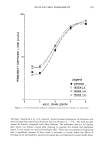
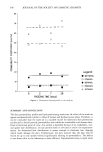
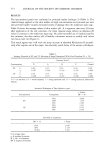
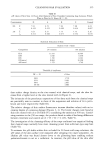
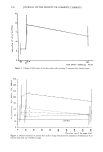
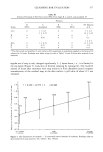
j. Soc. Cosmet. Chem., 37, 297-307 (September/October 1986) Evaluation of the nude rat as a model: Effects of short-term freezing and alkyl chain length on the permeabilities of n-alkanols and water S. DELTERZO, C. R. BEHL, R. A. NASH, N.H. BELLANTONE, and A. W. MALICK, St. John's University, Jamaica, NY 11439 (S.D., R.A.N.), Hoffman-LaRoche, Nutley, NJ 07110 (S. D., C.R.B., A. W.M. ), and Pfizer, Inc., Groton, CT 06340 (N.H.B.) Received June 2, 1986. Synopsis Laboratory skin permeation studies, using animal models, provide a convenient means for initial screening of new drug formulations for topical/transdermal application. Various animal models have been proposed for these types of studies however, each model has one or more shortcomings. In our laboratories we are investigating the use of the nude rat as a possible model system. This non-furry animal species has a sparse hair distribution, making it a potentially useful model for assessing percutaneous absorption of dermatolog- ical preparations. The data indicate that the nude rat skin permeability profile and the lipid partitioning sensitivity (•r-value), determined by using water and n-alkanols as test permeants, are mechanistically comparable to those of human skin. It can be concluded that the nude rat is a suitable model for skin permeation studies and that it should provide data which are correlatable with human data. Furthermore, its size is large enough to allow both in vitro and in situ/in vivo experimentation. Data are also presented indicating that nude rat skin may be frozen for up to one month without significantly altering its perme- ability profile. The ability to use frozen skin in the laboratory is more efficient (skin readily available), and more economical (reduced housing and procurement costs). Furthermore, skin variables such as age and gender can be better controlled. PURPOSE 1. To assess the suitability of the nude rat as a laboratory animal model for studying percutaneous absorption using test permeants. 2. To study the effect of short-term freezing on the permeability profile of nude rat skin to test permeants. INTRODUCTION While it is desirable to test dermatological preparations for percutaneous absorption in humans, human skin is not readily available for in vitro experimentation. In vivo studies in humans present even greater difficulties because of the necessity of following elabo- rate protocols, regulatory control, and the requirements for toxicological studies prior 297

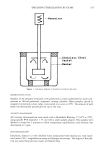
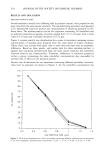
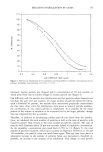
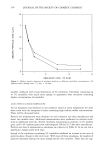
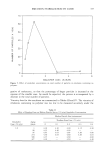
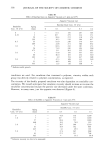
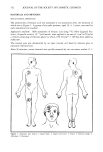
298 JOURNAL OF THE SOCIETY OF COSMETIC CHEMISTS to human testing. Therefore, laboratory skin permeation studies, using animal models, provide a convenient means for initial screening of new drug formulations for topical/ transdermal application. In vitro methods are particularly useful for rapidly establishing rank-order permeabilities of a series of topical formulations. These data must be corre- latable with human data. Therefore, suitable animal models must have skin perme- ability mechanisms comparable to those found in humans. In our laboratories we are investigating the use of the nude rat as a possible model system. This non-furry animal has a sparse hair distribution, making it a potentially useful model to assess percu- taneous absorption of dermatological preparations. Furthermore, its size is large enough to allow both in vitro and in situ/in vivo experimentation. The permeabilities of n-al- kanols and water through nude rat skin were determined and are compared with pre- viously reported data obtained using human skin, other animal skins, and Silastic membrane © (1-8). Based on these comparisons, the suitability of the nude rat as a laboratory model is assessed. The effect of short-term freezing on the permeability profile of nude rat skin has also been investigated. The permeabilities of n-alkanols obtained with freshly excised skin are compared to those obtained with skin frozen for two days, one week, and four weeks. Such studies provide information which can be used to make the experimental procedure easier, more efficient, and more economical. Variables such as age are better controlled, resulting in more meaningful data. Animal procurement and housing costs are also reduced. Additionally, results from this type of study can provide useful infor- mation for delineating the various mechanisms of skin permeation, regardless of whether the freezing process alters skin permeability. EXPERIMENTAL ANIMALS Female nude rats, strain RNU, were obtained from Harlan Sprague Dawley, Inc., Indi- anapolis, IN. Animals of 8-9 weeks of age were sacrificed by lethal injection of T-61 euthanasia solution (American Hoechst Corp.). The abdominal skin is practically hair- less and hair removal was unnecessary. Rats of this age do not have excessive fat at- tached to the skin, which, otherwise, needs to be removed. SKIN FREEZING The freshly excised skin was tacked to a Teflon © board, sealed in plastic bags, and stored in a freezer at -20øC. Prior to use, it was thawed at room temperature for one-half hour. DIFFUSION CELLS Horizontal glass diffusion cells were used. The cells were assembled with the skin sandwiched between the half-cells. The exposed skin surface area is 0.7 cm 2, and each half-cell has a volume of 3 mL. The assembled cells were immersed in constant temper- ature water baths at 37øC. The cell contents were stirred by propellers in each half-cell rotating at 150 rpm.
Purchased for the exclusive use of nofirst nolast (unknown)
From: SCC Media Library & Resource Center (library.scconline.org)