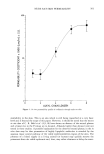
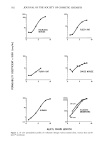
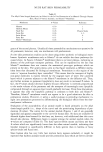
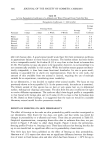
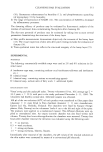
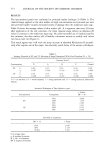
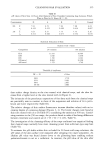
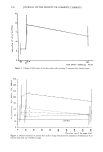
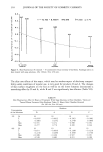
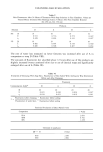
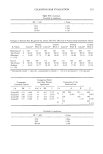
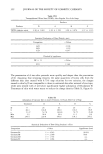
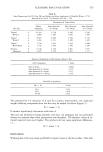
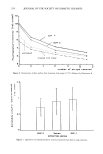
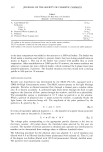
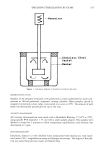
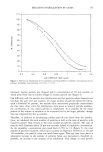
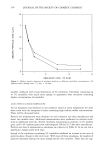
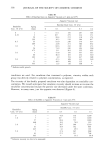
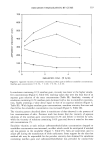
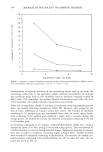
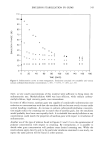
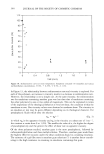
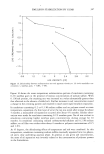
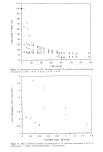
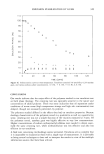
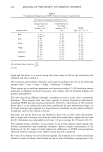
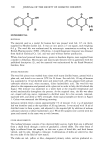
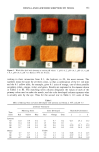
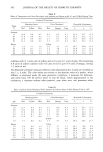
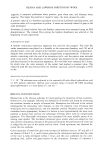
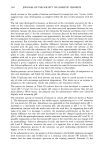
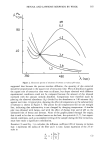
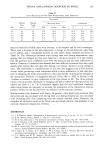
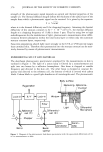
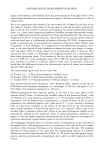
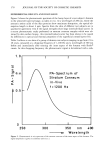
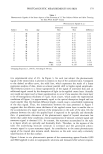
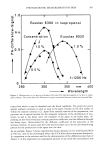
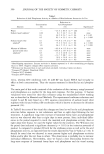
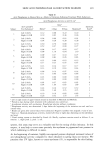
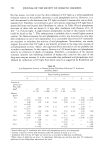
364 JOURNAL OF THE SOCIETY OF COSMETIC CHEMISTS steady increase in the uptake of lawsone and henna by human hair over 7 hours, which suggests that color development is complete before the hair is fully saturated with the dye. The red color developed by lawsone, as detected on the tintometer and given by the a value on the colorimeter, remained constant with changing dyeing time. The corre- sponding values for henna were lower, but there was good agreement between the two methods, because the mean ratios of the intensities for lawsone and henna were 2.0 for the tintometer and 2.3 for the colorimeter. A feature detected by both instruments was that while the yellow component was approximately the same for lawsone and henna, the red component for lawsone was greater than the yellow, while with henna the order was reversed. Put in another way, the overall color for lawsone was orange-red, and that for henna was orange-yellow. Another difference, between both methods and dyes, occurred with the gray tints. Henna showed a tenfold increase over lawsone on the tintometer, but with the colorimeter, the L values were approximately the same. Chlo- rophyll, which is known to be a constituent of henna (3,5), is probably the cause. Being green in color, chlorophyll would contribute to both yellow and blue, which would combine with red to give a high gray value on the tintometer, thereby making the yellow predominant in the color developed. In contrast, the green of the chlorophyll, because it gives a negative a value, reduced the red (a) component of the colorimeter, but did not influence L or b, which were virtually the same for lawsone and henna. Cox (3) attributed the green hue of hair dyed with henna to chlorophyll. Similar patterns can be detected in Table II, which shows the effect of temperature on the color developed, and Table III, which gives the influence of pH. Table II indicates that with both lawsone and henna, there is a small increase in inten- sity of color with increasing application temperature. This shows up as an increase in grayness in the colorimetric results and redness in the tintometer results. The results for lawsone in Table III indicate that the color developed is constant be- tween pH 3.0 and 5.0, but at higher pH values it becomes less intense (less red and more yellow). With henna, the grayness and the predominant yellow note diminish slightly with increasing pH. The electronic spectra of solutions of lawsone at various pH values are shown in Figure 2. The absorption maximum in the visible region, representing an n -• q-r* transition (6), was located at 454 nm. Absorbance was negligible at this wavelength below pH 3, increased to a maximum with increasing pH, and plateaued at pH 5 to 10. These observations contrast with the results seen with the wool felts, by suggesting that a pH value of at least 5 is necessary to achieve the maximum performance on the hair. A further difference was that the color developed on the felt changed significantly above pH 6, while the spectrophotometer results remained constant between pH 5 and 10. A possible explanation is that the internal pH value of the wool fiber does not change with its surroundings. Selective absorption of acids and bases by wool is minimal between pH 4 and 8. However, whatever the cause, it is apparent that, at least in the present situation, absorption spectra of dye solutions can give misleading information with respect to the in situ situation. In the substantivity tests, the quantity of dye released in the Soxhlet apparatus increased with extraction time and levelled out at a limiting value around 140 minutes. The extract had the same electronic spectrum as the starting material. Forestier (1) has

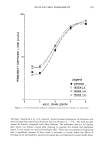
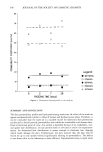
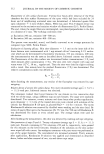
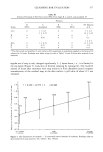
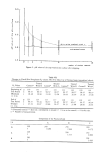
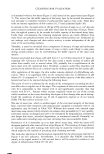
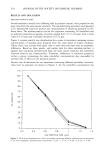
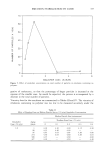
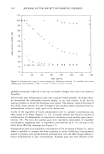
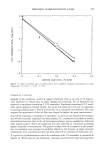
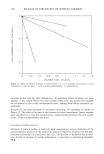
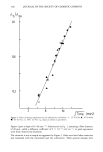
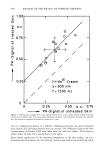
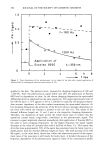
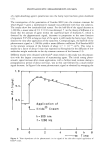
HENNA AND LAWSONE SORPTION BY WOOL 365 1ø/o 1Cm PH 5.7 80 40 350 450 (rim) Figure 2. Electronic spectra of solutions of lawsone at various pH values. suggested that because the process involves diffusion, the quantity of dye extracted should be proportional to the square root of extraction time. Plots of absorbance against the square root of extraction time were rectilinear, but slopes obtained with different experimental conditions could not be compared because the amount of dye released increased with the amount initially absorbed. Comparisons were therefore made by plotting the observed absorbance (A t) divided by the absorbance at 140 minutes (Aoo) against root time. A typical plot, showing the effect of temperature on the substantivity of lawsone is shown in Figure 3. The points for all temperatures fall on one straight line, indicating that substantivity is not changed by changing temperature. A similar plot was obtained with henna, and with the effect of dyeing time and of pH on the substantivities of henna and lawsone. None of the graphs passed through the origin this is said to be due to a surface barrier on the hair, the epicuticle (1,7), but experi- mental conditions, such as incomplete wetting of the sample during the first extraction, must have made a significant contribution. Forestier (1) used Eq. 1 to calculate the diffusion coefficient (D) of lawsone in human hair. r represents the radius of the fiber and t is time. Linear regression of the 25 re- sults in - _ (1) Aoo r
Purchased for the exclusive use of nofirst nolast (unknown)
From: SCC Media Library & Resource Center (library.scconline.org)