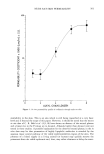
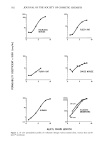
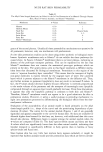
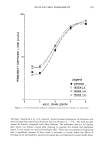
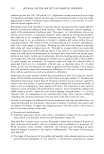
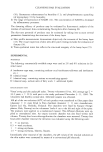
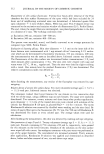
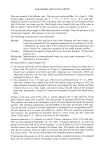
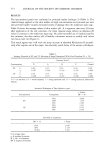
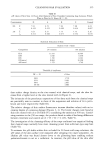
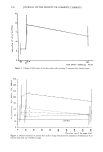
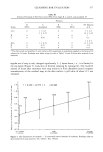
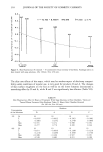
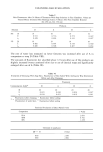
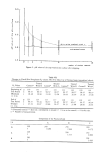
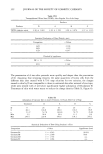
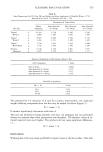
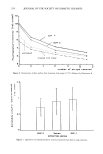
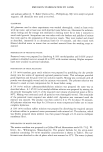
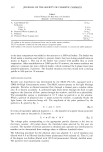
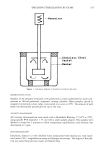
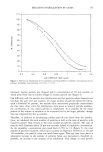
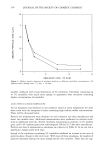
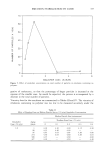
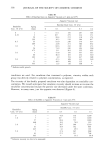
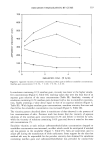
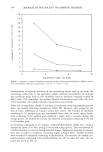
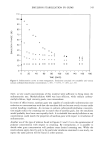
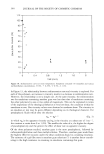
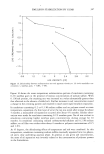
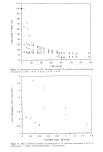
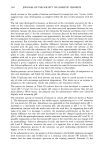
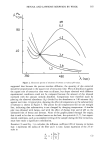
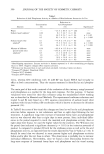
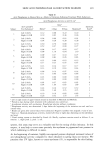
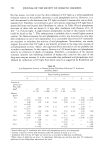
EMULSION STABILIZATION BY GUMS 339 7OO 6DO - 500 - ß 00 - 300 - 200 - 100 - 0 2 4 6 EMULSIFIER CONC. (• W/W) Figure 6. Apparent viscosity of emulsions containing xanthan gum at different emulsifier concentrations. Xanthan gum concentration: [] 0.1%, + 0.2%, O 0.3%, /• 0.4%. In emulsions containing 0.1% xanthan gum, viscosity was lower at the higher emulsi- fier concentrations (Figure 6, Table lll), reaching values that were less than that of an aqueous gum solution of the same concentration (Table Ill). Similarly, viscosity of emulsions containing 0.2% xanthan gum decreased with a rise in emulsifier concentra- tion, finally attaining a value about equal to that of an aqueous solution (Figure 6, Table III). With higher xanthan gum concentrations, emulsion viscosity first rose and then fell as the emulsifier concentration was increased (Figure 6, Table Ill). The viscosity pattern described above is reminiscent of that observed in the presence of low concentrations of salts. Previous work has shown that the viscosity of aqueous solutions of low xanthan gum concentrations (0.2% and below) is lowered by salts, while the viscosity of solutions containing 0.4% gum and above is raised at the same salt concentrations (7). Emulsion viscosity at each sodium carboxymethylcellulose concentration dropped as emulsifier concentration was increased, an effect which would be anticipated if residual salt was present in the emulsifier (Figure 7, Table IV). Salts are sometimes used to adjust pH during the manufacture of oleth surfactants. Some support for the idea that residual salt may be responsible for the peculiar viscosity data obtained for emulsions containing xanthan gum and carboxymethylcellulose was provided by conductivity

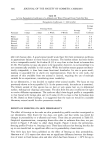
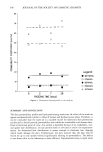
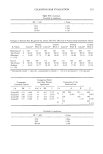
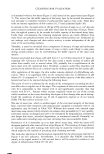
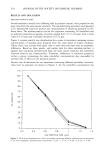
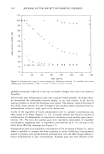
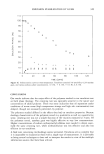
340 JOURNAL OF THE SOCIETY OF COSMETIC CHEMISTS 26 (D o o { 24- 22 20- 18- 16- 14- 12- 10- 8- 6- 4- 2- 0 0 2 4 6 EMULSIFIER CONC. (% W/W) Figure 7. Apparent viscosity of emulsions containing sodium carboxymethylcellulose at different emulsi- fier concentrations. Polymer concentration: [] 0.5%, + 1.0%, O 1.5%. measurements on aqueous solutions of the emulsifying agents used in our work. By converting conductivity to the equivalent sodium chloride concentration, we estimate that emulsions made with 0.25% emulsifier (and no polymer) contained 0.0026 M NaC1 with 1.0% emulsifier, the sodium chloride concentration was 0.0034 M with 5.0% emulsifier, the sodium chloride concentration was 0.02 M. There was no significant change in viscosity of emulsions containing xanthan gum for about two months following manufacture (Table III). However, after storage for one year or more, differences in viscosity values were noted. The viscosity of emulsions containing 0.1% xanthan gum was considerably lower than the initial values. Emul- sions containing 0.2% xanthan gum exhibited a slight drop in viscosity during this storage period. An increase in viscosity was observed in emulsions containing 0.3% and 0.4% xanthan gum. In emulsions containing 0.5% sodium carboxymethylcellulose (Table IV), viscosity dropped by about 10 to 50% during a two-month storage period. This was followed by a further decrease in viscosity during extended storage. Substantial decreases in viscosity were also recorded in emulsions containing higher polymer levels. Smaller decreases were recorded for emulsions containing methylcellulose. The viscosity of a freshly pre- pared emulsion containing 1.0% methylcellulose was 207 cp after 297 days, the vis- cosity was down to 154 cp.
Purchased for the exclusive use of nofirst nolast (unknown)
From: SCC Media Library & Resource Center (library.scconline.org)