j. Soc. Cosmet. Chem., 37, 387-393 (September/October 1986) Determination of lysosomal acid phosphatase in human skin as a marker of irritation following different surfactant treatments HUGO J. NIGGLI and RUDOLPH ROTHLISBERGER, Cosmira/ SA, Rte. de Chdsa//es 21, CH-1723 Mar/y, Switzerland, Research Company of We//a AG, Darmstadt, FRG. Received June 6, 1986. Synopsis Acid phosphatase activity in tape-strip biopsies of human stratum corneum was determined using p-nitro- phenyl phosphate as substrate following skin treatment of healthy volunteers with different surfactants at various concentrations. As a short-term effect, enhanced reduction of acid phosphatase activity with stronger surfactants and higher surfactant concentrations was detected. When the skin of panellists was exposed to surfactants in the standardized elbow washing test, a significant long-term increase of lysosomal horny layer acid phosphatase was observed after four or eight days following the final surfactant treatment. This long-term response was found to correlate very closely with the visual scoring system of erythema. Therefore, this assay may serve as a valuable tool for the prediction of skin irritancy and mildness of dilute surfactant solutions. Furthermore, this method is inexpensive, convenient, and avoids the use of animal model systems. INTRODUCTION Substantial efforts have been made in recent years to study the influence of surfactants on the skin. Generally, most of the reported assays are based on in vitro test conditions or using animals as model systems and have been reviewed by Lansdown (1) and Protrey (2). A more reliable in vivo technique for prediction and measurement of irritancy on human skin is the soap chamber test which utilizes a visual scoring system (3). Based on a similar scoring system, Frosch introduced the elbow washing test in 1982 (4). How- ever, these methods are subject to interobserver bias as a main problem (5,6). In 1974, Rutherford and Pawlowski (7) identified the utility of determining the release of acid phosphatase from epi'dermal lysosomes or membrane coating granules as a tool for the assessment of skin irritancy. These workers were using a histochemical staining technique and they observed a short-term increase of epidermal lysosomal acid phospha- rase activity after skin treatment with low irritancy compounds. In contrast, Protrey et a/. (8) recently reported enhanced short-term reduction of acid phosphatase activity in human skin treated with stronger surfactants. They inferred that protein denaturation was the most likely cause of their reduced enzyme activity. Theoretically, skin acid phosphatase activity may change in several ways as a consequence of contact with sur- factants. Some substances may directly influence the activity of this enzyme. Addition- 387

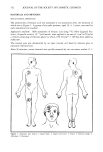
388 JOURNAL OF THE SOCIETY OF COSMETIC CHEMISTS ally, it is also possible that preformed acid phosphatase is released differently by irri- tants such as chemical or physical agents from latent sources as proposed by Rutherford and Pawlowski (7). In this paper we report our results on the short-term response of lysosomal acid phos- phatase activity in tape-strip biopsies of normal human stratum corneum after skin treatment with different surfactants at various concentrations. Long-term changes in acid phosphatase activity may be different. Therefore, we quantified the effect of other surfactant solutions on acid phosphatase after 4 or 8 days following the final treatment and designated these results as the long-term response. Since lysosomal enzymes in skin irritation may be directly influenced by chemical or physical agents, a possible alter- ation in acid phosphatase activity was investigated in normal human skin fibroblasts using UV light as an optimal irritation source. MATERIALS AND METHODS HAND DIPPING Volunteers dipped their hands in 1 liter of surfactant solutions in glass beakers main- tained at 41øC as described by Prottey et al. (8). The dipping period was usually 10 min, after which the hands were rinsed under running tepid tap water and then dried. In these experiments tape-strip biopsies were taken immediately before and 30 min after dipping. EVALUATION OF HUMAN SKIN IRRITANCY (ELBOW WASHING TEST) The technique of Frosch (4) was employed to assess the irritation properties of surfac- tants. In brief, male and female human volunteers free from visually observable skin damage were recruited. Their internal upper forearms were treated twice daily for 4 min with different surfactant solutions for up to five successive days. The treated area was rated on a 0 to 3 scale for erythema 20 min following each daily treatment. The test was stopped when one test site reached the endpoint (score of erythema: 3) or after five days. Three days before the beginning of the test, as well as four and eight days after the final surfactant treatment, acid phosphatase activity was determined as described below. SKIN SAMPLES AND DETERMINATION OF ACID PHOSPHATASE To obtain stratum corneum biopsies, Scotch © adhesive tape strips (3M Magic 810, 20 mm X 50 mm) were applied and taken from treated and untreated areas. The tape- strip biopsies were attached on 60-mm diameter Petri dishes and their acid phosphatase content determined. Standard assay conditions were 50 mM citrate buffer, pH 4.8, and 5.5 mM freshly prepared p-nitrophenyl phosphate (Boehringer, Mannheim, FRG) in a total volume of 1.0 ml. Incubations were for 30 min at 25øC on the attached complete tape strip, and reactions were terminated by adding 0.5 ml of the reaction mixture to 1 ml 0.1 M NaOH. The concentration of yellow color of liberated p-nitrophenol was obtained by spectrophotometric measurements (Unicam SP1700, Philips) at 405 nm. The instrument was calibrated with standard solutions of p-nitrophenol. Under these
Purchased for the exclusive use of nofirst nolast (unknown)
From: SCC Media Library & Resource Center (library.scconline.org)