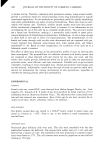
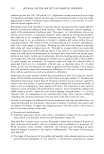
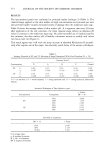
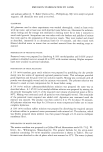
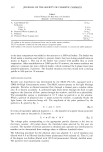
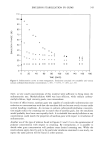
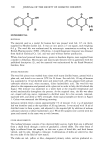
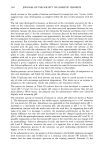
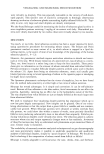
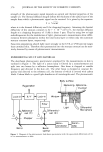
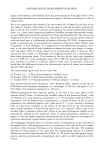
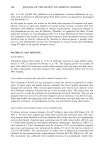
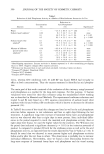
360 JOURNAL OF THE SOCIETY OF COSMETIC CHEMISTS O O OH • OH S-R 0 0) 0 EXPERIMENTAL MATERIALS The material used as a model for human hair was pressed wool felt, 0.5 cm thick, supplied by Hinders-Leslies Ltd. It was cut into pieces 2.5 cm square, each weighing 0.6 g. The wool felt was authenticated by microscopic examination according to the British Pharmacopoeia (1980). 2-Hydroxy-1,4-naphthoquinone (lawsone) was obtained from Aldrich Chemical Co. Ltd. and was used without further purification. Whole dried and powered henna leaves, grown in Southern Algeria, were supplied from a market in Ghardaia. Microscopic and macroscopic features were in agreement with the published description (2), and the material was authenticated by the Royal Botanical Gardens, Kew. DYEING PROCEDURE The wool felt pieces were washed three times with warm distilled water, pressed with a glass rod, and dried in an oven at 50øC for 24 hours. For each felt, 20 mg of lawsone was suspended in 10 ml distilled water and mixed well. pH was adjusted with sodium carbonate solution and, when necessary, dilute hydrochloric acid. The wool felt was placed in the suspension and pressed with a glass rod in order to help the felt absorb the liquid. The mixture was immersed in a water bath at the required temperature and stirred mechanically throughout the process. At the required time, the felt was taken out, rinsed with tap water, immersed in distilled water for a few seconds, removed, squeezed well, and dried at 50øC overnight. Some typical samples are shown in Figure 1. Colors were measured the following morning. Lawsonia inermis leaves contain approximately 1% of lawsone (3,4). 2 g of powdered leaf was therefore used as the equivalent of 20 mg lawsone. It was mixed with 10 ml of distilled water to form a paste, and adjusted to the required pH by addition of sodium carbonate solution or dilute hydrochloric acid. Wool felt samples were covered with the paste and treated in the same way as with lawsone. COLOR MEASUREMENTS The Lovibond tintometer consists of two identical light sources. Light from one is reflected from a chalk block through a series of graduated, colored slides. The other beam of light is reflected from the sample, in this case a piece of dried felt, and both beams viewed, side by side, through a telescope. Combinations of slides are selected so that the two sides of the field of view match. The slides are red, yellow or blue, designated primary colors, and are graduated ac-

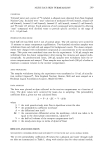
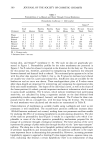
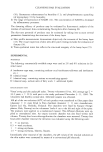
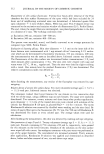
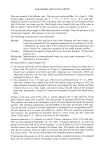
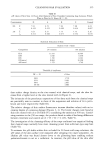
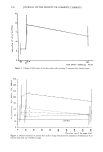
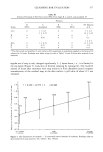
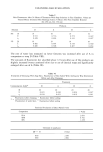
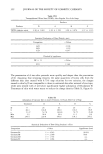
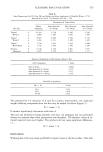
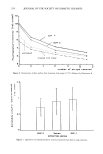
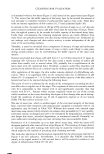
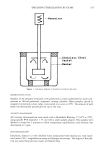
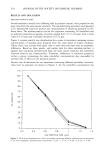
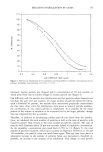
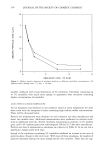
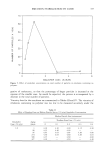
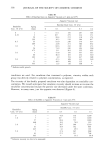
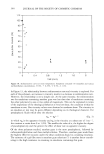
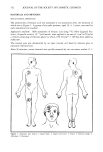
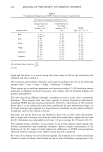
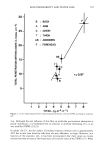
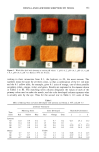
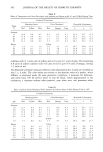
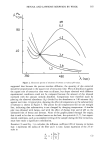
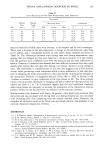
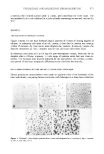
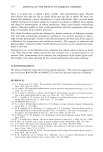
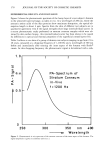
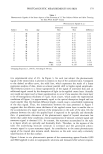
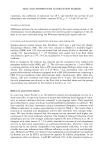
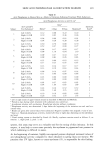
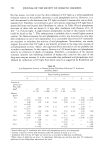
HENNA AND LAWSONE SORPTION BY WOOL 361 Figure 1. Wool felts dyed with lawsone at various pH values. 1, pH 3.0 2, pH 4.0 3, pH 4.5 4, pH 5.0 5, pH 6.0 6, pH 7.0. Dyed at 50øC for 30 min. cording to their intensities from 0.1, the lightest, to 20, the most intense. The numbers mean the same for all three colors, so that a combination of the 0.1 red slide and the 0.1 yellow slide, for example, gives 0.1 units of orange, one of three possible secondary colors, orange, violet, and green. Results are expressed in the manner shown in Tables I to III. The matching series column designates the values of each of the primary colors used to make the match, and the color developed column expresses what is actually seen by the eye. Thus for the second row in Table I, 0.1 units of blue Table I Effect of Dyeing Time on Colors Developed with Lawsone and Henna at 30øC and pH 4.5 Lovibond Tintometer Matching Series Color Developed Hunterlab Colorimeter Time (min) Red Yellow Blue Red Orange Gray L a b Lawsone 30 11.0 9.9 0.2 1.1 9.7 0.2 42.3 24.2 13.2 50 11.4 9.9 0. l 1.5 9.8 0.1 -- -- 60 11.7 9.9 0.3 1.8 9.6 0.3 42.0 24.5 12.9 90 11.7 9.8 0.2 1.9 9.6 0.2 41.9 24.9 13.2 Henna Yellow 30 4.7 8.7 1.2 4.0 3.5 1.2 44.8 11.4 12.5 60 5.7 9.7 1.4 5.0 4.3 1.4 43.9 11.4 ll.7 90 6.7 10.0 2.2 3.3 4.5 2.2 45.5 10.6 ll.9
Purchased for the exclusive use of nofirst nolast (unknown)
From: SCC Media Library & Resource Center (library.scconline.org)