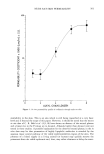
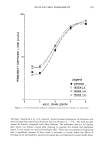
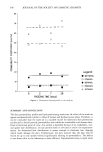
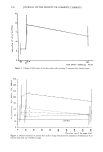
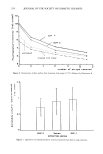
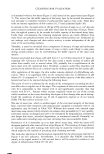
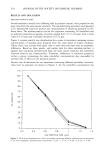
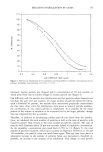
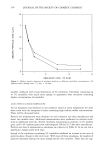
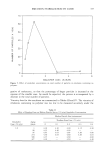
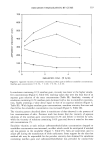
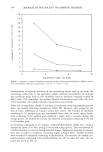
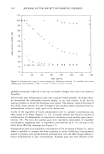
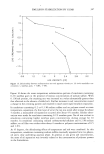
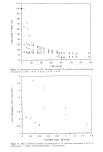
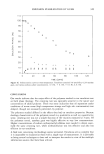
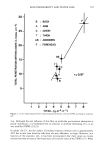
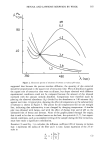
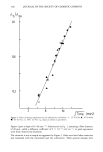
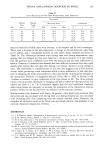
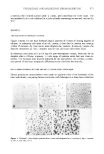
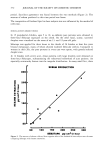
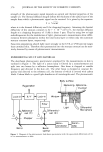
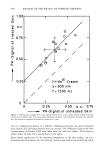
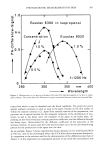
326 JOURNAL OF THE SOCIETY OF COSMETIC CHEMISTS The potential of equal concentrations of D and of A to extract material of low molecular weight from the horny layer is different. One reason could be the much more pro- nounced ability of classical soaps to swell corneocytes (23) and skin. This more pro- nounced swelling would retard access of the solvent to cracks and fissures. Another reason might be the decreased adsorption of anionic surfactants to skin as the pH value of the medium rises (8,24). This phenomenon, which is more probably of a physico- chemical nature, will have influenced the extent of the adsorption of Rhodamine B (Figure 2). Higher losses of low molecular weight material strain the skin's natural buffering and waterholding capacity and could harm normal and damaged skin. Products have to be ranked according to functionality or efficacy (cleaning and skin care) and their skin compatibility or lack of irritancy. It can be recognized that a patch test is not an appropriate tool to compare classical soaps with surfactant-type soaps based upon the above-mentioned reasons. We recommend that consideration should be given to reevaluation of compatibility of soaps under conditions of environment, season, and regular use. Parameters more strongly related to in-use conditions are skin surface roughness, cleansing efficacy, extraction measurements, and the irritancy of the products under normal use. Apparently the seeming advantages of surfactant bar soaps may have been overestimated. The authors gratefully acknowledge the contribution of the Central Research Depart- ment of Beiersdorf (Dr. Meyer-Ingold) concerning the experiment including VERO- cells (22b). REFERENCES (1) P. J. Frosch and A.M. Kligman, The soap chamber test, a new method for assessing the irritancy of soaps, J. Amer. Acad. Dermatology, 1, 35 (1979). (2) J. M. Philip, "Anionic Surfactants Dermatological Observations (Human)," in Chr. Gloxhuber, An- ionic Surfactants, Biochemistry, Toxicology, Dermatology (Marcel Dekker Inc. Basel 1980), pp. 309-326. (3) W. Schneider, Alkalineutralisation und Hauttyp, Arch. f. Dermatology, 219, 620 (1964). (4) U. Hoppe, H.-J. Kopplow, and G. Sauermann, EinfluB von Puffersystemen auf die pH-Werte der Erwachsenenhaut, •rztl. Kosm., 7, 75-81 (1977). (5) H. Schaefer, A., Zesch, and G. Stiittgen, Skin Permeability (Springer-Verlag, 1982), pp S739-740. (6a) F. R. Bettley, The irritant effect of soap in relation to epidermal permeability, Br. J. Dermatol., 75, 113-116 (1963). (6b) F. R. Bettley, The influence of detergents and surfactants on epidermal permeability, Br. J. Der- matol., 77, 98-100 (1965). F. R. Bettley, The influence of soap on the permeability of the epidermis, Br. J. Dermatol., 73, 448-454 (1961). G. Sauermann, unpublished results. V. Blazek and V. Wienert, Der EinfluB der Hornschichthydratation auf den zeitlichen Ablauf des akuten UV-Lichtschadens, Strahlentherapie, 157, 280-286 (1981). M. R. Eftink and C. A. Ghiron, Fluorescence quenching studies with proteins, Analytical Blochem, 114, 199-227, (1981). (1 la) E. Burstein et M., Fluorescence and the location of tryptophan residues in protein molecules, Photo- chem. and Photobiol. 18, 263-279 (1973). (1 lb) G. B. Strambini and E. Gabellieri, Intrinsic phosphorescence from proteins in the solid state, Photo- chem. and Photobio/., 39, 725-729, (1984). 12) G. Schwedt, Fl•orimetrische Analyse (Verlag Chemie, Weinheim, FRG, 1981), p 42. 13) U. Hoppe, Topologie der Hautoberfliiche, J. Soc. Cosmet. Chem., 30, 213-239 (1979) "Stratum Corneum--Struktur und Funktion," in Cosmetic Technology, F. Klaschka, Ed. (Grosse-Verlag, Berlin, 1981), pp 141-158. 14) H. Bandmann and S. Fregert, Epicutantestung (Springer Verlag, Berlin, 1973). 15a) L-O. Lamke, G. E. Nilsson, and H. L. Reithner, Insensible perspiration from the skin under stan- dardized environmental conditions, Scand. J. Clin. Lab. Invest., 37, 325-331 (1977). (7) (8) (9) (10)

CLEANSING BAR EVALUATION 327 (15b) P. G. M. van der Valk, M. C. Crijns, J.P. Nater, and E. Bleumink, Skin irritancy of commer- cially available soap and detergent bars asmeasured by water vapour loss, Dermatosen, 32, Heft 3 (1984). (16) F. Herrmann, H. Ippen, H. Schaefer, and G. Sthttgen, Biochemie der Haut (Georg Thieme Verlag, Stuttgart, 1973). (17) G. Piewig and A.M. Kligman, Acne (Springer-Verlag, 1975). (18) P.M. Elias, Epidermal lipids, membranes, and keratinization, Int. Soc. of Tropical Dermato/ogy. 20, 1-19, (1981). (19) G. Locher, Permeabilitiitspriifung der Haut Ekzemkranker und Hautgesunder far den neuen Indi- kator Nitrazingelb -Geigy-, Modifizierung der Alkaliresistenzprobe, pH-Verlauf in der Tiefe des stratum corneum, Dermato/ogica, 124, 159-182 (1962). (20) R. Aly, Ch. Shirley, B. Cunico, and H. I. Maibach, Effect of prolonged occlusion on the microbial flora, pH, carbon dioxide and transepidermal water loss on human skin, Journal of Investigative Derma- to/ogy, 71, 378-381 (1978). (21) G. Imokawa, K. Sumura, and M. Katsumi, Study on skin roughness caused by surfactants: I. A new method in vivo for evaluation of skin roughness, Journal of the American Oil Chemists Society, 52, 479-483 (1975). (22a) B. Chance, B. Schoener, R. Oshino, F. Itshak, and Y. Nakase, Oxidation-reduction ratio studies of mitochondria in freeze-trapped samples, NADH and flavoprotein fluorescence signals, Journal of Bio- logical Chemistry, 254, 4764-4771 (1979). (22b) Aliquots of cell-suspensions containing 3 X 10⁵ VERO-cells (Flow, Meckenheim FRG) in PBS pH 7.2 + 5% FCS/ml were mixed with aliquots of PBS or with aliquots of PBS-containing 0, 1% of SDS fluorescence-values (Ex 360, Em 440) decreased about 10% in the SDS-containing suspension compared to SDS-free dispersion after mixing. (23) G. Sauermann and U. Hoppe, Bestimmung und Beeinflussung des Volumens humaner Hornepithel- zellen, J•rztl. Kosm., 12, 185-207 (1982). (24) H. Wilmsmann and A. Marks, Zur Reaktion oberfliichenaktiver Verbindungen mir Keratin Und Enzymen, Fette, Seifen, Anstreichm. 61. Jahrg. Nr. 10, 1959, S. 969.
Purchased for the exclusive use of nofirst nolast (unknown)
From: SCC Media Library & Resource Center (library.scconline.org)