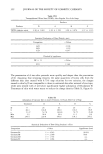
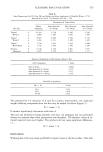
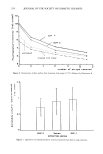
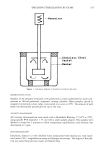
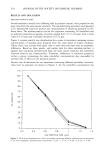
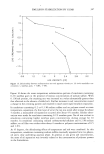
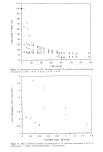
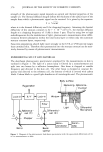
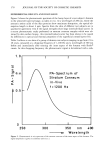
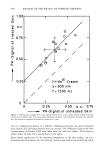
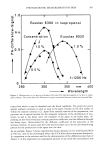
312 JOURNAL OF THE SOCIETY OF COSMETIC CHEMISTS Measurement of skin surface fluorescence. Twenty-four hours after removal of the Finn chambers the skin surface fluorescence of the spots which had been occluded for 24 hours and of neighboring untreated areas was determined. A bifurcated quartz fiber optic (diameter = 4 mm) (Schott, Mainz, FRG) was used. This Y-shaped device was connected to the excitation and emission window of a fluorometer (LS 5, Perkin Elmer). The end, where the single fibers are intermingled, was placed perpendicular to the skin at a distance of 2 mm. The working conditions were a) Excitation 290 nm, emission 320-500 nm. b) Excitation 360 nm, emission 400-500 nm. The spectra were recorded, stored, and finally converted to an average spectrum by computer (type 3600, Perkin Elmer). Evaluation of cleansing efficacy. Skin sites (diameter = 1.5 cm) on the inner side of the lower forearm were contaminated with 1 mg mineral oil/cm 2 containing 0.1% anthra- cene which can be determined by fluorimetry (excitation, 353 nm emission, 400 nm) the instrumentation was the same as described above. Informed consent was obtained. The fluorescence of the skin surface was determined before contamination (= F•) and three minutes after contamination (= F2). The skin sites were cleaned with soap and warm water (32 ø C, 30 sec., regular use). Then the sites were dried by slight touching with a towel. One minute later the residual fluorescence (= F3) was determined. The relative contamination-index was defined as: Rr __ F 3 - F• F 2 -- F• After finishing the measurement, any residue of the fluorophor was removed by .tape stripping. Relative density ofanionic skin surface charge. Ten male volunteers (average age • = 34.5 s = 11.3) took part. Informed consent was obtained. The volunteers washed their lower forearms for one minute on two consecutive days with two of the soaps, using a different soap on each forearm. The soaps were randomly distributed. Two minutes, twenty minutes and three hours after product application, spots (diameter = 3.3 cm) of the treated skin sites were colored with solutions of the cationic dye Rhodamine B (20 ppm in glycerol/H20 = 1'1) for 1 minute. The excess Rhodamine B solution was removed by distilled water washing and the sites dried. By means of quartz fiber optics the fluorescence (Ex 552 nm, Em 590 nm) of Rhodamine B was determined five times at every colored spot. The average values were used for calculation. After finishing the measurement, the color was removed by washing and tape stripping. Skin penetration of soaps D and A. Twenty volunteers (average age • = 31.6 s = 11.1) took part. Funnels containing 0.75% solutions of D and A, respectively, were pressed for two minutes on the lower forearms. Residues of the solutions on the skin surface were wiped off with cotton. An analogous treatment with pure water was performed at one of the upper forearms. The contralateral site remained untreated. Thirty minutes after application, Rhodamine B solution was applied and determined as described above, before and after removal of two, six and eleven tape strips.

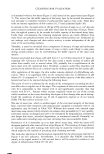
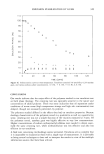
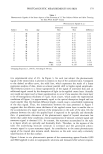
CLEANSING BAR EVALUATION 313 Skin care potential of the difj•rent soaps. The test was conducted May 14 to June 8, 1984. Twenty-eight volunteers (average age • = 35 s = 10.4 14 m, 14 f) took part. Informed consent was obtained. The volunteers used the soaps on one forearm and one half of the face two times per day. Both hands were cleaned with one of the soaps as often as needed. Only Nivea © Cream was used as a skin care product on the face. The test period always began on Monday and ended on Friday. Then the products to be tested were changed. The sequence of use was randomized. The following measurements were performed: Monday: Preparation of skin replicas of both lower forearms and both cheeks rep- licas were measured for the roughness parameter Rz according to (13) (Rz is defined as the mean value of five consecutive maximum/minimum dis- tances within five consecutive segments of the whole scanned profile). Tuesday: Evaluation of negative charge density on the lower forearms 12 hours after product use. Wednesday: Measurement of transepidermal water loss (only male volunteers) (15 a). Friday: Preparation of skin replica. pH measurements on taped-stripped skin. a) To estimate pH shifts within different layers of the stratum corneum occluded for 24 hours with 8% and 2% solutions of D and A, measurements were performed at treated and untreated sites before and after stripping (two volunteers). With one additional volunteer, this was done before and after performance of physical exercise (running for about V2 km). b: Ten volunteers (5 m, 5 f) took part. The test was performed June 19-21, 1985. One lower forearm was washed with D for one minute using tap water at 32øC the other forearm remained untreated. Each arm was stripped by tape. Before and after removal of one, two, four, eight, and sixteen strips, the pH values of the stripped areas were determined. Around 50 strips were necessary to remove the whole horny layer. Irritancy of free fatty acids (FFA) of B, C, and D compared with A. 8% solutions of the three classical soaps were acidified. The precipitates of primarily FFAs were filtered. The residues were dried and thoroughly mixed with petrolatum (Deutsche Arzneibuch quality). The resulting suspensions contained FFAs in the same percentage as 8% solu- tions of the soaps. Grated A was also suspended in petrolatum at a concentration of 8%. An 8% solution of A in water was added as a control. The test using the suspensions and solutions was performed (as described above in "visual scoring and skin surface pH values") from June 3-5, 1985 on the backs of 26 volunteers. Extractive potentiah of 1% solutions of A and D. Twenty volunteers (10 m, 10 f) took part. The test was performed September 16-20, 1985. A funnel (diameter ca. 35 mm) was pressed to the inner side of the lower forearms. 3.5 ml of either A or D (1% solutions in distilled water) was injected through the funnel tube. The liquid was shaken moder- ately for two minutes. Care was taken to avoid any leak between the skin surface and the rim of the funnel. The extract was analyzed for ninhydrin-positive material. To determine the sensitivity of the analytical method, standard solutions were prepared from the two extraction media containing a range of serine concentrations.
Purchased for the exclusive use of nofirst nolast (unknown)
From: SCC Media Library & Resource Center (library.scconline.org)