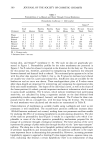
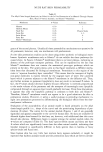
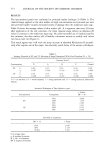
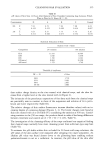
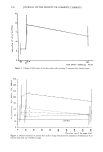
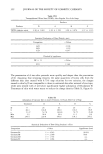
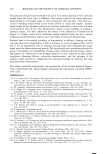
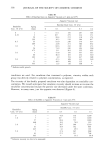
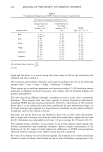
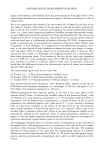
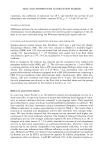
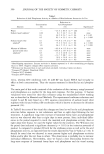
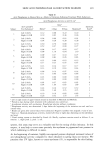
SKIN ACID PHOSPHATASE AS IRRITATION MARKER 391 Table II Acid Phosphatase in Human Skin as a Marker of Irritation Following Treatment With Surfactants Acid Phosphatase Activity in mU/10 cm 2 After e Site a (periodb)/ Erythema Subject Test Substance c Before d 4 Days 8 Days Maximum f Score g Left (3.0)/A 0.12 0.08 0.22 0.22 3 1 Right (3.0)/B 0.19 0.02 0.46 0.46 2 Left (3.0)/A 0.04 0.00 0.01 0.01 1 2 Right (3.0)/B 0.04 0.28 0.28 0.28 3 Left (3.5)/A 0.50 0.70 0.68 0.70 3 3 Right (3.5)/B 0.52 0.27 0.00 0.27 1 Left (4.0)/A 0.04 0.17 0.02 0.17 1 4 Right (4.0)/B 0.09 1.19 0.04 1.19 3 Left (4.0)/A 0.09 0.27 0.10 0.27 0 5 Right (4.0)/B 0.09 0.83 0.26 0.83 3 Left (4.0)/A 0.35 0.00 0.12 0.12 1 6 Right (4.0)/B 0.17 0.23 0.55 0.55 3 Left (4.5)/A 0.13 0.14 0.17 0.17 0 7 Right (4.5)/B 0.13 0.19 0.63 0.63 3 Left (5.0)/A 0.06 0.14 0.07 0.14 1 8 Right (5.0)/B 0.11 0.96 0.00 0.96 2 Left (5.0)/A 0.23 0.00 0.00 0.00 0 9 Right (5.0)/B 0.21 0.00 0.00 0.00 1 Left (5.0)/A 0.05 0.57 0.65 0.65 0 10 Right (5.0)/B 0.04 1.69 0.65 1.69 1 Left (5.0)/A 0.24 0.16 0.32 0.32 1 11 Right (5.0)/B 0.26 1.49 2.15 2.15 3 Left (5.0)/A 0.19 0.19 0.82 0.82 1 12 Right (5.0)/B 0.26 0.52 1.35 1.35 2 a Left or right inside of upper forearm treated as described in Materials and Methods. b Period in days during which treatment with surfactants was carried out. c A:surfactant solution with cocobetaine. B:surfactant solution without cocobetaine. a Phosphatase activity was determined 3 days before the beginning of the irritation test and used as a control value. e Results are given after control values were subtracted. Negative numbers were assigned a value of zero. f Same as e. Maximal phosphatase activities, reached after four or eight days depending on the individual, are listed. g Visual scoring system as described by Frosch (4). Briefly, erythema reaction scored as follows: 0, no reaction. 1, slight pink. 2, pink. 3, red. system, this assay may serve as a valuable tool for the rating of skin irritancy. In this respect, it may help to score more precisely the erythema in pigmented test persons in which reddening is difficult to assess. At the beginning of summer, highly sun-exposed persons displayed increased values of acid phosphatase activity compared to those obtained in spring (data not shown). We presume that UV light, known to cause erythema (15), is responsible for this finding.

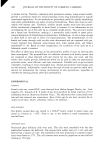
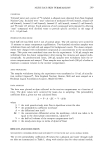
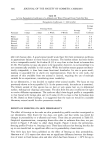
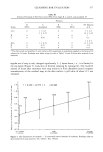
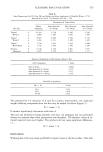
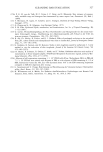
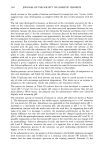
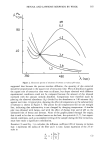
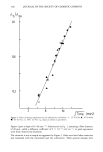
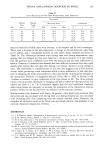
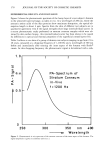
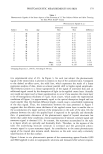
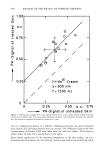
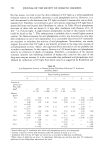
392 JOURNAL OF THE SOCIETY OF COSMETIC CHEMISTS For this reason, we tried to test the direct influence of UV light as a well-standardized irritation source on the possible alteration in acid phosphatase activity. However, it is well documented in the literature that UV light is related to human skin cancer devel- opment (16). Therefore, we switched to an in vitro system consisting of UV light from a germicidal lamp and human skin fibroblasts in culture. In Table III acid phosphatase activities of these cells are shown 0-9 days after irradiation with fluences of 0-45 J/m -2 at 254-nm light. A slight fluence-independent increase in this enzyme activity could be found at day 7. This enhancement is probably due to overall higher protein content. No fluence-response for acid phosphatase activity was detected even nine days after irradiation in our in vitro experiments. It is conceivable that several UV treatments are necessary to stimulate the activity of acid phosphatase. Nevertheless, our results support the notion that UV light is not directly involved in the long-term increase of acid phosphatase activity. Hence, the long-term effects detected in vivo are probably due to indirect mechanisms. In this respect, Prottey et al. (8) found higher acid phosphatase activity as a function of depth of stripping. Therefore, a stimulation of the stratum corneum turnover rate following irritation of human skin could be the cause of the long-term enzyme increase. It is also conceivable that preformed acid phosphatases were released by surfactants or UV light from latent sources as suggested by Rutherford and Table III Acid Phosphatase Activity in Normal Human Fibroblasts Following UV Irradiation (mU/Petri Dish a) Days Following Irradiation a 0 1 2 3 4 7 8 9 Content of protein per Petri dish (tag) b -- 435 455 477 422 662 -- --- 210 ñ 806 ñ 137 ñ 60 + 215 Fluence (J/m2) c 0.0 2.11 1.82 1.44 1.98 2.09 3.44 2.64 --- 0.10 __+ 0.52 ñ 0.03 __ 0.08 1.5 2.48 1.91 2.18 2.04 3.02 3.32 2.12 ___ 0.05 ñ 0.33 3.0 2.43 1.85 1.76 2.11 3.64 3.42 2.30 ñ 0.37 ñ 0.08 6.0 2.15 1.83 1.66 2.23 2.51 4.24 2.19 ñ 0.44 ñ 0.25 ñ 0.7 ñ 0.16 12.0 2.43 1.91 1.69 1.83 2.17 4.05 2.13 ñ 0.20 ñ 0.31 ñ 0.72 ñ 0.06 23.0 -- 1.98 -- -- 1.78 -- -- ñ 0.01 ñ 0.12 45.0 -- 1.81 -- -- 2.02 -- ñ 0.02 ñ 0.22 2.91 ñ 0.26 2.69 3.01 ñ 0.07 3.11 ñ 0.06 3.09 ñ 0.08 a Period following UV irradiation after which acid phosphatase activity was determined. b Content of protein in Petri dish determined after the method of Lowry et al. (11). c Irradiation with 254-nm UV light was carried out as described in Materials and Methods. a Mean values of duplicates are given. In experiments following one and four days after UV irradiation, duplicates of two independent experiments are listed.
Purchased for the exclusive use of nofirst nolast (unknown)
From: SCC Media Library & Resource Center (library.scconline.org)