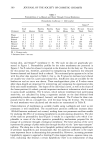
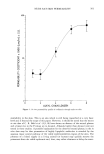
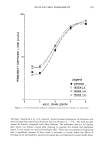
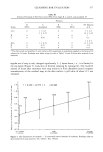
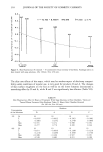
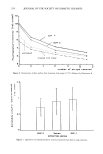
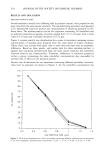
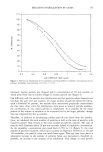
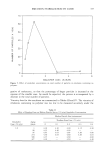
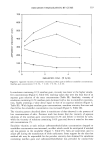
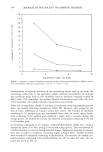
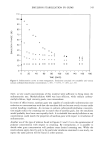
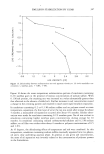
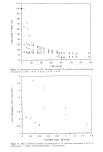
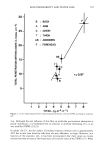
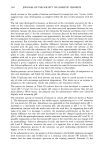
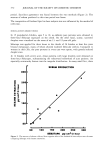
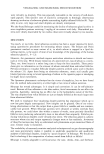
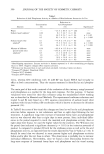
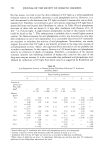
NUDE RAT SKIN PERMEABILITY 305 lOO o o o x 10' Legend ß UNFROZEN 0 FROZEN 2 d [] FROZEN 1 wk A FROZEN 1 mo 0 2 4 6 8 ALKYL CHAIN LENGTH Figure 3. In vitro permeability profile of n-alkanols in the nude rat: Unfrozen vs. frozen skin. 466 days. Swarbrick et al. (12), however, found increased absorption of chromone acid after freezing three specimens of human skin for 60 hours at - 17øC. The nude rat data cannot be directly compared with these findings. The published data are for human skin which was further treated after thawing to separate the dermal and epidermal layers. In our studies we used full-thickness skin. These data are presented recognizing that a significant amount of basic work is necessary to clearly define the effects of freezing on the permeability patterns of human skin and laboratory animal model skins.

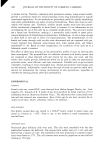
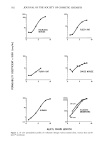
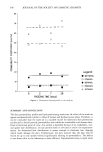
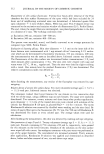
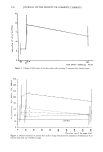
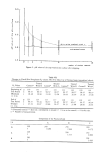
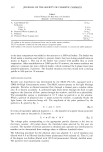
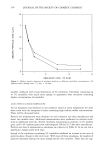
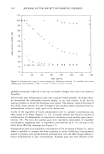
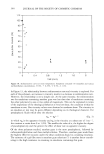
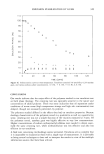
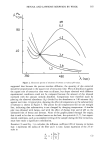
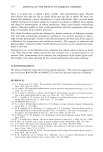
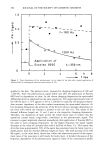
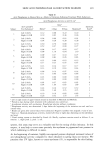
306 JOURNAL OF THE SOCIETY OF COSMETIC CHEMISTS 80- J 70- 60 50 40- 30- 20- 10- FREEZING TIME (days) Figure 4. Permeation freezing profile in the nude rat. Legend ß METHANOL [] ETHANOL ß BUTANOL ¸ HEXANOL A OCTANOL SUMMARY AND CONCLUSION The skin permeability profile and lipid partitioning sensitivity (m-value) of the nude rat appear mechanistically similar to those of human and hairless mouse skins. Therefore, it can be concluded that the nude rat is a suitable model for laboratory skin permeation studies and it should provide permeability data which are correlatable with human data. From a functional point of view, this animal is desirable because of its availability, size, and sparse hair distribution. Its size permits both in vitro and in situ/in vivo experimen- tation. Its abdominal hair distribution is sparse enough to eliminate hair clipping which could damage the skin. Furthermore, the data indicate that the skin may be frozen for up to one month without significantly altering its permeability. The ability to use frozen skin in the laboratory is more efficient. Experimental setup is rapid when
Purchased for the exclusive use of nofirst nolast (unknown)
From: SCC Media Library & Resource Center (library.scconline.org)