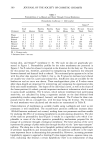
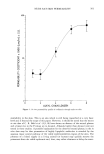
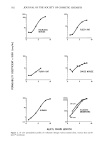
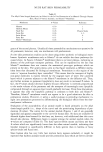
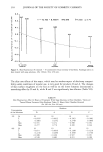
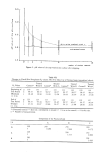
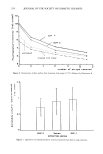
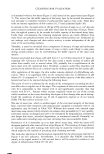
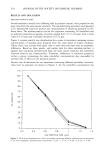
SKIN ACID PHOSPHATASE AS IRRITATION MARKER 389 conditions, the coefficient of extinction was 18.5, and therefore the activity of acid phosphatase was calculated as follows: measured O.D.4o 5 X 5.4 mU/10 cm 2 (9). STATISTICAL METHODS Differences between the test substances as assessed by the visual scoring system or the determination of acid phosphatase activity were tested by paired comparison of the test areas in the same individual using the Wilcoxon matched-pair signed rank test. CULTURING AND IRRADIATION CONDITIONS OF HUMAN SKIN FIBROBLASTS Foreskin-derived normal human skin fibroblasts 3229 were a gift from Dr. Robert Zimmerman (Boston, MA). The cells were cultured in Dulbecco's modified Eagle's medium (DME) with 10% heat-inactivated fetal calf serum (Gibco) as described pre- viously (10). Approximately 3 x 10⁵ fibroblasts were seeded into 6-cm Petri dishes and allowed to grow in a 37øC 5% CO2 incubator for 5-6 days at which time they were confluent. Prior to irradiation the medium was removed and the monolayers were washed with phosphate-buffered saline (PBS), pH 7.2. The cells were irradiated in 1.2 ml of PBS on a rotating platform with light from a 6W germicidal lamp (Philips) under sterile con- ditions. The yielding fluence rate of 0.15 W/m -2 was determined with a IL770A germicidal/erythemal radiometer equipped with a SEE 400 photodetector containing a NBS 254-nm interference filter (International Light, Newburyport, MA). After irra- diation, cells were incubated with fresh medium for 0-9 days. The determination of the acid phosphatase was directly in the Petri dish as described above and the protein concentration was measured by the method of Lowry et al. (11). RESULTS AND DISCUSSION In a previous report Protrey et al. (8) observed reduced acid phosphatase activity as a short-term effect in tape-strip biopsies of human skin following hand-dipping of volun- teers in various surfactant solutions compared to pre-dipping values. They employed spectrofluorimetric assays involving 4-methylumbelliferyl phosphate as substrate. We have extended this basic experiment using p-nitrophenyl phosphate as substrate with different surfactants at various concentrations as listed in Table I. Our results show a reduction of lysosomal acid phosphatase activity after treatment with stronger surfac- rants. We have further observed that this enzyme activity decreased with higher con- centrations of the tested surfactant solutions. Our finding of enhanced reduction of acid phosphatase activity with stronger surfactants supports the data of Protrey et al. (8). It disagrees with other reports (2,7,12) which described an increase of acid phosphatase activity in short-term experiments on surfactant-treated skin. However, these test systems may be not directly comparable to our experimental conditions. It is also con- ceivable that some substances have different influences on the activity of acid phospha- rase. Hiibscher and West (13) observed that mammalian acid phosphatase was inhibited by fluoride but not by EDTA and found the opposite for alkaline phosphatase. In our experiments (data not shown), 2 mM KF inhibited 10% of the measured enzyme ac-

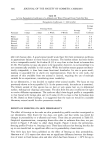
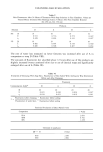
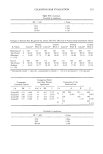
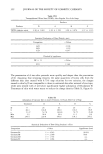
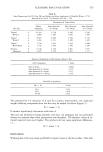
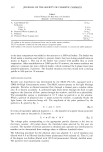
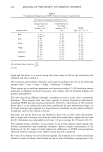
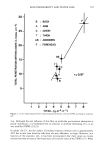
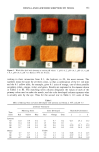
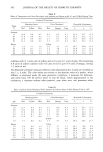
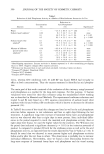
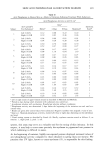
390 JOURNAL OF THE SOCIETY OF COSMETIC CHEMISTS Table I Reduction of Acid Phosphatase Activity as a Marker of Skin-Surfactant Interaction In Vivo Reduction in Concentration Acid Phosphatase • Solution (%) (%) Significance b Water -- -23.4 --- 85.9 (n = 120) -- Sodium lauryl sulphate c 0.01 8.1 -+ 22.7 (n = 10) none 0.1 62.5 --- 53.7 (n = 10) p = 0.05 0.5 83.1 --- 23.3 (n = 10) p = 0.001 Sodium lauryl ether 0.1 -75.8 --- 174.2 (n = 10) none sulphate a 0.5 75.2 --- 30.2 (n = 10) p = 0.001 1.0 64.3 -+ 15.3 (n = 10) p = 0.001 Mixture of different 0.01 -83.6 --- 115.9 (n = 10) none special lauryl ether 0.1 - 143.0 --- 357.9 (n = 10) none sulphates e 0.5 13.2 --- 49.8 (n = 10) none 1.0 -14.7 -+ 88.7 (n = 10) none 5.0 18.4 q- 56.0 (n = 10) none 7.5 19.7 -+ 44.0 (n = 10) none • Hand-dipping experiment. Enzyme activities in htuTmns expressed in % after normalizing pre-dipping values to 100%. Negative changes reflect enzyme activation. b Wilcoxon test for paired data in each individual calculated. Individual values not shown. c Texapon Z © (Henkel, DiSsseldorf, FRG). a Texapon N25 © (Henkel). e Texapon ASV © (Henkel). tivity, whereas 60% inhibition with 10 mM KF was found EDTA had virtually no effect at both concentrations. Thus the enzyme measured is identified as acid phospha- tase. The main goal of this work consisted of the evaluation of skin irritancy using lysosomal acid phosphatase as a marker for the long-term response. For this purpose, 12 human volunteers were tested for their skin tolerance using the standardized elbow washing test as described in Materials and Methods. The experimental surfactant solutions used (coded A and B) were based on a 20% aqueous concentration of sodium lauryl ether sulphate with (A) and without (B) cocobetaine which is known to decrease the irritation potential (14). In Table II the scores of the visual skin changes are listed as well as the acid phosphatase activities before exposure to test substances and four or eight days following the last treatment. A significant long-term increase of lysosomal horny layer acid phosphatase activity was observed after four or eight days in most persons. Since individual differ- ences in the period required to reach the maximal acid phosphatase activity (four or eight days) were found, we used the higher values for the statistics. The Wilcoxon test for paired data indicated a significant decrease (p = 0.01) in the irritation potential of product A compared to product B both for the erythema scores as well as for the acid phosphatase activity, as expected from the results reported by Van de Valk et al. (14). It should be noted that we observed in some persons higher acid phosphatase activities before and/or after the test than in others. This observation is probably due to intrinsic individual differences. Nevertheless, since we found a close relationship between the long-term response of lysosomal horny layer acid phosphatase and the visual scoring
Purchased for the exclusive use of nofirst nolast (unknown)
From: SCC Media Library & Resource Center (library.scconline.org)