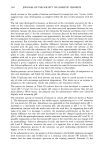
EMULSION STABILIZATION BY GUMS 331 and sodium sulfate (J. T. Baker Chemical Co., Phillipsburg, N J) were analytical grade reagents. All chemicals were used as received. GLASSWARE All glassware used in these experiments was washed thoroughly, rinsed at least twice with tap water, and at least once with distilled water before use. Glassware for sedimen- tation testing and for storage was sterilized in boiling water for at least 2 minutes to avoid mold growth. Scrupulous care was taken with the beakers and paddles of mixers that were used in the preparation of the reaction vessels. They were washed and rinsed as described, immersed in an ultrasound bath for 10 minutes, and then rinsed with filtered distilled water to insure that no residual material from the washing steps re- mained. PREPARATION OF PRESERVED WATER Preserved water was prepared by dissolving 0.18% methylparaban and 0.02% propyl- paraban in distilled water at around 60 to 65øC with constant stirring. Higher tempera- tures were avoided to prevent hydrolysis. PREPARATION OF STOCK SOLUTIONS A 1% (w/w) xanthan gum stock solution was prepared by sprinkling the dry powder slowly into the vortex of vigorously agitated preserved water. This technique provided good dispersion and the gum went into solution rapidly. Mixing was continued until all powder was thoroughly wetted and the mixture was smooth. The polymer solution was allowed to stand at room temperature for 24 hours before using. A 3% (w/w) sodium carboxymethylcellulose solution was prepared the same way as described above. A 1.851% (w/w) methylcellulose solution was prepared by mixing the dry powder thoroughly with V3 of the required total volume of preserved water at 80 to 90øC. Mixing was continued until all particles were thoroughly wetted. The remainder of the preserved water required was added cold. Agitation was continued until the mixture was smooth. The product was then cooled to 0 to 5øC for about 30 minutes. All polymer solutions were kept for 24 hours at room temperature before use to insure complete hydration. A 10% (w/w) sodium sulfate solution was prepared by dissolving the required amount of sodium sulfate in preserved water presaturated with mineral oil. The solution, which was freshly prepared when needed, was then passed through a 0.22-micron millipore membrane filter. PREPARATION OF MASTER EMULSION The master emulsion was prepared in a Gifford-Wood Homomixer model 1L-75 (J. W. Greer, Inc., Wilmington, Massachusetts). The general formula for the oil-in-water emulsion containing 1% (w/w) emulsifier concentration is shown in Table I. The sur- factants were dissolved in the oil phase which was warmed to 45øC. The water (a-phase)

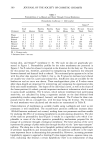
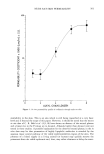
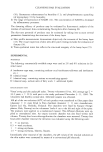
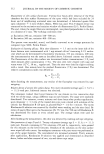
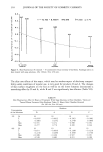
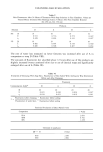
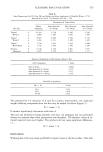
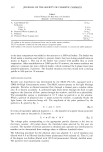
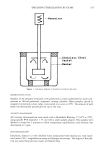
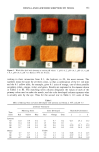
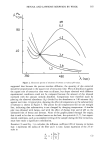
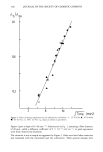
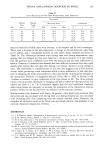
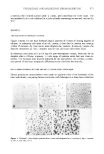
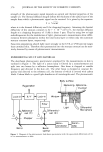
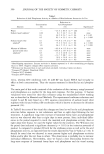
332 JOURNAL OF THE SOCIETY OF COSMETIC CHEMISTS Table I General Formula for Non-Ionic o/w Emulsion (Example: 1.0% Emulsifier) A. Light Mineral Oil 10.0 g Surfactants Volpo 3 0.41 g Volpo 10 0.59 g B. Preserved Water (a-phase [i]) 39.0 g C. Polymers 0-1.5 % [ii] D. Preserved Water (b-phase [iii]) 50.0 g 100.0 g [i] a-phase is the amount of preserved water used to make master emulsion. [ii] % of polymer is based on the total amount of aqueous phase. [iii] b-phase is the amount of preserved water added to master emulsion. It contains all added polymers. at the same temperature was added to the mixture in a 2000-ml beaker. The beaker was fitted inside a stainless steel jacket to prevent drastic heat loss during emulsification as shown in Figure 1. The top of the beaker was covered with paraffin film to avoid evaporation. After emulsification at 2000 rpm for 20 minutes, the master emulsion was added at a constant rate into a 400-ml beaker, which contained the b-phase (water plus dissolved polymers, if present). The finished emulsion was then mixed with a rotating paddle at 100 rpm for 10 minutes. P^•tT•CLE S•ZE ^N^L¾S•S Particle size distribution was determined by the HIAC PC-320, equipped with a CMH-60 High Concentration sensor. The HIAC sensors operate on the light blockage principle. Particles in diluted emulsion flow through a channel past a window whose area 'A' is known accurately. A collimated light beam shines through the fluid at right angles to the direction of flow, passes through the window, and falls on a photodiode. The preamplifier output is maintained at 10 V when no particle is in the window. When a particle of projected area 'a' passes across the window, it partially blocks the light beam, the reduction being a/A. The amplitude of the pulse produced by the particle is E, given by Eq. 1, E = a/A X 10 V (Eq.1) In terms of equivalent spherical diameter, i.e., the diameter of a sphere whose projected area is the same as the particle, E becomes E = •r d2/4A x 10 V (Eq. 2) The voltage pulse corresponding to the appropriate particle diameter is fed into an electronic counter. All pulses above the threshold value selected by the user are counted. The number of oversize particles is obtained and a particle size distribution by number can be determined from readings taken at different threshold values. The following procedure for the dilution steps was adopted: 0.1 ml of emulsion was diluted with 9.9 ml filtered distilled water presaturated with mineral oil. Then 0.2 ml of the aliquot was further diluted with 199.8 ml presaturated, filtered, distilled water. The particles were immediately counted.
Purchased for the exclusive use of nofirst nolast (unknown)
From: SCC Media Library & Resource Center (library.scconline.org)