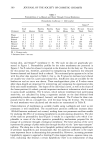
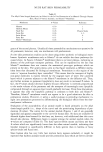
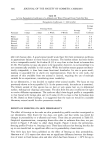
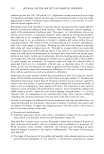
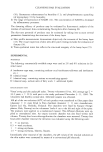
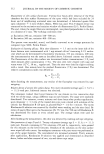
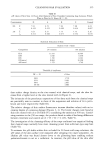
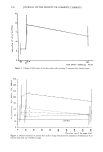
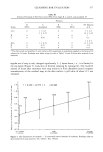
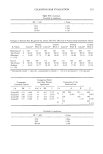
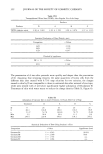
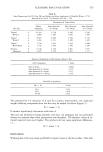
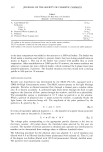
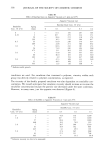
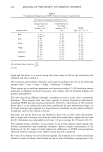
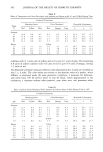
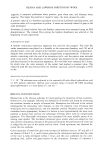
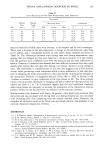
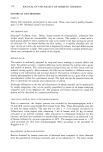
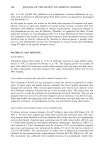
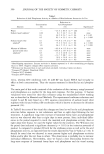
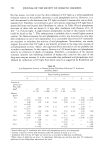
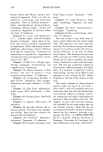
362 JOURNAL OF THE SOCIETY OF COSMETIC CHEMISTS Table II Effect of Temperature on Colors Developed with Lawsone and Henna at pH 4.5 and 30 Min Dyeing Time Lovibond Tintometer Matching Series Color Developed Hunterlab Colorimeter Temp øC Red Yellow Blue Red Orange Gray L a b Lawsone 15 10.0 9.6 0.1 0.4 9.5 0.1 53.4 25.7 12.5 30 11.0 9.9 0.2 1.1 9.7 0.2 42.3 24.2 13.2 40 12.6 9.9 0.2 2.7 9.7 0.2 41.9 26.4 13.0 50 13.2 9.9 0.2 3.3 9.7 0.2 40.1 25.2 11.2 Henna Yellow 15 4.5 7.1 1.0 2.6 3.5 1.0 50.7 10.8 14.5 30 4.9 8.1 1.1 3.2 3.8 1.1 44.8 11.4 12.5 40 6.4 8.5 2.2 2.1 4.2 2.2 43.8 11.7 11.9 50 6.6 9.6 2.4 3.0 4.2 2.4 41.0 11.0 10.2 combine with 0.1 units each of yellow and red to give 0.1 units of gray. The remaining 9.8 units of yellow combine with 9.8 units of red to give 9.8 units of orange, leaving 1.5 units of red. The Hunterlab colorimeter measures reflected color photometrically. Colors are recorded on the L, a, b scale. The color values are relative to the absolute value of a perfect, white diffuser, as measured under the same geometric conditions. L measures the lightness, and varies from 100 for perfect white to zero for black, which approximates to eye evaluation a measures redness when positive, gray when zero, and greenness when Table III Effect of pH on Colors Developed With Lawsone and Henna After 30 Min Dyeing Time at 30øC Lovibond Tintometer Matching Series Color Developed Hunterlab Colorimeter pH Red Yellow Blue Red Orange Gray L a b Lawsone 3.0 13.1 9.4 0.4 3.7 9.0 0.4 41.1 26.3 12.2 4.0 14.2 9.8 0.3 4.4 9.5 0.3 41.5 27.7 12.7 4.5 11.0 9.9 0.2 1.1 9.7 0.2 42.3 24.2 13.2 5.0 13.4 8.7 0.2 4.7 8.5 0.2 41.9 26.9 13.2 6.0 11.4 9.7 0.0 1.7 9.7 0.0 45.0 26.5 15.8 Yellow 7.0 5.7 8.0 0.2 2.3 5.5 0.2 58.5 18.5 21.7 Henna Yellow 3.0 6.4 9.6 3.3 3.2 3.1 3.3 40.1 8.6 8.5 4.0 7.3 10.0 4.0 2.7 3.3 4.0 38.9 8.8 8.0 4.5 7.6 10.0 4.0 3.6 2.4 4.0 44.8 11.4 12.5 5.0 7.1 10.0 3.0 2.9 4.1 3.0 43.5 9.5 10.7 6.0 7.0 9.5 3.2 2.5 3.8 3.2 44.7 11.2 11.8 7.0 6.4 9.2 2.0 2.8 4.4 2.0 46.0 12.2 13.6

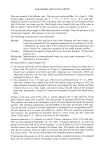
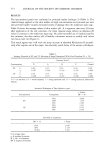
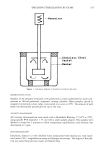
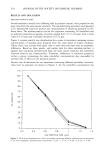
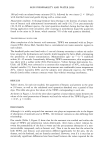
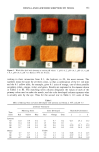
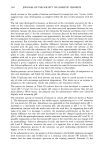
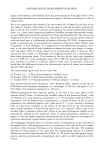
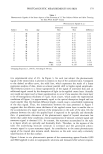
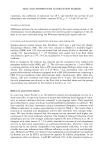
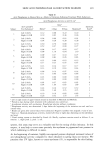
HENNA AND LAWSONE SORPTION BY WOOL 363 negative b measures yellowness when positive, gray when zero, and blueness when negative. The larger the positive or negative value, the more intense the color. A positive value of a is therefore equivalent to red in the Lovibond matching series, and a positive value of b is equivalent to yellow. L values are inversely related to gray in the color developed. Absorbances of colored solutions from the Soxhlet extractions were measured using an EEL absorptiometer. The colored filter giving the highest absorbance was selected at the beginning of each experiment. SUBSTANTIVITY TESTS A Soxhlet continuous extraction apparatus was used for this purpose. The wool felt under examination was placed in a thimble in the extraction chamber, and 150 ml of distilled water, twice the volume of the thimble, poured into the boiling compartment. Samples were removed from the boiling compartment at approximately 15-minute in- tervals, coinciding with the end of an extraction cycle, and the precise time recorded with a stop watch. The absorbance of each sample was measured on the absorptiometer and then returned to the extraction apparatus. All wool felts were extracted for 2 hours, by which time the color intensity of the extract had reached a constant value. The extracted wool felt was removed from the thimble, squeezed, and left overnight at 50øC to dry. INFLUENCE OF pH ON ELECTRONIC SPECTRA 5 X 10 -5 M solutions were adjusted to the required pH with dilute hydrochloric acid or 10% sodium carbonate. Spectra were scanned using a Unicam SP 1800 recording spectrophotometer at a scan speed of 2 nm sec-• RESULTS AND DISCUSSION Human hair is the obvious substrate for investigating the properties of hair cosmetics. Forestier (1), for example, followed the absorption of lawsone and henna by measuring the resultant increase in weight of human hair. Absorption was followed in the current investigation by measuring color changes, so that the inherent color of human hair would give rise to complications, and was therefore avoided. Bleached lambs' wool was considered more appropriate, because it is known to have approximately the same com- position as human hair and has the advantage of being white with no complicating pigments. The Hunterlab colorimeter was considered the more reliable means of as- sessing color uptake. The Lovibond tintometer gives results which are subjective, but was used for comparison, because in the practical situation the performance of a hair dye is judged by the eyes of the stylist and his client. Good agreement was obtained be- tween the two methods. Color intensities of wool felts dyed with lawsone for different times at 30 ø and pH 4.5 are shown in Table I. L, a, and b values given by the colorimeter indicate that the color of the wool is fully developed within 1 hour, and this was confirmed by the corre- sponding (red, yellow and gray) results on the tintometer. Forestier (1) observed a
Purchased for the exclusive use of nofirst nolast (unknown)
From: SCC Media Library & Resource Center (library.scconline.org)