j. Soc. Cosmet. Chem., 37, 369-374 (September/October 1986) $ebutape' A device for visualizing and measuring human sebaceous secretion ALBERT M. KLIGMAN, DAVID L. MILLER, and KENNETH J. McGINLEY University of Pennsylvania School of Medicine, Department of Dermatology, Philadelphia, PA 19104 (A.M.K., K.J.M), and CuDerm Corporation, P.O. Box 801413, Dallas, TX 75380 (D.L.M.). Received March 31, 1986 Synopsis Current methods of determining sebum production do not enable visualization of the droplets produced by individual follicles. Sebutape furnishes a means of obtaining sebum pore patterns. The tape is a hydro- phobic adhesive film with innumerable tiny cavities which trap sebum as it issues from each follicular orifice. The pore pattern provides a permanent record of size and distribution of sebum droplets which can be quantified speedily by computerized image analysis. Additionally, the tape can be extracted with hexane for analysis of lipid components by thin layer chroma- tography and for determination of sebum output gravimetrically. Pore patterns vary in various parts of the body, with age, sex, and disease. Sebutape is convenient for estimating the effect of topical and oral drugs which influence the physiology of the sebaceous glands. INTRODUCTION The measurement of sebum production in humans most often depends on a gravimetric method in which the sebum is trapped in an absorbing matrix (for example, cigarette paper), from which it is subsequently extracted and analyzed (1). Sebum output can also be estimated optically by the way droplets collected on ground glass alter the transmis- sion of light (2). The lipometer is a recently introduced, commercially available device which simplifies and standardizes the optical assessment (3, 4). These techniques permit estimation of the total quantity of sebum produced per unit area for a given time period. The production of droplets from individual follicles cannot be monitored. In this paper we describe a sebum-sensitive adhesive film (Sebutape ©) which not only allows measurement of sebum production but also displays the output from individual follicles, as well as revealing overall droplet patterns. 369

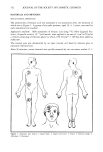
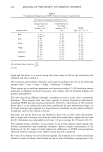
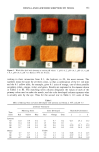
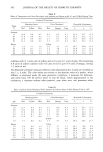
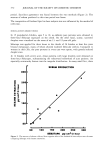
370 JOURNAL OF THE SOCIETY OF COSMETIC CHEMISTS MATERIALS AND METHODS SUBJECTS Nearly 400 volunteers participated in this study. These were mostly healthy females, ages 5 to 88. Informed consent was obtained. THE ADHESIVE FILM Sebutape © (CuDerm, Corp., Dallas, Texas) consists of a hydrophobic, polymeric film within which there are innumerable, tiny air cavities. The surface is coated with a lipid-porous adhesive which enables the tape to be sealed to the skin during the period of collection (5). As sebum reaches the skin surface, it is rapidly absorbed into the tape. As the air within the microcavities is displaced by sebum, the lipid-filled cavities become transparent to light. The output from each follicle forms a sharply defined spot, whose size corresponds to the volume of the droplet. METHOD OF USE The surface is ordinarily prepared by soap and water washing to remove debris and lipid. For greater accuracy, complete defatting can be obtained by wiping with a gauze pad soaked in hexane. The collection period ranged from one to three hours with the subjects sitting quietly. After removal, the film can be handled in different ways ac- cording to the information and precision desired. The pattern of droplets can be imme- diately photographed or the adhesive film may be smoothed out on a glass slide or other non-absorbent surface for a permanent record. The lipid can also be extracted from the film to determine the amount and composition of sebum. Although differences in the size and distribution of sebum droplets can be appreciated by simple inspection, they can be quickly quantified by means of an image analyzing computer such as the Magiscan (6). The program and results obtained by using this system will be described in a separate publication. ANALYSIS OF LIPIDS BY THIN-LATER CHROMATOGRAPHY Prior to extraction, the droplet pattern was recorded by macrophotography with a 35-mm SLR camera using Kodak Hi-Contrast Copy Film. These photographs may also be used for image analysis. The tape was cut into 2 X 2-cm squares and placed in Teflon-lined, screw-capped vials containing 2 ml of hexane with 50 •g of methyl nervonate as an internal standard. After sonication in a Bransome Sonicator for five minutes, the fluid was transferred to another flask and resonicated in an additional 2 ml of hexane followed by vacuum evaporation at 40øC. The samples were stored at -20 ø until processed for thin layer chromatography (TLC) according to the procedure of Ruggieri et al. (7). MEASUREMENT OF SEBUM PRODUCTION Results obtained by hexane extraction of Sebutape were compared to those obtained with the gravimetric technique routinely used in our laboratory (7). The latter entails
Purchased for the exclusive use of nofirst nolast (unknown)
From: SCC Media Library & Resource Center (library.scconline.org)