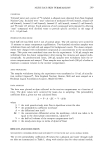
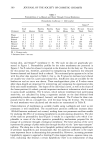
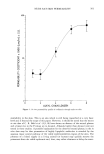
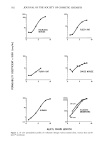
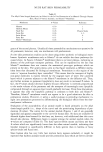
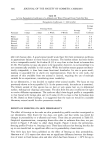
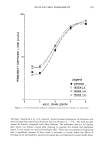
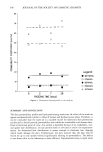
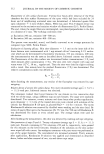
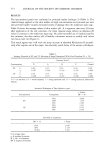
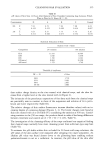
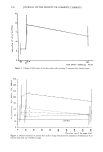
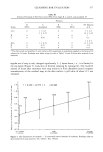
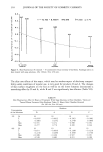
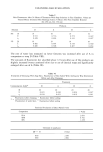
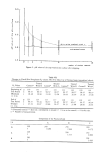
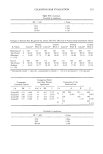
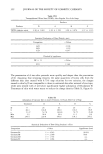
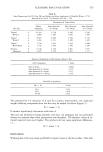
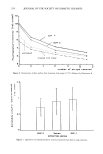
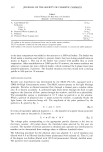
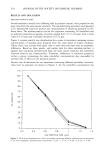
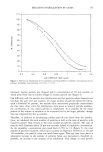
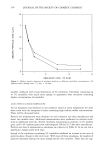
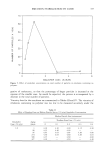
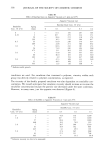
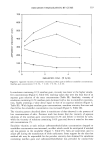
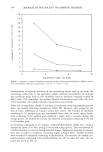
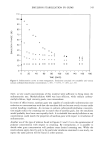
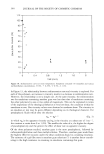
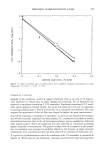
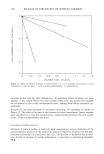
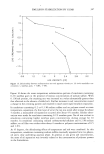
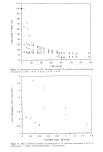
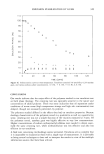
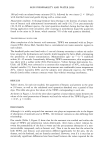
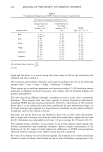
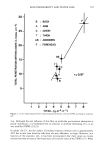
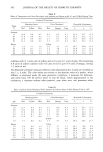
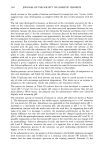
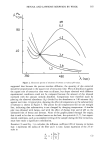
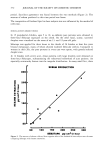
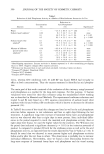
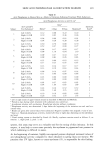
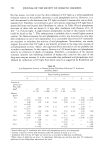
300 JOURNAL OF THE SOCIETY OF COSMETIC CHEMISTS Table I Permeabilities of n-Alkanols and Water Through Various Membranes Permeability Coefficient x 1000 (cm/hr) Skin Silastic © Nude Permeant Rat Hairless Hairless Fuzzy Swiss Furry 80 mcm 50 mcm Human Mouse Rat Rat Mouse Rat Thick Thick Water 4.2 Methanol 4.4 Ethanol 4.2 Butanol 14.2 Hexanol 47.7 Octanol 59.0 Reference: PS 0.5 2.3 -- 11.7 -- 3.4 -- 0.5 3.6 -- 1.8 7.7 2.4 33 -- 0.8 3.4 1.0 2.0 4.7 2.4* 60 94 2.5 13.5 2.4 7.4 14.6 4.8 203 360 13.0 63.8 -- 21.8 19.0 9.4 764 970 52.0 114.9 30.0 30.8 25.5 -- 1260 1320 1 2 3 4,5 6 7 8 8 PS = Present study. * Estimated data--see text. human skin, and Silastic © membrane (1-8). The nude rat data are graphically pre- sented in Figure 1. Permeability profiles for the other membranes are presented in Figure 2. No P-value for ethanol is reported in the literature for the furry rat. The curve for this animal was, therefore, generated by extrapolating the regression line obtained between hexanol and butanol back to ethanol. This estimated point appears to be in line with the other data reported in Table I that is, the P-values for methanol and ethanol are usually very close for a particular animal skin. Insufficient data are available for the hairless rat and no curve was drawn. These semilogarithmic plots of P-values versus alkyl chain-length are important for interpreting and comparing the experimental data from each model membrane. The shapes of the individual curves, as well as the slopes of the linear portions (x-values), provide important mechanistic information which is used to assess model suitability. The x-values, which indicate membrane lipid partitioning sensitivity, are calculated by doing a regression analysis on the data obtained from permeability studies using ethanol, butanol, and hexanol. The P-values for these com- pounds tend to fall on a straight line, with the slope being the x-value. The w-values for each membrane were calculated and the results are summarized in Table II. Characterization of membranes as suitable models using n-alkanols and water as test permeants is well established. The octanol/water partition coefficient increases about 100-fold between methanol and octanol, making these test permeants excellent models for studying the effect of increasing lipophilicity on percutaneous absorption. The plot of the nude rat permeability data (Figure 1) results in a sigmoidal curve which is ex- plainable in terms of the three operative permeability mechanisms proposed for the passage of a permeant through a biological membrane. The lower plateau of the curve represents the passage of polar molecules through the skin via the "pore-type transport" pathway. The sharp rise in the curve (lipophilic pathway) reflects increasing significance of permeant lipophilicity and demonstrates that the partition coefficient is the single most important factor in determining skin permeability. However, increasing permeant lipophilicity appears to approach a limiting P-value (upper plateau-aqueous tissue con- trol), indicating that beyond a certain lipophilicity there is no enhancement of drug

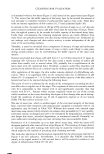
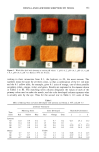
NUDE RAT SKIN PERMEABILITY 301 100- o o o 7 o m 10 ÷ ] I i i 0 2 4 6 ALKYL CHAIN LENGTH Figure 1. In vitro permeability profile of n-alkanols through nude rat skin. availability to the skin. This is an area which is still being researched at a very basic level and is beyond the scope of this paper. However, it should be noted that the recent in situ data of C. R. Behl et al. (4,9, 10) have shown an absence of the second plateau and a linear rise in the P-values up to decanol. Alkanols higher than decanol were not tested in these studies. A possible explanation for the observed second plateau in the in vitro data may be that permeation of highly lipophilic molecules is retarded by the aqueous tissue control pathway of the viable epidermis/dermis region of the skin. The presence of a blood supply in a living animal (or human) may quickly remove the permeants from the viable epidermis and, thus, may either eliminate or delay the emer-
Purchased for the exclusive use of nofirst nolast (unknown)
From: SCC Media Library & Resource Center (library.scconline.org)