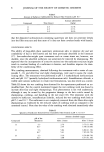
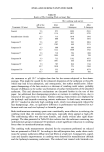
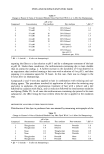
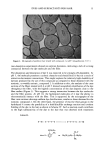
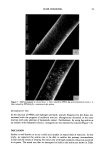
POLYMER/SURFACTANT GELLING STRUCTURES 23 systems, they were diluted fivefold. In preparing compositions for rheological study at the higher polymer concentration, special precautions were necessary to remove all air bubbles entrained during preparation. This generally involved letting the samples stand for at least a day and "deaerating" several times by connecting the containing vessel to a vacuum. Likewise, great care was taken in loading the specimen into the outer cylin- drical element of the rheometer and squeezing it into the annular space between the outer and inner cylindrical elements. Sample preparation for SEM studies was as follows: 1% polymer (JR30M) and 1% polymer with 0.1% surfactant (SDS) solutions were used. Samples were prepared by placing a small amount of each solution on a separate aluminum stub, which is a standard mounting device for SEM examination. One AI stub with the sample was positioned in the bottom of a small flask, and the flask was submerged in liquid N2 until it was frozen, involving a minimum of 5 minutes. The frozen sample was then dried in vacuo for at least 2 hours. The A1 stub carrying the sample was removed from the flask, coated with Au, and examined in the SEM at 20 kV. In keeping with the rationale given above, most of the rheological work was done in the oscillatory mode. The frequency (f) range was 0.001 Hz to 10 Hz, and the parameters G*, G', G" and • were automatically plotted as a function of to (2xf). In the same way, viscosity O'l) and shear stress (x) were plotted for some systems. It was confirmed that the measurements were in the linear range, i.e., where the derived parameters were independent of the strain values chosen. For some of the systems a simple stress relax- ation experiment was carried out. Here the sample was rapidly subjected to a strain and then the decay of stress was monitored periodically over a 20-minute period. EQUIPMENT All rheological measurements were done with the Bohlin VOR Rheometer at room temperature (25øC). The scanning electron microscope used was a Cambridge Model S-250. CHEMICALS The different grades of Polyquaternium-10 cationic cellulosic used, viz., UCARE Polymers JR30M, LR30M, JR400, LR400, and an experimental product, HR 400, are products of Union Carbide Corporation. In this series the suffix refers to an aqueous solution viscosity and therefore is a molecular weight index, with 30 M 400. The designations H, J, and L refer to the degree of cationic substitution (CS) of the cationic cellulosic and follow the sequence H J L. An ethoxylated methyl glucoside qua- ternary was supplied by Amerchol. The surfactants used, together with their suppliers, are as follows: SDS--sodium dodecyl sulfate (EM Industries) SLES-2,3--sodium lauryl diethoxy, triethoxy sulfate (Standapol ES-2, ES-3, Henkel Corp.) SDDBS--so- dium dodecylbezenesulfonate (Pfaltz and Bauer) AOT--dioctyl sodium sulfosuccinate (Aerosol OT, American Cyanamid) CTAB--cetyltrimethyl ammonium bromide (Fluka) sodium salicylate (Aldrich). The polyanion used, viz. CMC--carboxymethyl cellulose, sodium salt (Polysciences)-- was of molecular weight 700,000. RHEOLOGICAL TEST RESULTS It was discovered (9) many years ago that dilute solutions of the surfactant cetyltri-

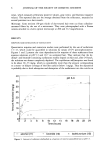
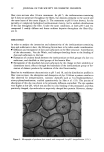
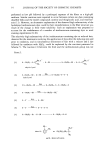
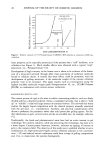
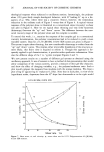
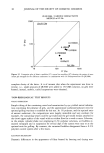
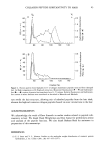
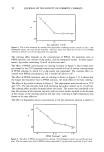
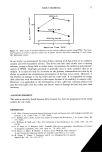
24 JOURNAL OF THE SOCIETY OF COSMETIC CHEMISTS methylammonium salicylate exhibit pronounced viscoelasticity due to the formation of elongated cylindrical micelles and their interaction to form a pervasive network. We studied the oscillatory rheology of this model gel first and found "classical" behavior, in the sense that it conformed to single-element Maxwellian behavior, i.e., that expected of a spring and dashpot in series. This led to a single relaxation time of--2 seconds where G" and G' cross over (8): at low frequencies the loss modulus G" exceeded the elastic modulus G'. At higher frequencies the viscous element does not have time to respond to the oscillatory displacement and the elastic modulus dominates. Our data were obtained for a 5 % solution of CTAB containing a stoichiometric amount of added sodium salicylate. Turning to the Polyquaternium-10 (JR30M)/anionic systems, we found that for the typical thick gel composition, i% JR30M plus 0. i5% SDS, the elastic modulus domi- nated over the loss modulus over the entire frequency range tested (0.001 to i0 Hz), and no crossover (which would have allowed estimation of a dynamic relaxation time) was encountered (see Figure 4). We tried to simulate the observed behavior theoretically with simulations based on several combinations of springs and dashpots in series and parallel arrangements, but with only partial success. The results of these studies will be published elsewhere. The conclusion can be drawn that the ultimate molecular structure represents one in which there is a combination of chain entanglement (the molecular weight of this "stiff" backboned cellulose polymer approaches a million daltons) and cross-linking by association of the bound surfactant ions, the overall structure presenting a complex 1% JR 30M, 0.15% SDS 500 G * G' 200 S ,• t00. 0.00! 0.0t 0.! Frequency Hz ! io 0.01 Figure 4. Elastic modulus, G', loss modulus, G", phase angle, 6, and dynamic viscosity, x]' versus oscillation frequency for 1% Polyquaternium-10 (JR30M), 0.15% SDS mixture.
Purchased for the exclusive use of nofirst nolast (unknown)
From: SCC Media Library & Resource Center (library.scconline.org)