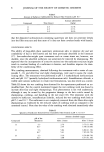
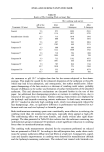
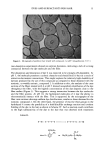
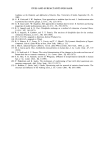
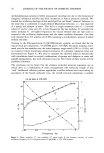
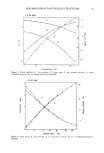
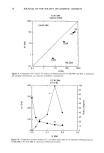
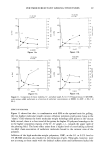
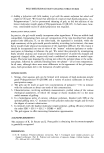
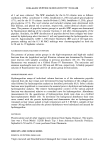
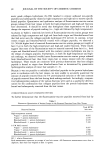
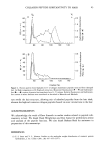
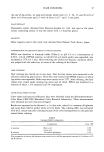
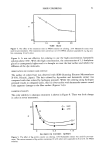
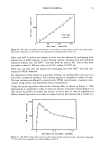
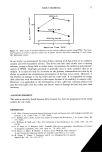
HAIR COLORING 55 ß 200 o o / /0 /0 /0 /0 CI r=o. 995 offO/O p o. o• 50 1 oo 150 Na Cone. (•mol/•) Figure 10. The effect of sodium concentration in the solvent on the elution of silver ions from zeolite. Ag-zeolite containing 2.5 wt% silver was suspended in Carmody buffer at pH 9.8. Silver ions held in zeolite were shown to elute into the solution by exchanging with sodium ions in buffer solution. In hair coloring systems, ammonia ions were dissolved instead of sodium ions. The NH 4+ ions may work the same as Na + ions so that their ion radius is about 0. 100 nm, close to the Na + radius of 0.095 nm. Silver ions can elute into the solution by exchanging ions with NH 4+ ions and cata- lyzing the PPDA oxidation. On application of this system to actual hair coloring, its coloring effect was seen on a level with commercial products. The coloring process is completed in about 30 min. The hair coloring was affected by many factors: PPDA concentration, treatment time, content of Ag-zeolite, and hamamelis extract concentration. Using the excess Ag-zeolite reduced the coloring effect as shown in Figure 5. This phenomenon is considered to relate to silver ion elution. It has been shown (Figure 11) that excess Ag-zeolite decreased the elution of silver ions. It may be explained as follows: Excess Ag-zeolite is not able to suspend well in the solution and it results in a 800 ," 400 o ! I 0.5 1 .0 Ag-Zeolite Content (g/4mt) Figure 11. The effect of Ag-zeolite content on the elution of silver ions from zeolite. Ag-zeolite containing 2.5 wt% silver was suspended in Carmody buffer at pH 9.8.

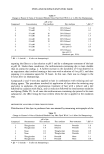
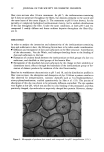
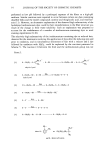
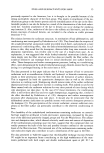
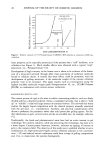
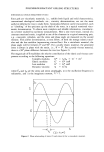
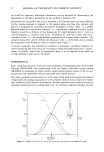
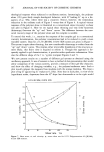
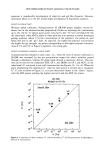
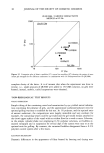
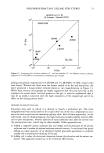
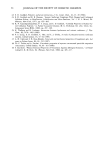
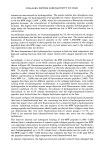
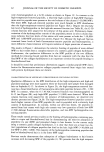
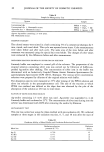
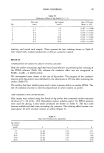
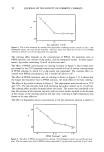
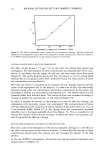
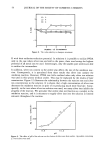
56 JOURNAL OF THE SOCIETY OF COSMETIC CHEMISTS 2.0 1.0 - -_ __ .... ! 1 O0 200 Time (sec) Figure 12. The effect of silver ion concentration on the oxidation reaction. The time-course of the absorp- tion was measured for each concentration of silver. 4.62 mM PPDA solution was used. decrease of the silver ion elution. Thus it is not easy to cause a reaction, a marked tendency in hair coloring systems rather than in solution systems. This is because in the former system, there is a poorer dispersion, owing to hair in the solution, than in the latter system. It is necessary to control the quantity of Ag-zeolite and the composition of the solution in order to prepare good conditions for silver elution from zeolite in the development of hair coloring products. These results show that various levels of coloring can be produced by means of control of these factors. Furthermore, we ventured to use the plant extract containing tannin for increased safety. Tannin is expected to be a coupler because of its polyhydroxy benzene structure which reacts with oxidized PPDA and prevents the formation of Bandrowski base. We have found that hamamelis extract accelerated the polymerization of melanin in a pre- vious study. We used it in our hair dye system as a source of tannin. Mutagenicity by the Ames test consequently decreased. Hamamelis extract lowered the mutagenicity of the reaction of PPDA and hydrogen peroxide alone. Furthermore, the use of Ag-zeolite instead of hydrogen peroxide decreased the mutagenicity and damage to the hair fiber. 2o0, 1.0 4.6 2mM 3.70_.m.•_. __ 200 T•.ne (sec) Figure 13. The effect of PPDA concentration on the oxidation reaction.
Purchased for the exclusive use of nofirst nolast (unknown)
From: SCC Media Library & Resource Center (library.scconline.org)