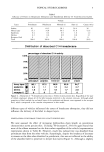
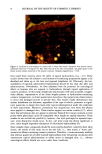
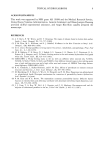
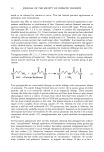
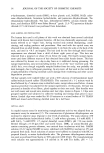
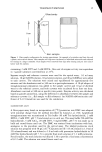
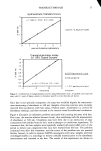
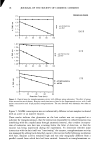
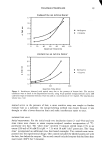
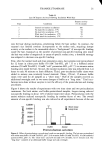
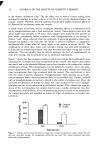
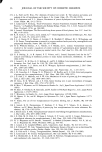
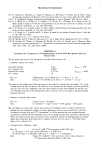
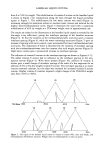
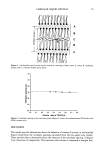
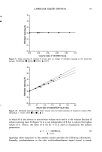
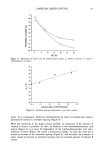
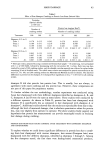
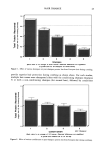
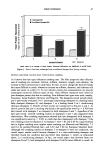
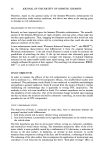
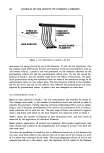
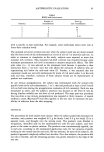
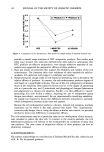
TRANSGLUTAMINASE 17 Hydroxamate Standard Curve 2 0 I ' I ' I ' I ' I ' 0 I 2 3 4 5 pmoles Glutamine Hydroxamate 1 I•mole = z• A525 of 0.528 Transglutaminase Assay 0.1 Unit Sigma Enzyme 1.6 1.4 1.2 1.0 0.8 0.6 0.4 0,2 0.0 , ß , ß , ß 0 10 20 Time (rain) 0.05374 6A/min/O.1 unit 0.528 z•A/l•m ol e 3o = 1.017 i•moles/min/unit of enzyme Figure 2. Confirmation of transglutaminase activity using hydroxamate assay. A standard curve (top) and assay with 0. ! units of Sigma enzyme to determine specific activity (bottom) are shown. Since hair is not optically transparent, the assay was modified slightly for semicontin- uous monitoring of absorbance at 340 nm. Samples of reaction solution were routinely removed from incubation with hair using a Pasteur pipet, transferred to a cuvette for absorbance readings, and then returned to the reaction vessel for additional incubation. Figure 4 illustrates an unforeseen problem associated with running the assay with hair. Over time, the reaction solution became cloudy, thus interfering with the measurement of absorbance at 340 nm. Cloudiness may have been due to an interaction of assay components with residue from the hair, such as shampoo or conditioner ingredients. To counteract this, the hair samples were repeatedly washed with assay buffer over a 24-hr period to remove any components that may have leached from the hair. The problem continued even after this treatment, and the source of the problem was not pursued further. Instead, in order to measure NADH consumption with time, samples were first centrifuged briefly in a microfuge to remove colloidal material prior to the absorbance measurement and returned to the hair. The results of this experiment are shown in

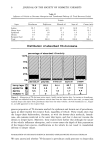
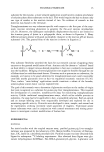
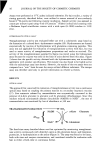
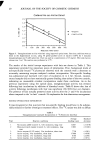
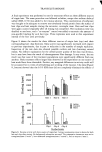
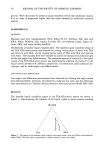
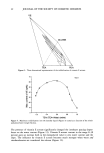
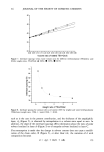
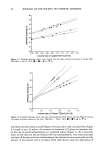
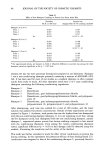
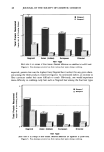
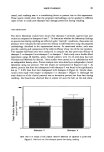
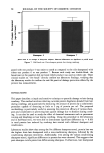
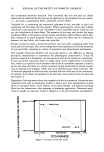
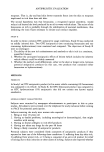
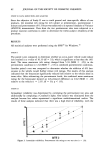
18 JOURNAL OF THE SOCIETY OF COSMETIC CHEMISTS 1.5 1.4 1.3 1.2 1.1 1.0 0.9 I I I ' I ß 0 20 40 60 80 I00 • AAHistamine AA Ref Relative Rate 100% 1.40 .38 1.36 1.34 1.32 .30 .28 [] AA Putresc•ne ß AA Ref 20 4O 60 80 I00 21% 1.3 1,2 o 1.0 [] &A Hydroxylamine ß z•, Ref 17% I I I 0 20 40 60 80 Reaction Time (min) Figure 3. Optical assay for transglutaminase activity with different amine substrates. The effect of amine donor on reaction rate is shown. Reaction conditions were as listed in the Experimental section, with 2 mM amine concentration and 10 }xl purified transglutaminase. The rate obtained with histamine was taken as 100%. Figure 5. NADH consumption was not substantially different in hair samples incubated with an active or an inactive enzyme. These results indicate that glutamine on the hair surface was not recognized as a substrate for transglutaminase, that the interaction responsible for colloid formation was interfering with the coupled assay through ammonia removal, that covalent incorpora- tion of cadaverine into hair was occurring below the limit of detection, or that the enzyme was being inactivated during the experiment. To determine whether some interaction with the hair itself was "inactivating" the enzyme, transglutaminase activity was reassayed by adding back dimethyl casein to the reaction buffer following incubation with hair, Enzyme activity remained high and was only marginally different from a parallel control from which hair had been omitted. Inasmuch as transglutaminase re-
Purchased for the exclusive use of nofirst nolast (unknown)
From: SCC Media Library & Resource Center (library.scconline.org)