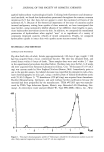
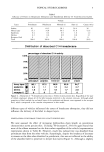
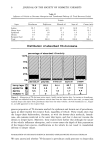
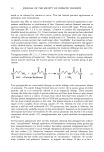
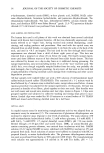
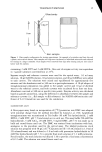
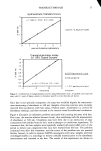
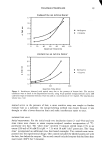
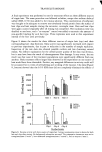
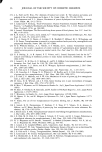
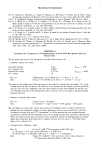
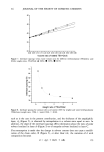
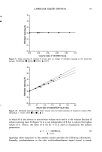
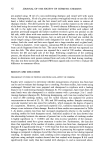
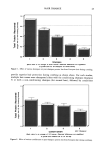
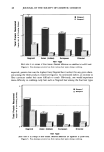
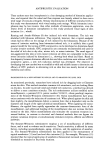
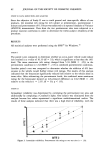
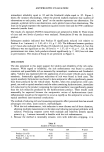
TRANSGLUTAMINASE 19 1.7 1.6 c 1.5 1.4 1.3 1.2 Cadaverine as Amine Donor I I I I 0 I 0 20 40 60 8 1 O0 120 Reaction Time (min) m No Enzyme ß + Enzyme Histamine as Amine Donor 2.4 2.2 E 2.0 o 1.8 I•i No Enzyme • ß + Enzyme 1.6 1.4 0 100 200 Reaction Time (min) Figure 4. Interference observed with optical assay due to the presence of human hair. The reaction conditions were as listed in the Experimental section, using 10 pJ purified transglutaminase and 2 mM cadaverine (top) or histamine (bottom). Hair was used at a concentration of 12.5 mg/ml. The total reaction volume was 2 ml. mained active in the presence of hair, a more sensitive assay was sought to further evaluate hair as a substrate. An isotope-labeling method was chosen because it was thought to offer a lower detection limit and make interferences easier to trace. RADIOISOTOPE ASSAY Initial measurements. For the initial study two incubation times (2- and 4-hr) and two rinse times were chosen to assess enzyme-catalyzed covalent incorporation of •4C- putrescine into hair. The "short rinse" involved 15-minute stirred rinses (x3) in an excess (250 ml) of 50 mM Tris (pH = 7.5) with 10 mM "cold" putrescine. The "long rinse" incorporated an additional rinse that lasted overnight. Two controls were incor- porated into the experimental design. One control included the labeled putrescine with the hair, but lacked the enzyme. The second control included enzyme that had been heat inactivated (100øC for 5 minutes).

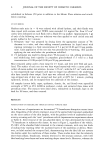
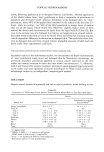
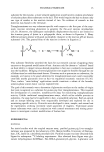
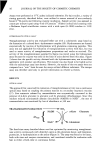
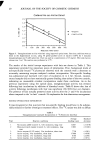
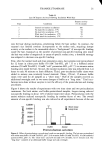
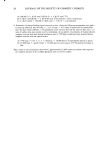
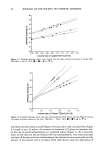
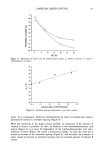
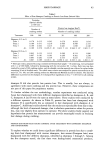
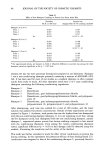
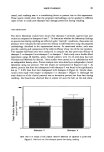
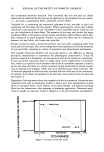
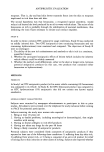
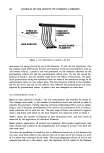
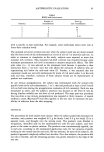
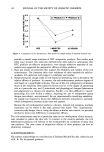
20 JOURNAL OF THE SOCIETY OF COSMETIC CHEMISTS Cadaverine as Amine Donor 1.4 1.3 1.2 1.1 1.0 0.9 0.8 • ß • * ß • ß I ' I ß 0 100 200 300 400 500 600 700 [] + Enzyme © + Inactive Enz. Reaction Time (min) Figure 5. Transglutaminase activity with hair using improved optical assay. Reaction conditions were as listed in the Experimental section, using 40 •l/ml purified active or inactive (100øC for 5 minutes) transglutaminase and 5 mM cadaverine. Hair was used at a concentration of 25 mg/ml. The total reaction volume was 2 ml. The reaction was performed at 37øC. The results of the initial isotope experiment with hair are shown in Table I. This experiment provided two important pieces of information. First, background levels of non-specifically bound •4C-putrescine observed with the controls were a deterrent to accurately measuring enzyme-catalyzed covalent incorporation. Non-specific binding was substantial and increased with time of incubation (2 vs 4 hr). Second, enzyme- treated samples did not have statistically greater binding than either of the two controls, indicating no measurable covalent incorporation under these conditions. As in the previous experiment using the optical assay, transglutaminase activity was retested following hair incubations by addition of dimethyl casein. Table II shows that loss of activity following incubations with hair was significant (30-50%) but not dramatic. The presence of hair actually preserved more activity after the 2- and 4-hr incubations when compared to the "no hair" controls. No explanation for this observation was apparent. RINSING OPTIMIZATION EXPERIMENTS It was recognized at this iuncture that non-specific bindin?4 would have to be substan- tially reduced to further investigate treatment effects. The • C-amine was able to diffuse Table I Transglutaminase Catalyzed Incorporation of •4C-Purrescine Into Hair Average Standard Trial Reaction conditions binding (cpm) deviation 1 No enzyme added (control 1), 4-hr incubation, long rinse 12067 (+ 1478) 2 Heat-inactivated enzyme (control 2), 4-hr incubation, long 11803 (-1401) rinse Active enzyme (0.125 units), 2-hr incubation, short rinse 7728 Active enzyme, 4-hr incubation, short rinse 17080 Active enzyme, 2-hr incubation, long rinse 6106 Active enzyme, 4-hr incubation, long rinse 12767 3 (-+581) 4 (+658) 5 (---296) 6 (-+672)
Purchased for the exclusive use of nofirst nolast (unknown)
From: SCC Media Library & Resource Center (library.scconline.org)