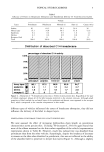
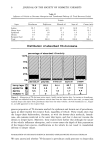
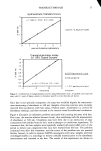
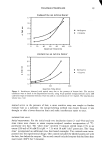
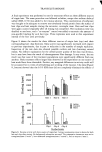
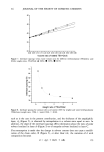
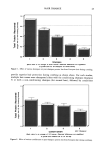
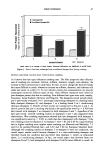
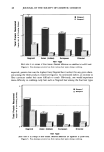
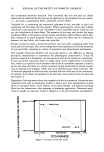
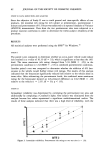
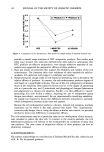
TRANSGLUTAMINASE 2 3 A final experiment was performed to test for treatment effects on three different sources of virgin hair. The same procedure was followed as before, except that sodium dodecyl sulfate (SDS, 0.5%) was added to the rinsing solution. This concentration of surfactant was thought to be adequate to remove non-covalently bound protein from the surface of hair clips and hair samples during the extensive, overnight rinse. Hair and hair clips were again counted separately after all rinsing was completed. The incubation time was doubled to one hour, and a "no enzyme" control was added to ascertain the amount of non-specific binding for each hair type. Three replicates were used in this experiment instead of the four used previously. Figure 8 shows the results for three different sources of virgin hair (top) and their corresponding hair clips (bottom). Data scatter was significantly increased with respect to previous experiments, due in part to reduction in the number of sample replicates. Inspection of the raw data also showed possible outliers and less clustering around means. No definite explanation for the overall poorer quality of the data was obvious, but it may have been the result of inhomogeneous fiber damage. In any event, the net result was that none of the treatment populations were significantly different from one another. Only treatment effects larger than observed in the experiment on one source of hair would have been observable. Further, any marginal differences in activity could still be accounted for in terms of self-labeling and sticking of the enzyme. Clip data (Figure 8, bottom) showed that the 0.5 % SDS rinse did not completely eliminate the effects of 2000 1500 lOOO 500 Hair 1 Hair 2 Hair 3 [] Active [] Control [] None 1200 800 400 o Clip 1 Clip 2 Clip 3 Substrate [] Active [] Control [] None Figure 8. Enzyme activity with three sources of virgin hair. Isotope incorporation (cpm) is shown for both hair and clips after rinsing. No background subtraction was used. The comparative treatments were active transglutaminase ("active"), heat-denatured transglutaminase ("control"), and no enzyme ("none").

24 JOURNAL OF THE SOCIETY OF COSMETIC CHEMISTS adsorption, at least on stainless steel. Thus, interference with the hair measurement could not be ruled out. DISCUSSION An optical and an isotope assay were developed in an effort to determine if human hair was recognized by guinea pig liver transglutaminase as a glutamine donor substrate. No conclusive evidence was found using either assay to show that virgin hair was modified by transglutaminase. This result appears to contradict previous work in which it was asserted that transglutaminase cross-links endogenous glutamine and lysine residues on hair surfaces (31). The process tested in the present work involved reaction with a solution phase amine donor, and so only one reactant was in the nonsoluble, less-mobile phase. Probability would seem to dictate that reaction with a solution-phase donor would be more favorable than with a bound reactant, because diffusion would allow more orientations and events to be sampled than chain-to-chain proximity limitations existing between endogenous sites. Endogenous cross-linking that still did occur would reduce the number of glutamine sites that could be labeled with [•4C]-amine and subsequently detected, but it is unlikely that this was a significant mechanism. There- fore, the most realistic interpretation of the data is that virgin hair is not a glutamine donor substrate for transglutaminase. This implies that previous observations (31) may have been based on non-catalytic effects. A calculation was performed in an effort to estimate the amount of covalent binding required to give rise to a measurable signal using the more sensitive isotope assay. A comparison was made based on data from experiments using rat cauda sperm cells (43). No other example was found in the literature in which binding with a nonsoluble glutamine substrate was characterized. Appendix A shows the data and assumptions used to compare sperm and hair data. From these calculations it was estimated that approximately 32,000 cpm should have been detected in our experiment if hair was as good a substrate as the rat cauda sperm surface. This number is nearly two orders of magnitude greater than the detection limit for the current experimental conditions. This implies that if hair had been recognized as a even a mediocre substrate, the results should have been detected. Thus we conclude, as before, that virgin hair is not a glutamine substrate for transglutaminase. Human hair was a good candidate for solution-phase modification by this enzyme. Hair has a large abundance of glutamine residues, and there was evidence in the patent literature suggesting that it was recognized as a substrate. Examples in the broader transglutaminase literature show, however, that all glutamines are not substrates for the enzyme (44). This is due to the chemical sequence of residues around glutamine, the structure of the immediate site, and whether the site is accessible to the enzyme under normal conditions. The exact nature of the hair surface is still a subject of debate, and an abundance of glutamine does not ensure that the surface will be recognized by transglutaminase. There is evidence to suggest that the outermost 1-2 nm of the virgin hair surface is a covalently bound layer of fatty acid, known in the wool literature as the F-layer (45-47). Such a layer would probably restrict access to candidate glutamine sites though hydrophobic repulsion or steric interactions. This theory could be tested by
Purchased for the exclusive use of nofirst nolast (unknown)
From: SCC Media Library & Resource Center (library.scconline.org)