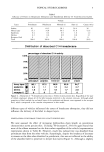
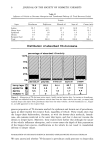
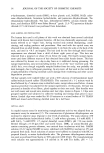
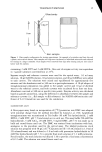
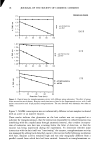
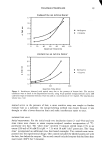
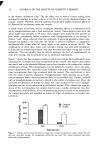
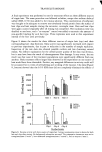
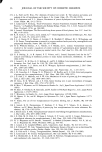
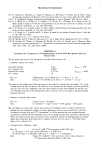
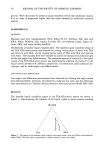
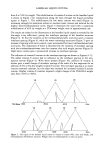
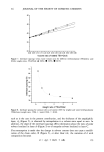
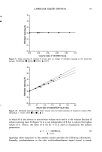
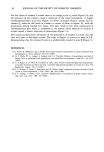
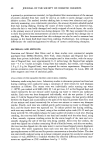
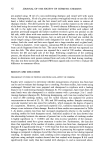
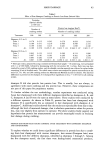
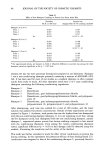
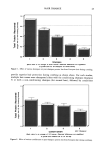
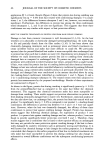
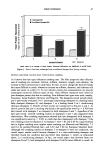
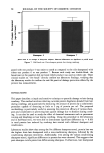
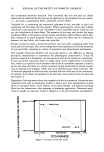
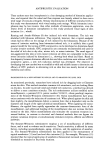
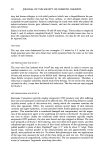
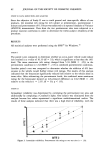
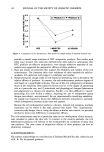
LAMELLAR LIQUID CRYSTAL 35 50- 45 • 40 •. 35 ß • 30 25 20 I I I I I 0.00 0.02 0.04 0.06 0.08 0.10 Volume ratio of VE/[TEA+OLA] Figure 9. Small amounts of vitamin E acetate gave no change of interlayer spacing in the water-free systems. TEA/OLA: ß 40/60, ß 35/65, ß 30/70. 50 • 45 •. 40 a3 35 30 25 0.0 011 012 0'.3 014 015 016 Volum ratio of water/[TEA+OLA+VE] Figure 10. Interlayer spacings versus water volume ratio for small amounts of vitamin E acetate (VE). TEA/OLA = 35/65 VE% ß 0, ß3, ß 6. in which R is the solvent to non-solvent volume ratio and o• is the volume fraction of solvent entering layer B (Figure 5) o• is not independent of R but is reduced for higher values of it. Hence, the limit of o• for R--) 0 is used to characterize the solvent penetration o• = ! - (Od/OR)/d o (2) R--)0 Applying these equations to the present results provides the following information. Formally, triethanolamine in the oleic acid/triethanolamine liquid crystal is evenly

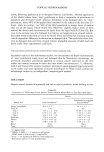
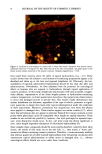
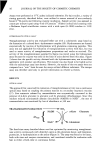
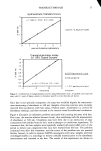
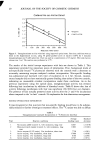
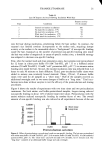
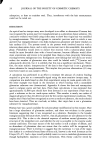
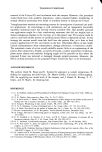
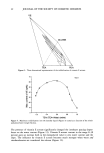
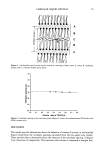
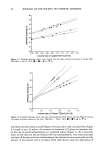
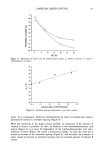
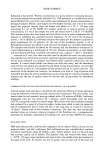
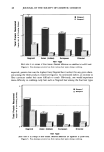
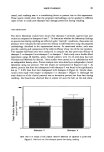
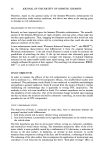
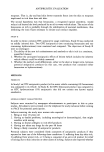
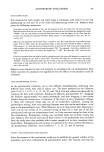
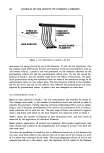
36 JOURNAL OF THE SOCIETY OF COSMETIC CHEMISTS 46- 42. • 4O • 36 L-- • 34 32 30 i ' i ' i i i i i ' i i 0.00 0.02 0.04 0.06 0.08 0.10 0.12 0.14 0.16 0.18 Volume ratio of water/(TEA+OLA+VE) Figure 11. Interlayer spacings versus water volume ratio for large amounts of vitamin E acetate (VE). TEA:OLA = 38:62. VE%: ß 0, ß 8, ß 20, ß 30. 45 4O • 25 I 2O 0.0 Volume ratio of (Water+TEA)/(OLA+VE) Figure 12. Interlayer spacings versus water plus triethanolamine (TEA) volume ratio for different amounts of vitamin E acetate counted on the total. TEA:OLA = 38:62. VE%: ß 0, ß 8, ß 20, ß 30. distributed between layers A and B (Figure 5) because the ot value calculated from Figure 6 is equal to zero. In reality, the variation in ionization (4,5) plays an important role. In the case of water/triethanolamine as a combined solvent (Figure 7), the ot values for water are less than one and are reduced with less triethanolamine. Less water penetrates into layer B because with less triethanolamine the solvents becomes more polar and the amount of non-ionized acid is increased. Both these factors cause less penetration of
Purchased for the exclusive use of nofirst nolast (unknown)
From: SCC Media Library & Resource Center (library.scconline.org)