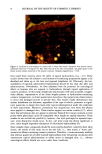
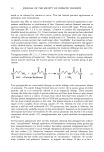
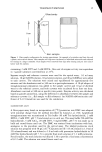
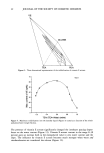
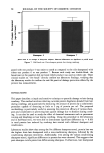
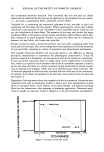
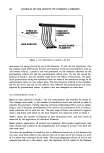
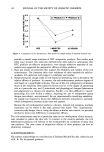
ANTIPRURITIC EVALUATION 59 ITCH RATING SCALE Itch intensity for both studies was rated using a continuous scale with 0 at one end representing no itch and 10 at the other end representing severe itch. Subjects were given the following instruction: Your task is to rate the intensity of itch, not the duration of itch. To create itch, the tester will drag fibers across your skin near your wrist. The tester will alert you each time fibers are dragged by saying "NOW." Use the scale below to help you determine how to rate the degree of itch. You may feel no itch, even though you easily feel the fiber. Please reserve "0" for absolutely no itch, and "10" for a severe itch. Often the itch produced will be short lived, a second or two. But sometimes the itch produced may linger. Tell us "OK" when the itch sensation stops, so that the tester will know when to proceed. If the rating is "0," then the tester will proceed since no itch was felt. But if your itch rating is some other number, tell us when the itch stops by saying "OK." For example, if you felt a moderate itch sensation that lasted only for a second, you might say: "5, OK." But don't say "OK" until the itch stops. If the itch sensation does not stop by itself in several seconds, the tester will attempt to erase the itch by gently wiping the site with a cotton ball. The tester will alert you to this action by saying "ERASE." The test works better when you do not look at the site being tested. So either look at the scale below or look away from the test site. If you need time out to reconcentrate, tell us and we'll wait a few seconds. Subjects were required to rate itch intensity to stimulation by the esthesiometer both before and after the products were applied so that the effects of the products could be evaluated. ITCH ESTHESIOMETER: STUDY I In the pretreatment condition, up to nine different monofilaments, delivering nine different force levels, were used to induce itch. The forces produced by the filaments were: 0.04, 0.1, 0.25, 2, 4, 12, 20, 50, and 150 g. Itch was induced mechanically by touching the skin with a filament, bending the filament approximately 45 ø, dragging the filament approximately two inches proximally, and then dragging it two inches distally along the testing sites. A schematic of the device in use is presented in Figure 2. Note that schematic shows only one set of similar-force filaments. During the pretreatment testing, three itch-inducing filaments were selected for each subject, to be used in the posttreatment tests. These filaments were the three lowest force filaments to elicit itch by the criteria of 1) a minimal rating of three for at least one of the five stimulations with any one esthesiometer level, or 2) any non-zero rating for three of the five stimulations. Pretreatment testing was concluded when one of these criteria was met. Subjects who did not meet one of these criteria in the premeasures were excluded from the study since they probably didn't report enough itch to show consistent treat- ment effects. Postapplication itch ratings, as induced by the three criterion filaments in the pretreatment condition, were recorded at 1, 5, 15, 25, and 35 minutes. STUDY I: DATA REDUCTION AND ANALYSIS Since the purpose of this preliminary study was to establish the general validity of the procedure, data were combined for all posttreatment times. The measure used was the

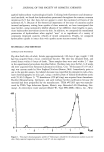
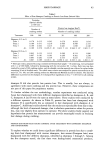
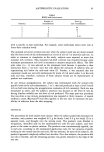
60 JOURNAL OF THE SOCIETY OF COSMETIC CHEMISTS STIMULUS SKIN SURFACE II}111 ///// I DOWNWARD •_•_•_•.• ROUND-ENDED•-• •1•• FILAMENTS Figure 2. Itch esthesiometer as applied to the skin. maximum itch rating elicited by any of the filaments. To test the first hypothesis, that the method could differentiate between pretreatment levels and posttreatment with an oil-in-water vehicle, a paired t-test was performed on the measures obtained on the pretreatment vehicle site and the posttreatment vehicle sites. To test the second hy- pothesis of Study I, that the method could detect the effects of benzocaine, the maxi- mum pretreatment rating was subtracted from the mean of the maximum ratings for all posttreatment times on a per-subject basis. The data reduction resulted in two variables, one for the active and one for the vehicle, that reflected the posttreatment itch level, adjusted by pretreatment values. A paired t-test was computed on these data. ITCH ESTHESIOMETER: STUDY II Based on data collected in Study I, the itch esthesiometer was modified for Study II. Two changes were made: 1) the number of stimulation levels was reduced in order to expedite the procedure, thereby reducing potential confounding effects such as subject fatigue, and 2) multiple monofilaments were used at each stimulation level to induce a more consistent itch at each test site. The new range of forces was selected to approx- imate a log-linear scale based on the most frequent itch induction levels in Study I. Table I shows the number of filaments at each stimulation level, and force levels as measured by the application of individual filaments. Before product application, all stimuli were employed. After product application, only those stimuli that resulted in the preapplication itch ratings of at least 3 for both test sites were used. To reduce the possibility of variability due to differential sensitivity to itch between the test sites, only those subjects who rated at each site at least one of the stimuli at a level of 3 or above were continued in the study. The actual assignment of level of itch to itch stimulus was left up to the subject, since the experience of itch related to the filament
Purchased for the exclusive use of nofirst nolast (unknown)
From: SCC Media Library & Resource Center (library.scconline.org)