ANTIPRURITIC EVALUATION 57 receptors. That is, dry and hard skin better transmits forces into the skin to receptors implicated in itch than does soft skin. The second hypothesis was that benzocaine, a recognized topical anesthetic, would reduce itch beyond the level produced by an oil-in-water vehicle alone. The action of the benzocaine on itch is probably through the stabilization of neuronal membranes, thus inhibiting the ionic fluxes necessary to initiate and conduct impulses. STUDY II In order to mimic common OTC antipruritic usage conditions, Study II was conducted on mildly irritated skin. Two OTC antipruritics (one containing benzocaine and one containing hydrocortisone) were examined and compared. The objectives of Study II were to investigate: 1. The ability of the new itch esthesiometer and methods to elicit itch in a consistent, quantified manner 2. Whether the anticipated antipruritic effects of lotions (which includes the inherent vehicle effects) could be reliably measured 3. Whether the method could differentiate, either in the short or longer term, between potential antipruritic products (in this case, two products that contained either benzocaine or hydrocortisone). METHODS PRODUCTS In Study I an OTC antipruritic product (oil-in-water vehicle containing 6% benzocaine) was compared to its vehicle. In Study II, the OTC benzocaine product was compared to an OTC hydrocortisone (1%) antipruritic that did not contain any known topical anesthetics. GENERAL SUBJECT CHARACTERISTICS Subjects were recruited by newspaper advertisements to participate in this or prior studies. All subjects were screened over the telephone for study inclusion before coming to PACE for potential participation. Subjects entering the study were women who reported: 1. Being at least 18 years old 2. Having no health problems, including neurological or dermatological, that might interfere with testing 3. Having no known allergies to itch-relief products 4. Having not taken any drugs for the past 48 hours 5. Being a likely consumer of antipruritic products. Potential subjects were considered likely consumers of antipruritic products if they reported at least one of the following three conditions: 1) suffering from dry-skin itch, 2) suffering from winter itch, or 3) being a consumer of an anti-itch product for relief of itching due to skin irritation or other causes of itching. Subjects also reported whether

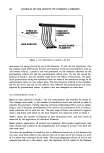
58 JOURNAL OF THE SOCIETY OF COSMETIC CHEMISTS they had known allergies to itch-relief products (which was a disqualification for par- ticipation), and whether they had hay fever, asthma, or other allergies (which were acceptable for participation). Subjects completing the study were those who passed the subject-inclusion criteria, gave informed consent, and met the minimal itch-level cri- terion (see below). Subjects in both studies were between 18 and 60 years of age. Thirty subjects completed Study I, and 43 subjects completed Study II. Study II also included some men, but to keep the comparison between Studies I and II consistent, the data for the men will not be reported here. TEST SITES The test sites were demarcated by two rectangles 2.5 inches by 4.5 inches (on the distal-proximal axis) that were drawn four inches proximal from the wrist on the volar surface of each forearm. SITE PREPARATION FOR STUDY I The sites were first lathered with Ivory © bar soap and shaved in order to remove any residual cosmetics, etc., on the site, as well as any hair on the site, both of which might interfere with the evaluation. The itch esthesiometer would cause a variable movement of hairs and activate receptors at the follicle level. Shaving reduces the degree to which these follicle receptors would be stimulated by the itch esthesiometer. Therefore, a reduction in response variability should result from shaving. To the extent that shaving irritated the skin, it may have facilitated itch induction. The skin was not tape stripped for Study I. SITE PREPARATION FOR STUDY II Rationale: Consumers typically employ antipruritic OTC products only after suffering from itch and subsequent scratching of the affected area. The scratching behavior usually includes several cycles of itch-scratch-itch, during which the consumer scratches the itchy skin rigorously. Often, the consumer removes several layers of skin (stratum corneum and upper epidermis, at least partially) before finally applying an antipruritic product. This scratched skin is considered damaged and compromised, and the migra- tion of the antipruritic agent to the underlying itch nerves is facilitated. To prepare the test sites to mimic closely the conditions under which consumers typically employ antipruritic OTC products, the sites were shaved and tape stripped as follows: The sites were prepared as in Study I. After shaving, sites were dried with paper towels, and then cellophane-tape stripped to the point of first visual indication of skin glistening (tape pulled parallel to plane of skin Highland © tape, 0.5" wide by about 4" long). Three spaced strips, oriented parallel to the distal-proximal axis and approximately evenly spaced, were produced on each site. To achieve skin glistening at least two applications of the tape were necessary for each of the three strips on each test site. The stripping produced areas of compromised, mildly irritated skin. The site preparation emulated the action of consumers' fingernails scratching their skin.
Purchased for the exclusive use of nofirst nolast (unknown)
From: SCC Media Library & Resource Center (library.scconline.org)