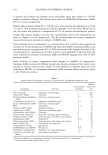
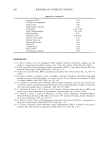
248 JOURNAL OF COSMETIC SCIENCE Appendix (continued) Syntopon 8 D1 © 6.00 Ethoxylated nonylphenol 3.00 Ethyl acetate 2.00 Hydroxyethyl cellulose 2.40 Isopropanol 3.00-15.00 Lauric diethanolamide 1.50-2.00 Methyl paraben 0.05 Propylene glycol 5.00-9.00 Sodium lauryl sulfate 2.95 Sulfated castor oil 4.00 Polyvinylpyrrolidon 2.00 Oleic acid 5.00 n-Nonylamine 25.00 Oranex HT © 3.00 Cetrimonium chloride 0.50 REFERENCES (1) E. Pel, G. Bordin, and A. R. Rodrfguez, HPLC candidate reference method for oxidative hair dye analysis. I. Separation and stability testing,J. Liq. Chrom. Re/. TechnoL, 21(6), 883-901 (1998). (2) E. Pel, Application of High Performane Liquid Chromatography (HPLC) to the Study of Oxidative Hair Dyes (Internal annual report, GE/R/ACH/03/95, 1995), pp. 1-19. (3) D. H. Liem andJ. Rooselaar, HPLC of oxidation hair colours, Mitt. Gebiete Lebensm. Hyg., 72, 164-176 (1981). (4) N. Goetz, J. Mavro, L. Bouleau, and A. de Labbey, "Analysis of Oxidative Hair Dyes Using High Performance Liquid Chromatography," in Cosmetic Analysis: Selective Methods and Techniques, P. Bord, Ed. (Marcel Dekker, New York, 1985), pp. 245-287. (5) C. Gennaro, P. L. Bertolo, and E. Marengo, Determination of aromatic amines at trace levels by ion interaction reagent reversed-phase high-performance liquid chromatography--Analysis of hair dyes and other water-soluble dyes, J. Chromatogr., 518, 149-156 (1990). (6) V. Andrisano, R. Gotti, A.M. di Pietra, and V. Cavrini, Analysis of basic hair dyes by HPLC with on-line post-column photochemical derivatisation, Chromatographia, 39, 138-145 (1994). (7) C. Genova, A. Zatta, L. Deiana, F. Montesion, F. Buosi, and G. Gazzaniga, "Ethoxylated Mono- Branched Primary Alcohols in Hair Dyes," in Cosmetics 1997 ConjUrerice Proceedings: Modern Challenges to the Cosmetic Formulation, 1997, pp. 359-377. (8) U. Vincent, Practitwl Aspects of the Determination of Oxidative Hair Dyes by RP-HPLC--Development of a Data Base (Annual report, GE/R/ACH/04/99, 1999), pp. 1-24. (9) U. Vincent, Evaluation of High Performance Liquid Chromatography (HPLC) in Relation to the Study of Oxidative Hair Dyes (Internal annual report, GE/R/ACH/13/97, 1997) pp. 1-26.

j. Cosmet. Sci., 50, 249-279 (July/August 1999) Skin delivery of vitamin E MEERA RANGARAJAN and JOEL L. ZATZ, Department of Pharmaceutics, College of Pharmacy, Rutgers-The State University of New Jersey, 160 Frelinghuysen Road, Piscataway, NJ 08854-8020. Accepted for publication June 3 O, 1999. Synopsis Acute and chronic exposure to sun rays have been linked to several types of skin damage, including sunburn, photoaging, photocarcinogenesis, and photoimmunosuppression. One likely hypothesis for the genesis of these skin pathologies is believed to be the formation of free radicals. This suggestion has led to the supplementation of antioxidants such as o•-tocopherol (vitamin E) in various cosmetic skin preparations. Vitamin E is now considered essential for the stabilization of biological membranes, particularly those containing large amounts of polyunsaturated fatty acids. For stability considerations, o•-tocopherol is com- monly used as its prodrug ester. This article reviews the chemistry of vitamin E, its cutaneous biological functions, its prodrug forms and their metabolism into the active form of free vitamin E, and the effect of varying formulations on the percutaneous absorption of vitamin E. INTRODUCTION Evans and Bishop in the 1920s discovered that vitamin E (then o•-tocopherol) is an essential nutrient influencing reproduction in the rat. The term tocopherol came from "tokos" (childbirth) and "phorein" (to bring forth), and the -ol suffix indicates its phenolic nature. Now the term "vitamin E" is a generic name for all tocol and tocotrienol derivatives qualitatively exhibiting the biological activity of o•-tocopherol. Vitamin E, a fat-soluble vitamin, is considered essential for the stabilization of biological membranes, especially those with high amounts of polyunsaturated fatty acids (1). As further evi- dence of the interplay between lipid peroxides and skin disease is obtained, topical use of vitamin E in cosmetics is being highly recommended (2). When vitamin E is added to cosmetics, it may protect against destructive chemicals that compromise the integrity of skin and hair (3). The biological actions of vitamin E are due to its antioxidant property. o•-Tocopherol is thought to modulate the structure and functions of the lipid-protein system that makes up the plasma lipoprotein (4). Vitamin E has been used systemically, particularly in diseases in which lipid peroxidation is thought to be in- volved, such as in arteriosclerosis, diabetes, cancer, and hematological diseases. Repetitive sun exposure can result in skin changes known as photoaged skin. The clinical changes that are seen in photoaged skin differ from those of normally aged skin in some protected sites. There is increased wrinkling, elastosis, solar comedones, pigmentary 249
Purchased for the exclusive use of nofirst nolast (unknown)
From: SCC Media Library & Resource Center (library.scconline.org)