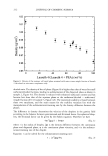
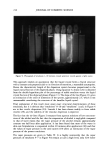
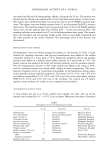
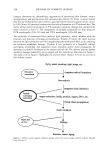
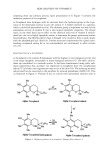
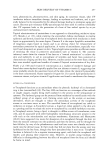
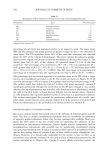
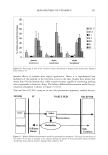
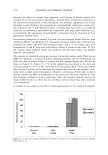
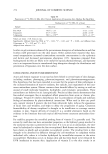
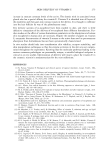
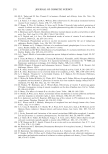
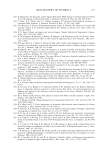
250 JOURNAL OF COSMETIC SCIENCE changes, phototoxicity, photoallergy, aggravation of preexisting skin diseases, immu- nosuppression, and precancerous and cancerous skin lesions (5). Thus, it seems natural that the use of photoprotectants will be a good preventive measure against actinic insult. In 1962 Norris (6) provided evidence for free radical formation in UV-radiated skin. The theory of free radical involvement in UV-mediated cutaneous damage was confirmed by other scientists as well (7). The components of sunlight responsible for skin aging are UVB wavelengths (290-320 nm) and UVA wavelengths (320-400 nm). The oxidation of unsaturated fats produces lipid peroxides, which interfere with the structure and function of biological membranes. Vitamin E limits the chain reaction between the lipid peroxides and their neighboring polyunsaturated fatty acids, confining the resultant membrane damage. Vitamin E acts primarily as a lipophilic radical- scavenging antioxidant and suppresses chain initiation and/or chain propagation by donating its phenolic hydrogen to the oxygen radicals (8). The defense systems against oxidative damage induced by active oxygen and free radicals are illustrated in Figure 1. The dark circle in Figure 1 highlights the portion where vitamin E elicits its activity in this defense system. H202, metal, smoking, light, drugs, etc. • (suppress radical format free radicals [a•d. •.•c_al•} _• • (suppresinitiatchain •:•}•:•olecules: lipids, proteins, sugars, DNA, etc. • (break chain propaga chain oxidation age diseases, cancer, aging Figure 1. Defense systems against oxidative damage induced by active oxygen and free radicals. Adapted from reference 8.

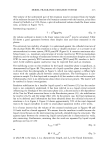
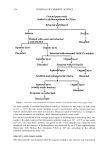
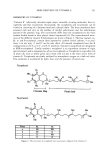
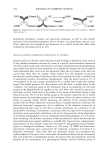
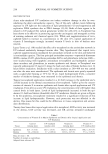
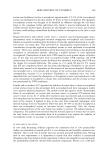
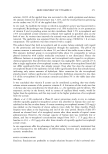
SKIN DELIVERY OF VITAMIN E 251 CHEMISTRY OF VITAMIN E "Vitamin E" collectively describes eight major, naturally occuring molecules, four to- copherols and four tocotrienols. Structurally, the tocopherols and tocotrienols can be viewed as consisting of a chroman head and a phytyl chain. The four tocopherols have saturated tails and vary in the number of methyl substituents and the substitution pattern of the phenolic ring. The tocotrienols differ from the tocopherols by the three isolated double bonds in their phytyl chains (isoprenoid) (9). The stereochemical struc- tures of the different vitamin E homologues are given in Figure 2. The four isomers, o•-, [3-, •/- and 8-tocopherol, contain three asymmetric carbons (chiral carbons, *) at posi- tions 2 on the ring, 4' and 8' on the side chain. All natural tocopherols have the R configuration at the C-2, C-4', and C-8' positions. Natural o•-tocopherols are designated as RRR-cx-tocopherol. Totally synthetic tocopherol is an equivalent mixture of eight optical isomers and is designated as a//-rac-(•-tocopherol. o•-Tocopherol is especially rich in plant oils such as wheat germ and cotton seed oil and is the most active form of vitamin E. Tocopherols are slowly oxidized by atmospheric oxygen to a dark red color. This oxidation is accelerated by light, heat, and the presence of metal ions. Tocopherol: R1 HO. 6 •'• A R2 8 e Me Me Chroman Ring Phytyl chain Tocotrienol: R1 HO 6/• Me Me Me R2 8 1 l•le 3' 7' 11' Me Me Form R• a Me Me • Me H ¾ H Me 8 H H Figure 2. The structures of tocopherols and tocotrienols. Adapted from reference 9.
Purchased for the exclusive use of nofirst nolast (unknown)
From: SCC Media Library & Resource Center (library.scconline.org)