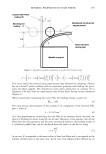
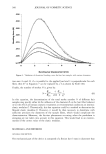
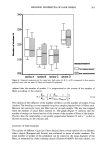
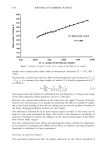
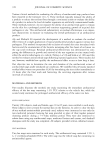
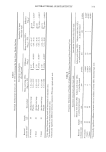
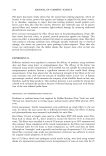
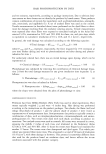
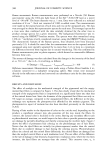
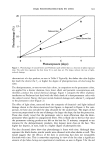
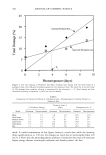
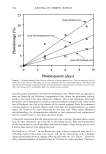
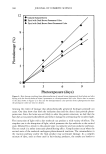
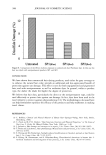
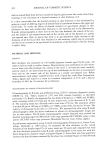
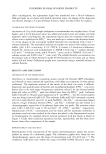
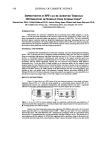
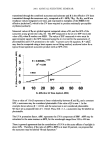
HAIR PHOTOPROTECTION BY DYES 383 25 2O 15 10 Undyed Piedmont Hair Dyed with Demipermanent I I I I 0 2 4 6 8 10 Photoexposure (days) Figure 3. The total damage to Piedmont hair fibers resulting from dyeing with the black shade of a demipermanent hair color, followed by photo-exposure for the indicated times. The solid line is the best linear fit. The damage from oxidative coloring is represented by the intercept (t: 0). Total damage has been calculated according to equations 1 and 2 (see text for details). Table I summarizes the parameters for all the shades tested for these two product categories. Generally, in a given product type, the darker the color the shorter the x•. and the higher the photoprotection it provides. The results are more complicated when comparing the results across product types. For example, the permanent colors, in general, provide a higher level of photoprotection than the demipermanent colors when used on unpigmented (Piedmont) hair because they deposit more color on hair. How- ever, because they cause more chemical damage to hair initially (during dyeing), the photoprotective effect is only realized after prolonged photo-exposure, as evidenced by higher % values. As one would expect, these results are strongly dependent on the natural color of the hair used in the study. With the pigmented hair, two opposing processes, the "lift" (bleach- ing) of the natural pigment and the deposition of the synthetic color, take place simul- taneously. Permanent colors produce more lift and therefore reduce the natural photo- protection more than the demipermanent colors. However, since in general they also deposit more color than the demipermanent colors, the net result is a combination of the above two effects, and harder to predict. This is seen in Figure 6, which compares the result of photoirradiation of natural brown hair before and after dyeing with the dark brown shades of a permanent and a demipermanent hair color. It is clear that the demipermanent color, which produces little lift and is primarily a deposit-only color,

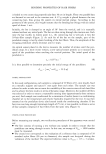
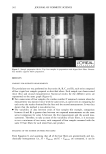
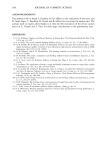
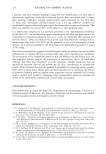
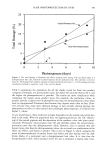
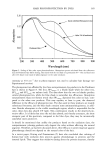
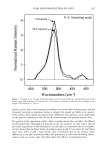
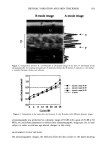
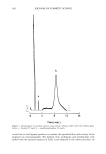
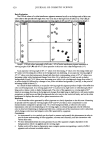
384 JOURNAL OF COSMETIC SCIENCE 25 20 o 10 ¸ 5 Undyed Piedmont Hair... Dyed with Demipermanent color o Dyed with Permanent color I I I I 0 2 4 6 8 10 Photoexposure (days) Figure 4. The photodamage of hair fibers as a function of photo-exposure time. The lines represent the best linear fits to the data sets. The slopes of the lines represent the rate of photodegradation. The data reveal that dyeing of Piedmont (unpigmented) hair with the permanent coloring product provides more protection than does dyeing with a comparable shade of a demipermanent product. provides greater photoprotection than the permanent color. These results are opposite to what we found for the Piedmont (unpigmented) hair, where the permanent coloring product was found to be more efficacious (Table I). This is not surprising, since both permanent and demipermanent products essentially behave as deposit-only colors in the case of Piedmont hair due to the absence of the natural pigment. Since the permanent coloring products, in general, deposit more color than the demipermanents, we would expect the former to be more efficacious for this hair type. These subtle differences notwithstanding, the photoprotection afforded to both pigmented and unpigmented hair by oxidation dyes is clear from the above results. It should be mentioned that the photoprotection due to dyeing, discussed above, results from the dyes themselves and is not due to the dyeing process. This was demonstrated by the experiments in which hair fibers that had undergone a sham dyeing process with a dyeless base showed little photoprotection. The band at ca. 510 cm -• in the Raman spectrum of hair is associated with the S--S stretching mode of the amino acid cystine, and can be conveniently used to monitor chemical and photochemical changes affecting this molecule (13). Figure 7 shows the effect of photoirradiation of Piedmont hair for 96 hours in a solar simulator. The loss in
Purchased for the exclusive use of nofirst nolast (unknown)
From: SCC Media Library & Resource Center (library.scconline.org)