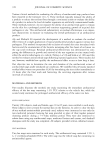
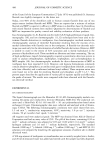
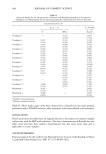
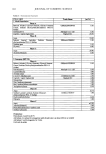
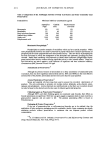
416 JOURNAL OF COSMETIC SCIENCE Table I: Formulation Examples CTFA/INCI Trade Name [wt %] 1. Model formulation Phase A Behenyl Alcohol, Glyceryl Stearate, Glyceryl Stearate CERALUTION H 0.50 Citrate, Sodium Dicocoylethylenediamine PEG-15 Sulfate lsotrideceth- 12 Marlipal O 13 / 120 0.50 Caprylic / capfie triglyceride Miglyol 812 25.00 Phase B Aqua 10.00 Sodium Lauroyl Lactylate, Sodium Dicocoyl- CERALUTION F 1.00 ethylenediamine PEG- 15 Sulfate Xanthan gum 0.10 Glycerin 6.00 Phase C Aqua 50.90 Alcohol [Ethanol] 6.00 2. Sunspray (SPF 20) Phase A Behenyl Alcohol, Glyceryl Stearate, Glyceryl Stearate CERALUTION H 0.50 Citrate, Sodium Dicocoylethylenediamine PEG- 15 Sulfate lsotrideceth-12 Marlipal O 13 / 120 0.50 Cyclomethicone 4.00 Triethyl titrate 4.00 C 12-C 15 AIkylbenzoate COSMACOL EBI 2.50 Caprylic / caprio triglyceride Miglyol 812 5.00 Octocrylene 5.00 Octyl methoxycinnamate 5.00 Butyl methoxydibenzoylmethane 1.00 Tocopherol acetate 0.50 Phase B Aqua 12.75 Sodium Lauroyl Lactylate, Sodium Dicocoyl- CERALUTION F 1.00 ethylenediarnine PEG-15 Sulfate . . Hydroxyethylce!lulose 0.20 Glycerin 5.00 Phase C Aqua ad 100 Alcohol [Ethanol] 5.00 Phenylbenzimidazole-5-sul fonic acid 4.50 Sodium hydroxide 6.00 Production: Heat phases A and B to 60 øC Add phase A to phase B, homogenize until droplet size is at about 400 nm or smaller Add phase C and homogenize for 2 min. Cool and de-aerate

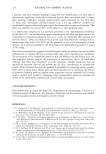
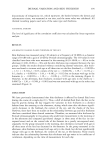
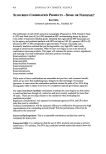
2001 ANNUAL SCIENTIFIC SEMINAR 417 NEW METHOD FOR TESTING MOSQUITO REPELLENCY: HIGHLIGHTING A NEW BENEFIT FOR AN EXISTING INGREDIENT Heather Eyre, Steve Watkins and Richard Birch Quest International, Ashford, Kent, TN24 OLT, United Kingdom Back,qround Mosquitoes are found all over the world except Antarctica. There are around 170 different species of mosquito found in Nodh America alone (1) and, even within the United States, cedain species are known to be responsible for spreading disease (2). Even a harmless bile often results in a red, itching welt on the skin, caused by an allergic reaction to the mosquito saliva. (3) An Effective Deterrent Various attempts have been made to control mosquito populations, but this work has had limited success and so there is still a need to use repellent products to avoid being bitten. Ideally, a product sold as a repellent should achieve high [ 90%] repellency on initial application and maintain that efficacy for a number of hours. Unfodunately, there is no regulation stipulating how long a product should last and not all products give the same level of protection for the same length of time. In pad, this is due to the large number of variables involved in assessing the repellency. The formulator has a limited palette of effective actives from which to choose. Diethyl Methyl Benzamide (DEET), developed by the US Army in 1946 (4), is still considered the most effective repellent active available today. There is evidence to suggest that its main mode of action may be through inhibiting lactic acid receptors on the mosquito antennae (5). In normal use there is a consensus that 50% DEET will provide acceptable levels of protection for 3-4 hours. Using 100% DEET may extend this range by a further hour. However, there are a number of drawbacks to its usage: it is a good plasticiser, so can damage equipment. It is aesthetically unpleasant which will discourage frequent product usage, and most seriously, despite rigorous and repeated safety tests showing that it has no adverse effects when used properly, there are still concerns over the potential toxicity when used by children and pregnant women (1). In addition, allergic skin reactions are occasionally reported (6). DEET is irritant to the eyes and mucous membranes and care should be taken when applying it Io the face. Other actives include encapsulated DEET, ethyl butyl acetyl amino proprionate (Merck IR 3535), Bayrepel and dimethyl phthalate. IR 3535 has recently been introduced to the US as a 'biopesticide' alternative to DEET, with a good safety record from its a long history of use in Europe. It is claimed to offer the skin effective protection from insects without toxic allergic or sensitizing propedies, without skin penetration, but its use has so far been limited in the US due to an exclusivity agreement with one manufacturer, and the limited data is somewhat conflicting. • There are also a number of natural products available, which usually contain a blend of volatile oils as active ingredients. Published literature is only available to any significant extent for citronella, which, while effective, has an extremely short length of action, often under one hour (7). In summary, few alternatives exist and, whichever active is selected, the need to use high concentrations in order to achieve the desired activity is a concern. A possible way around this is to use lower levels of the main active by blending repellents or by identifying existing cosmetic ingredients that can contribute to the overall repellency. Bitin.q Behaviour There are a number of factors that attract the mosquito to its human prey (7): ß Chemoreceptors on the insect's antennae can detect minute quantities of substances of chemical attractants. The most important of these are believed to be lactic acid from skin, and carbon dioxide in exhaled breath. ß Mosquitoes rely on body heat and moisture to determine where to bite once they are within close range ß Anopheles mosquitoes bite at night, with the most intense outdoor activity being in the early evening ß Aedes mosquitoes are daytime feeders and are most active in the afternoon ß There appears to be a gender difference in attracting mosquitoes, with females receiving significantly more bites in trials (8). In addition, children tend to be bitten less than adults. Larger people tend to be bitten more than smaller individuals Repellent action The mechanism of action of repellents applied to the skin is not well understood, but undoubtedly they interfere with the chemical stimuli that attract mosquitoes. Repellents can be thought of as having a vaporising effect: molecules of repellent evaporate from the skin and interfere with the "homing mechanism" that mosquitoes use (6). There is an enormous range of species of mosquito with varying sensitivity to repellents. This variation is even present within species. For instance, DEET is highly effective against Anopheles stephensi but much less active against Anopheles albimnus. (9). Mosquitoes seem to prefer to bite a person with no repellent on their skin than one wearing a repellent, even if the repellent is not very effective and/or is present in quite low concentrations. (6)
Purchased for the exclusive use of nofirst nolast (unknown)
From: SCC Media Library & Resource Center (library.scconline.org)