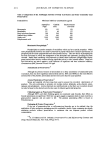
418 JOURNAL OF COSMETIC SCIENCE Screeninq Ingredients that might contribute to Repellency Numerous methods for testing the effectiveness of mosquito repellents have been described. One of the most popular and convenient is the "cage test". A volunteer places an arm into the mosquito cage, and the number of bites received in a particular time is noted. In contrast, a "free flight" test necessitates the individual standing in a large cage containing mosquitoes. This allows the testing of different body parts, for direct comparisons. Cage test methods are mainly used to calculate the minimum effective dose, i.e., potency, of a repellent. Ultimately, the best test is with large field trials but this is expensive and is not an option when considering screening many different compounds. It had long been reported that certain aromatic oils had mosquito repellent activity (10, 11). However, the available data was not always reliable and proved difficult to compare. We initiated a screening program in conjunction with The University of London, Wye College, to identify a suitable screening technique that could compare many different compounds. This was then used to evaluate several hundred Perfumery ingredients, including a number of Cosmetic ingredients. The patented protocol (12, 13) used test cages containing a warmed moist skin 'biting target'. The ingredient was applied to the target (dosage 0.2mg/cm2), then hungry female Aedes aegypti mosquitos were released into the chamber, and their biting behaviour monitored by video. The mean numbers of bites immediately after introduction, and one hour later, were calculated. The method allowed a positive control (DEET) to be run alongside 3 test materials, giving direct comparisons between ingredients regardless of time of test. Materials were ranked according to their performance initially and at one hour, "good" materials achieving at least 50% repellency at both time intervals. The results showed that DEET typically gave 93% initially, and 75% at 1 hour, and IR 35353 gave 86% and 25% respectively. One of the interesting results showed that a commercially available coolant and skin moisturiser, Menthyl Pyrrolidone Carboxylate (MPC), performed very well, giving an equivalent of 80% repellency initially, and 59% after one hour. The test was repeated using 2% active in skin cream, again compared to DEET, to prove that this benefit would be manifested in a more 'real life' situation. We have no explanation for this ability, whether it is due to the odour, taste or chemical properties of MPC. However, MPC is known to liberate menthol on the skin due to hydrolysis, so we conducted a further test against menthol. MPC was significant•ly better at both time points, confirming that menthol cannot be the sole contributor to this effect. MPC is not registered or marketed as a repellent, but promoted as a cosmetic ingredient for its cooling, moisturising and soothing benefits. This data demonstrates that MPC could also contribute to the overall repellency of a finished formulation, perhaps allowing for the reduction of the main active. This would be of particular interest for suncare formulations, where the performance of DEET is known to be inhibited by the presence of sunscreens (14). References 1 Annals of Internal Medicine online: http:fiwww.acponline.orgljournalslannalslO1jun981mosquito.htm 2 United States Environmental Protection Agency website: http:fiwww.epa.govlpesticideslfactsheetslskeeters.htm 3 United States Environmental Protection Agency website: http:llwww.epa.govlpesticideslcitizenslmosquito.htm 4 United States Environmental Protection Agency website: http:fiwww.epa.govlpesticideslcitizensldeet.htm 5 Dogan EB, Ayres JW, Rossignol PA. Behavioural mode of action of DEET: inhibition of lactic acid attraction. Med Vet Entomo1:13:97-100 (1999). (in 6) 6 The Pharmaceutical Journal online: http:llwww.pharmj.comlEditorial1200008261educationltravel_bites.html 7 Fradin, MS. Mosquitoes and mosquito repellents: a clinician's guide. Ann Internal Med 128:931-40 (1998). (in 6) 8 Golenda CF, Solberg VB, Burge R, Gambel JM, Wirz RA. Gender-related efficacy difference to an extended duration formulation of topical NN-diethyl-m-toluamide (DEET). Am J Trop Med Hyg 60:654-7 (1999). (in 6) 9 Robert LL, Hallam JA, Seeley DC, Roberts LW, Wirtz RA. Comparative sensitivity of four Anopheles (Diptera:Culicidae) to five repellents. J Med Entomol 28:417-20 (1991). (in 6) 10 Brown M, Hebert AA. Insect repellents: an overview. J Am Acad Dermatol. 36(2 Pt 1 ):243-9 (1997). 11 Das NG, Nath DR, Baruah I, Talukdar PK, Das SC. Field evaluation of herbal mosquito repellents. J Commun Dis. 31 (4):241-5 (1999). 12 WO 96/08147, Quest International. 13 Sharpington P J, Healy TP, Copland M J: A wind tunnel bioassay system for screening mosquito repellents. J Am Mosq Control Assoc. 16(3):234-40 (2000). 14 Montemarano AD, Gupta RK, Burge JR, Klein K. Insect repellents and the efficacy of sunscreens. Lancet. 349:1670-1 (1997). (in 1).

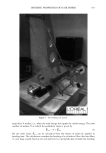
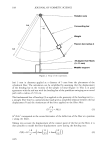
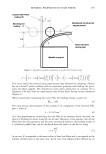
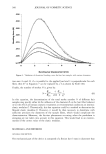
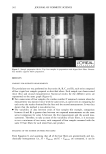
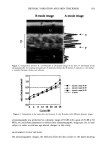
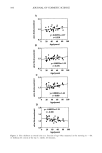
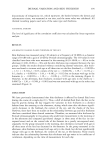
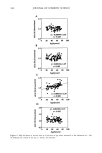
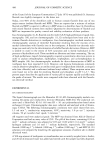
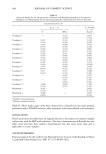
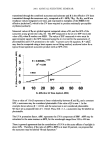
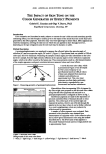
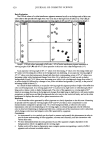
2001 ANNUAL SCIENTIFIC SEMINAR 419 THE IMPACT OF SKIN TONE ON THE COLOR GENERATED BY EFFECT PIGMENTS Gabriel E. Uzunian and O!ga V. Dueva, Ph.D Engelhard Corporation, Ossining, NY Introduction Color cosmetics are formulated to mask, enhance or correct the user's skin tone and sometimes provide contrasting effects, but little thought is usually given to the impact of the actual skin tone on the t'mal color generated by the effect pigments. Skin tones may vary from light beige to almost black. Effect pigments are relatively transparent, allowing the skin tone on which they are applied to show through however, depending on the type of pigment used, the end result may be dramatic or subtle. Method Description A goniospectrophotometer was employed to measure the reflected light at the specular angle of reflection (0 ø) and two aspecular angles, 20 ø and 45 ø (Figure 1). Experimental data was plotted in CIELab color space for D-65 illuminant. Measuring the samples at these angles provides information on the color travel of a sample, from the high intensity reflection at the specular angle to lower reflection at aspecular angles, which is the effect viewed by the human eye. These measurements result in a full characterization of the sample appearance and good correlation between measured values and visual effects. 45 ø Sa• • 450 20 ø 0 ø Figure 1. Measuring geometry of goniospectrophotometer A novel skin tone color chart, which is presented on Figure 2 was developed by The Leneta Company to our specifications based on CIELab values of skin tones obtained from numerous volunteers and utilized as an experimental tool. This color chart possesses excellent shade uniformity, color density, reproducibility, non- fluorescence and surface smoothness. Nitrocellulose films incorporating 22% of pigment by dry film weight were prepared on the skin tone color charts using selected effect pigments and analyzed on a goniospectrophotometer configured as shown in Fig. 1. Interference pigments are made by the deposition of precisely controlled films of titanium dioxide on mica platelets. They reflect part of the incident light and transmit the portion, which is not reflected through the platelet to the next layer where it can be further reflected. As a result complimentary colors are produced, by reflection and by transmission. A number of effect pigments were evaluated. Data presented in this discussion were obtained from measurements of a pigment with a violet reflection color and a yellow-green transmission color using the method described above. The INCI name of this pigment is Mica (and) Titanium Dioxide and its average particle size is approximately 25pm. Figure 2. Skin tone color chart Backgrounds of skin tone color chart: 1- white 2 - light beige 3 - dark beige 4 - yellow-beige . 5 - light brown 6 - dark brown 7 - black.
Purchased for the exclusive use of nofirst nolast (unknown)
From: SCC Media Library & Resource Center (library.scconline.org)