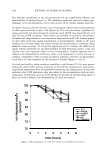
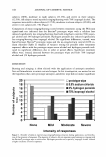
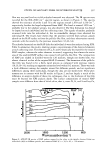
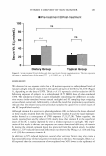
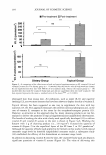
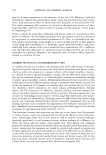
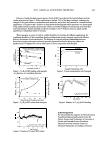
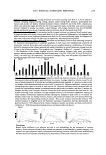
VITAMIN E DELIVERY BY SKIN CLEANSER 181 to 288 nm. Under these conditions, the typical retention times for vitamin E and vitamin E acetate were five and seven minutes, respectively, and the limits of detection for each (vitamin E/skin surface area) were approximately 2-4 pmoles/cm2. It is worth noting that the HPLC method used here does not discriminate between the stereo isomers of tocopherol. REAGENTS AND TEST FORMULATIONS All solutions and reagents, except as noted, were analytical grade and obtained from Sigma Chemical Co. (St. Louis, MO) and Aldrich Chemical Co (Milwaukee, WI). Ethanol (dehydrated alcohol, 200 proof, U.S.P. Punctilious) was obtained from Quan tum Chemical Co. The vitamin E (d-a-tocopherol) and vitamin E acetate (d-a tocopheryl acetate) standards used for the HPLC analysis were analytical grade (99% pure) and were purchased from Fluka Chemical Corporation (Ronkonkoma, NY). All rac-a-tocopherol and all-rac-a-tocopherol acetate (BASF Corporation, Mount Olive, NJ) were used to formulate the vitamin E body wash. Vitamin E tablets (Carlson Aqua Gem-E tablet, 400 IU a-tocopherol) were from Carlson Laboratories, Inc. (Arlington Heights, IL). Blood samples were collected using the Vacutainer™ system (Becton Dickinson, Franklin Lakes, NJ). The following commercially available products were provided to subjects for use during the skin normalization period: Baby Magic TM Laugh & Splash Baby Bath (for skin cleansing), Baby Magic™ Laugh & Splash Baby Shampoo (for hair cleansing), and Baby Magic™ Baby Lotion Original (as a skin moisturizer). The vitamin E body washes used in these studies are commercially available (Palmolive™ Vitamins Shower Creme and Softsoap™ Vitamins Body Wash). Both products contain 0.15% vitamin E and 0.10% vitamin E acetate and employ a polymeric delivery system (25). STATISTICAL ANALYSIS All data reported in the text are means ± SE. To assess the significance of changes due to skin washing and sun exposure and/or washing, a paired t-test was used to evaluate each exposure variable at the 5 % significance level. Analysis of variance (ANOV A) was used to determine overall differences relating to subject, exposure, time (when appro priate), and treatment as effects. RESULTS SUN EXPOSURE STUDIES The effects of natural sunlight on the vitamin E and vitamin E acetate in the superficial layers of the SC were measured in August and October 2000. Exposure to 30 minutes of midday sunlight (radiance = 0.81 mJ/cm2 UVB and 1.76 mJ/cm2 UVA) in central New Jersey in mid-August reduced surface vitamin E levels by 65%, from 19.0 ± 3.7 pmoles/cm2 to 6.5 ± 1.9 pmoles/cm2 (n = 16,p 0.05) (Figure 1). When the study was repeated eight weeks later in mid-October (radiance = 0.47 mJ/cm2 UVB and 1.1 7 mJ/cm2 UVA), a similar result was obtained: namely, vitamin E in the superficial SC was reduced by 50%, from 31.2 ± 8.1 pmoles/cm2 to 15.6 ± 4.5 pmoles/cm2 (n = 14, p

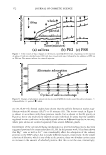
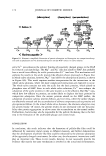
182 JOURNAL OF COSMETIC SCIENCE ■ Unexposed Sun Exposed 50.00 * * .-.. 40.00 E J;! 30.00 0 E a. 20.00 w 10.00 0.00 August October Figure 1. Affect of 30-minute exposure to natural sunlight on vitamin E in the superficial layers of the stratum corneum. The data represent the mean ± standard error of the mean. In August, sixteen subjects completed the study, whereas fourteen completed the study in October(* = p 0.05). 0.05 ). In contrast to vitamin E, the amount of vitamin E acetate in the superficial SC was not affected by sunlight exposure (data not shown). Erythema was not observed in either study. TOPICAL VERSUS DIETARY SUPPLEMENTATION The results of supplementing the diet with 400 IU a-tocopherol for 11 days or washing the skin once daily with the vitamin E body wash for nine days are shown in Figures 2 and 3. As can be seen (Figure 2), both groups started the study with equivalent serum vitamin E (p � 0.05) levels. Vitamin E acetate was not detected in the serum of either group (data not shown). Additionally, only the dietary supplemented group showed an increase in serum vitamin E levels from 24.3 ± 1.5 to 45.3 ± 3.3 µmoles/liter (Figure 2). In contrast to these results, both treatment modalities increased vitamin E in the superficial SC (Figure 3a, p ::5 0.001). In the group using the vitamin E body wash, surface vitamin E increased more than 50-fold, from 5 ± 2 to 267 ± 15 pmoles/cm2• The increase in surface vitamin E for the subjects taking the dietary supplements was much more modest, increasing eightfold, from 9 ± 3 to 79 ± 18 pmoles/cm2• Indeed, topical supplementation was nearly 300% more effective than dietary supplementation (267 ± 15 vs 79 ± 18 pmoles/cm2, p ::5 0.001) in terms of increasing SC vitamin E. However, since vitamin E is not stored within the skin as an ester, only topical supplementation increased the vitamin E acetate in the superficial SC from 1 ± 1 to 157 ± 28 pmoles/cm2 (Figure 36).
Purchased for the exclusive use of nofirst nolast (unknown)
From: SCC Media Library & Resource Center (library.scconline.org)