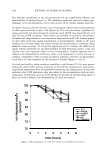
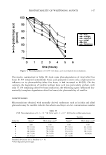
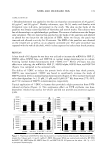
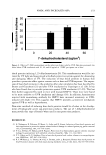
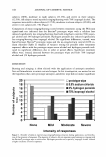
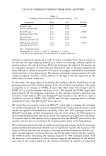
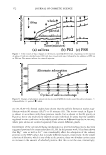
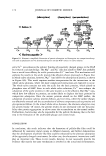
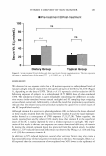
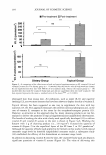
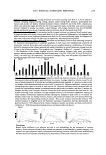
VITAMIN E DELIVERY BY SKIN CLEANSER 185 pro-vitamin is twofold. First, tocopheryl acetate is nonreactive (35), allowing formula tors to create a formula that is relatively stable to sunlight and oxidation. Since tocoph eryl acetate is almost ubiquitous in personal care products, we were not surprised to find low residual levels in most subjects. The second benefit is that once delivered to the skin (Figure 3), tocopheryl acetate can serve as a relatively stable source of vitamin E for future use. However, the value of depositing tocopheryl acetate on the skin is based on the premise that enzymes located in the skin will transform this pro-vitamin to the active vitamin (35). Although Alberts et al. (18) found little evidence of the bioconver sion of tocopheryl acetate to tocopherol, we (36) and other investigators (3 7), have observed modest conversion in human skin. Indeed, recently we detected vitamin E levels significantly above baseline levels 24 hours after washing the site with a cleanser containing only vitamin E acetate (unpublished observations). Dietary intake represents the sole means of obtaining this critical nutrient. U nfortu nately, data from the Third National Health and Nutrition Examination Survey (12) suggests that almost one third of the US population could be defined as clinically deficient in vitamin E (i.e., plasma vitamin E levels below accepted norms, 20 µmoll liter). Since there is good correlation between serum and skin levels (13,14) it is rea sonable to infer that a substantial number of Americans may not have enough vitamin E in their skin to properly protect it from oxidative stress (7). We show (Figure 3) that subjects who wash their skin once daily with the vitamin E body washed raised the level of vitamin E in their SC threefold greater than those subjects taking a daily vitamin E supplement (400 IU a-tocopherol) that was 18-fold greater than the RDI. Although both groups started with similar serum vitamin E levels, which were within the normal range reported in the literature (12-14,38), only the group supplementing their diets with a-tocopherol tablets significantly increased serum vitamin E levels (Figure 2). Interestingly, after supplementing their diet with 400 IU a-tocopherol for 11 days, serum vitamin E levels (Figure 2) were similar to values reported by Werninghaus et al. (38) after six months of dietary supplementation with 400 IU O'.-tocopherol. Also worth noting, topical supplementation did not increase serum vitamin E levels and therefore poses no systemic risk. CONCLUSIONS In conclusion, we show here that even modest exposure to sunlight (i.e., 30 minutes at midday) depletes the superficial layers of the SC of its protective complement of vitamin E by more than 50%, causing a localized functional deficiency of vitamin E. Impor tantly, we also show that use of a vitamin E body wash increased the quantity of vitamin E in the superficial layers of the stratum corneum more effectively than ingesting a vitamin E tablet daily that was 18x greater than the RDI. ACKNOWLEDGMENTS The authors gratefully acknowledge Mitch Kotler and Chip Kloos for their guidance on statistical design and analysis of the data, S. Cardona for the vitamin analysis, S. Kaplan and 0. Hamilton for coordinating the clinical studies, and G. Berkeley, J. Hunt, and K. Rocca for clinical support. All subjects participating in the studies reported here were

186 JOURNAL OF COSMETIC SCIENCE examined by a board-certified dermatologist, who had no other involvement or interest in the conduct of the study. REFERENCES (1) K. Trouba, H. Hamadeh, R. Amin, and D. Germolec, Oxidative stress and its role in skin disease, Antioxid. Redox. Signal, 4, 665-673 (2002). (2) S. R. Pinnell, Cutaneous photodamage, oxidative stress, and topical antioxidant protection,]. Am. Acad. Detmatol., 48, 1-19 (2003). (3) J. Fuchs, R. Mehlhorn, and L. Packer, Free radical reduction mechanisms in mouse epidermis skin homogenates,]. Invest. Dermatol., 93, 633-341 (1989). (4) J. Thiele, F. Dreher, and L. Packer, "Antioxidant Defense Systems in Skin," in Drugs vs. Cosmetics: Cosmeceuticals, P. Elsner and H. Maibach Eds. (Marcel Dekker, New York, 2000), pp. 145-188. (5) Y. Shindo, E. Witt, D. Han, and L. Packer, Dose response effects of acute ultraviolet irradiation on antioxidants and molecular markers of oxidation in murine epidermis and dermis,]. Invest. Dermatol., 102, 470--475 (1994). (6) G. Rhie, M. H. Shin, J. Y. Seo, W. W. Choi, K. H. Cho, K. H. Kim, K. C. Park, H. C. Eun, and J. H. Chung, Aging- and photoaging-dependent changes of enzymic and nonenzymic antioxidants in the epidermis and dermis of human skin in vivo, ]. Invest. Dermatol., 117, 1212-121 7 (2002). (7) J. Thiele, M. G. Traber, and L. Packer, Depletion of human stratum corneum vitamin E: An early and sensitive in vivo marker of UV photo-oxidation,]. Invest. Dermatol., 110, 756-761 (1998). (8) A. Tavakkol, Z. Nabi, S. Cardona, N. Soliman, and T. Polefka, Tropospheric ozone induces lipid hydroperoxides and depletes vitamin E in human skin in vivo with no detectable clinical or biophysical changes,]. Invest. Dermatol., 114, 844 (2000). (9) F. Nachbar and H. Korting, The role of vitamin E in normal and damaged skin,]. Mo!. Med., 73, 7-17 (1995). (10) R. Wolf, D. Wolf, and V. Ruocco, Vitamin E: The radical protector,]. Eur. Acad., Derrnatol. Venereal., 10, 103-117 (1998). (11) Institute of Medicine of the National Academies, Dietary Reference Intakes for Vitamin C, Vitamin E, Selenium, and Carotenoids (National Academy Press, Washington, DC, 2000), pp. 186-283. (12) E. S. Ford and A. Sowell, Serum a-tocopherol status in the United States population: Findings from the Third National Health and Nutrition Examination Survey, Am. ]. Epidemiol., 150, 290-300 (1999). (13) Y.-M. Peng, Y.-S. Peng, Y. Lin, T. Moon, D. Roe, and C. Ritenbaugh, Concentrations and plasma tissue-diet relationship of carotenoids, retinoids, and tocopherols in humans, Nutr. Cancer, 23, 233- 246 (1995). (14) G. W. Burton, M. G. Traber, R. V. Acuff, D. N. Walters, L. H. Kayden, and K. U. Ingold, Human plasma and tissue a-tocopherol concentrations in response to supplementation with deuterated natural and synthetic vitamin E, Am.]. Clin. Nutr., 67, 669-684 (1998). (15) A. Kretz and U. Moser, "Vitamins," in Handbook of Cosmetic Science & Technology, A. 0. Barel, M. Paye, and H. I. Maibach, Eds. (Marcel Dekker, New York, 2001), pp. 463--472. (16) S.S. Shapiro and C. Saliou, Role of vitamins in skin care, Nutrition, 17, 839-844 (2001). (17) M. Kamimura and T. Matsuzawa, Percutaneous absorption of a-tocopherol acetate,]. Vitaminol., 14, 150-159 (1968). (18) D.S. Alberts, R. Goldman, M. J. Xu, R. T. Dorr, J. Quinn, K. Welch, J. Guillen-Rodriguez, M. Aickin, Y. M. Peng, L. Loescher, and H. Gensler, Disposition and metabolism of topically adminis tered a-tocopherol acetate: A common ingredient of commercially available sunscreens and cosmetics, Nutr. Cancer, 26, 193-201 (1996). (19) F. Dreher, B. Gabard, D. A. Schwindt, and H. I. Maibach, Topical melatonin in combination with vitamins E and C protect skin from ultraviolet-induced erythema: A human study in vivo, Br. ]. Dermatol., 139, 332-339 (1998). (20) N. Muizzuddin, A. R. Shakoori, and K. D. Marenus, Effect of topical application of antioxidants and free radical scavengers on protection of hairless mouse skin exposed to chronic doses of ultraviolet B, Skin Res. Technol., 4, 200-204 (1998). (21) E. Pelle, N. Muizzuddin, T. Mammone, K. Marenus, and D. Maes, Protection against endogenous and
Purchased for the exclusive use of nofirst nolast (unknown)
From: SCC Media Library & Resource Center (library.scconline.org)