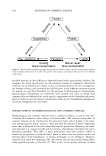
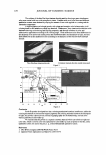
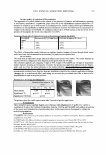
2003 ANNUAL SCIENTIFIC MEETING 227 In vitro studies: b) reduction of IL6 production The importance of cytokine balance in the control of the processes of immune and inflammatory reactions is well known. Interleukin 6, in particular, plays a key role in the inflammatory response induced by UV radiation or related to age (2-fold increase in circulating levels), locally creating chronic pro-inflammatory conditions. In our experiments, a marked decrease in basal IL6 secretion was observed at a concentration of 10 ppm. In the absence of Pal-GQPR, UV irradiation induces up to 20-fold increase in the IL6 levels. In the presence of the peptide, IL6 levels were reduced by 33 to 60%: Variation of basal and UV-induced IL6 level in the nresence ofnentide Pal-C-rOPR Pal-GQPR Decrease in IL6 (% basal level) Decrease in induced IL6 level (ppm) 10 -15% -33% 15 -20% -37% 30 -25% -60% The effects of hesperidine methyl chalcone on capillary fragility (leaking of serum through blood vessel walls) have been well documented in the literature [5,6] and were not repeated here. In vivo studies: The study had an open-label design and each subject acted as her own control. The results obtained at baseline (TO) were compared to those obtained at time points T28 and T56 days. The volunteers applied a gel containing 33 ppm of VW, 10 ppm of Pal-GQPR and 150 ppm of hesperidine methyl chalcone, morning and evening for 2 months. The product was applied by dabbing with the fingers, under each eye, from the lateral extremity to the medial extremity. The detenninations on T28 and T56 were conducted in the absence of the product the last am,lication having taken place the previous day. The measurements conducted were thus free from any interference related to the cosmetic application technique (drainage due to a mechanical effect) and taking into account the peri-orbital stasis that is known to be amplified after a night in the prone position. Decrease n = 20 of Mean altitude Significance TO Si · cance T56/f28 T28-TO -0.08 p0.05 (mm) T56-TO -0.20 p0.01 0.05 The pictures show the visible improvement after 2 months of product application. Conclusion: Three identified causes (capillary fragility, poor drainage, mild inflammation) of "puffy eyes" call for a combination of actives for treatment. Hesperidine chalcone, Val-Trp and Pal-GQPR each address at least one of the causes and, formulated in a topical product show visible improvements that appear to validate the underlying assumptions. ---�References Ill DOBBINS, 1990 Constriction of the perfused lymphatics by acetylcholine, bradykinin and histamine. Microcirc. Endothelium Lymphatics, dee, 6 (6), p409 [2] YOKOYAMA, 1996, Effects ofbradikinin on lymphatic pumping in rat mesentery, Am J Physiol, 270( 5 Pt 1), p G752 [3] SAITO1 et al., 1994 Structure and activity of angiotensin converting enzyme inhibitory peptides from Sake and Sake lee. Biosc. Biotechnol. Biochem, 58 (10), pl767 [4] WARREN, 1995 Captopril increases skin microvascular blood flow secondary to bradykinin Faseb J, 9(5), p41 l [5) RUDOVSKI, 1989 Improving venous tone and capillary sealing. Fortsch med, 107(19):52, p55 [6) GARG et al., 2001 Chemistry and pharmacology of the citrus bioflavonoid hesperidin Phytother Res, 15 (8), dee, p 655

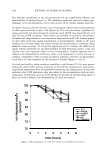
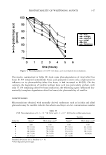
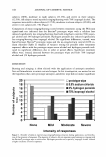
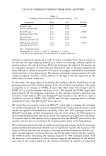
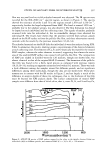
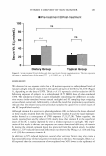
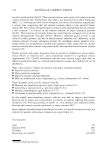
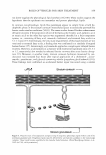
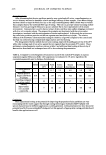
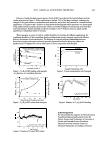
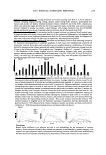
228 JOURNAL OF COSMETIC SCIENCE CATEGORICAL EVALUATION OF THE OCULAR IRRITANCY OF COSMETIC AND CONSUMER PRODUCTS BY HUMAN OCULAR INSTILLATION PROCEDURES Yang Gao, M.D., Kelly P. Lockwood and Bruce Kanengiser, M.D. Department of Ophthalmology, Clinical Research Laboratories, Inc., Piscataway, NJ Objective The assessment of ocular irritation potential is an important part of safety testing for cosmetic and consumer products. The different types of cosmetic and consumer products may irritate ocular tissues at different levels with various irritancy patterns. The purpose of this investigation was to examine ocular irritancy levels elicited by various categories of a specific class of cosmetic and consumer products, which have a potential to inadvertently enter the eye during use. Material and Methods The results of 205 (410 eyes) human subjects with self-assessed non-sensitive eyes and non-contact lens wearers, ranging in age from 19 to 69 years old, from 12 ocular instillation studies were reviewed. Test materials assessed belonged to I of 7 categories, which included liquid makeup, shampoo, baby wash, eye makeup re111over, mascara, powder eye shadow and facial cleanser (Table I). These test materials were evaluated by human ocular instillation followed by examinations, for which subjective perceptions of irritation were recorded, and component areas of ocular tissues were individually examined for inflammation and for the area and density of fluorescein staining patterns, at 30 seconds and at 5, I 5, 60 and 120 minutes post-instillation. Each subject was reclined in an automated ophthalmic chair at a 60° angle. A 75 - 100µ1 or 30mg dose of each test material was instilled into the inferior cul de sac, while the lower eyelid was retracted downward. Subjective irritation was determined by ascertaining from the subject any experiences of ophthalmic irritation (i.e. stinging, burning, itching, dryness, and foreign body sensation) at the time of the specified examination. Subjects were examined for evidence of excessive lacrimation. Each subject's upper and lower eyelids, specifically the lid margins and meibomian gland orifices, were examined for evidence of redness, scaling, swelling, and/or excessive meibomian secretions. The palpebral and bulbar conjunctivae were examined and scored for redness, inflammation, follicular, and/or papillary reactions. The cornea was examined for evidence of any inflammation, neovascularization, edema, infiltrates, opacities, and/or epithelial defects. To assess fluorescein staining patterns, a Fluorets sterile ophthalmic strip was inserted into the inferior cul de sac of each eye. A novel grading system (scale of O -13) was employed to evaluate the integrity of the palpebral and bulbar conjunctivae, corneal epithelium, and caruncle. Additionally, the tear film break-up time was assessed. All data was analyzed by one-way analysis of variance followed by Tukey's test and correlation (r-value). 111011r .. 1 Tablel Product Type Distribution Prodll:IS Preoaration Nllli,erofrn:s o/o LqwnBkel.fl Neat 40 9.76 Sha"1JOO IO''lo 160 39.02 Baby wash Neat 80 19.51 E:,e maket.p rem:ver Neat 60 14.63 Mascara Neat 10 2.44 Powder e:,e shadow Neat 40 9.76 Facial cleanser Neat 20 4.88 Total 410 100.00 Results /1/u, tration of ocular i"itation (Figure I). Ocular tissues consisting of palpebral conjunctiva, bulbar conjunctiva, cornea, and caruncle respond to cosmetic exposure with different severity, pattern and/or onset of symptoms, with respect to inflammation, abnormalities and/or observed tissue abrasion. As an example, this figure depicts ocular irritation induced by instillation of a cosmetic or consumer product. Moderate inflammation of the conjunctivae at a score level of 3, punctate fluorescein staining patterns of palpebral conjunctiva at an area level of 3 and a density score level of 2. superficial punctate keratopathy at a level 3 or 4 area with density level of 2 or 3 in the quadrants of inferior nasal and inferior temple, and punctate staining of caruncle at a level 4 area with density score level of 3 were observed.
Purchased for the exclusive use of nofirst nolast (unknown)
From: SCC Media Library & Resource Center (library.scconline.org)