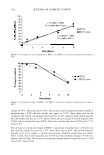
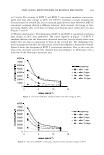
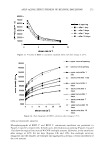
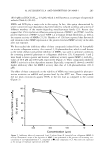
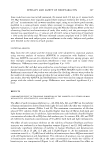
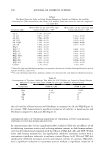
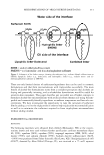
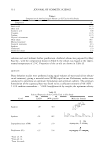
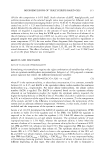
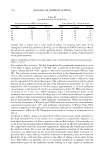
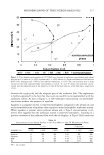
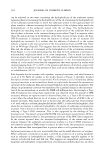
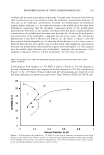
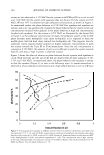
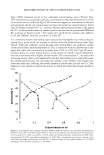
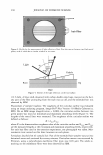
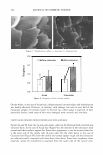
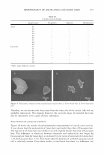
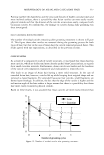
M. HETEROPHYLLA AND INHIBITION OF MMP-1 285 180.0 µM) and EGCG (SC 50 4.9 µM), which is well known as a scavenger of superoxide radicals (Table I) (20-22). MMPs and ROS play a major role in skin aging. In fact, skin aging characterized by severe connective tissue degradation has been linked to induced synthesis and activity of different members of the matrix-degrading metalloprotease family (23). Recent data suggest that UVA irradiation influences gene expression of MMP-1 and TIMP-1 and the protein expression of MMP-1,2 and TIMP-1,2 in human dermal fibroblasts, as well as the enzyme activity of MMPs (23,24). Hantke et al. (24) have reported that flavonoids and vitamins reduce MMP expression at the protein level and MMP activity in the skin after sun exposure. We first studied the inhibitory effect of these compounds isolated from M. heterophylla on in vitro collagenase activity. As a control, 1, 10-phenanthroline, which is well known as the metal chelator and general inhibitor of MMPs, was used to optimize conditions for screening potential gelatinase or collagenase inhibitors (25 ). Compounds 1 and 2 were found to have a potent and distinct inhibitory activity against MMP-1, with IC 50 values of 60.0 µM and 100.0 µM, respectively (Figure 2). These compounds inhibited MMP-1 activity in a dose-dependent manner. Especially, compound 1 showed a twofold higher inhibitory effect for MMP-1 activity than that of 1,10-phenanthroline (121.0 µM). The effect of these compounds on the viability of HDFs was investigated for photopro tective activities on mRNA and protein level by the MTT test. These compounds did not show cytotoxicity against HDFs in the test dose as compared to the control (Figure 3 ). 100 8=� 80 u � 0 I L. a.. +-' 60 � C 0 � u ..... ..... 0 0 40 C � 0 .c 20 .c C 0 500 400 100 10 Concentration (µM) Figure 2. Inhibitory effects of compounds 1 and 2 isolated from M. heterophylla on collagenase (MMP-1) activity. Fluorometic assays of the activities of MMP-1 was performed in the presence of increasing con centrations of 1, 10-phenanthroline (□), compound 1 (e), and compound 2 (0). The results are expressed as the average of triplicate experiments with SD.

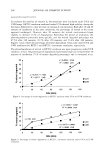
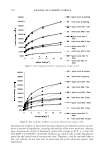
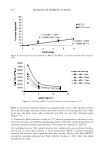
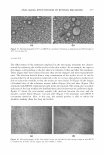
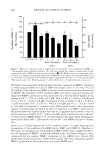
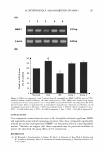
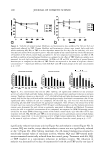
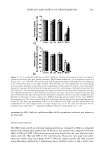
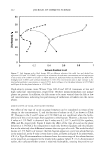
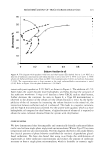
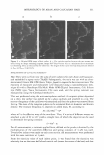
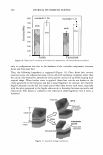
286 160 140 120 (1) ..... I 100 a.. - � _g � C 80 - 0 0 u 2 - C 0 60 2 ':::R. C � 0 40 0 20 0 JOURNAL OF COSMETIC SCIENCE Non-UVA UVA tRA 3 6 6 15 30 Cone. of eomp.1 Cone. of eomp.2 (µM) (µM) 100 80 60 40 20 0 J:I - � 0 .c C -� 0 u - = 0 Q) ':::R. 0 0 - Figure 3. Effects of compounds 1 and 2 isolated from M. heterophylla on the production of MMP-1 in UVA-irradiated human dermal fibroblasts. The cells were treated with various concentrations of these compounds for 24 h. aMMP-1, matrix metalloproteinase-1 (■). The MMP-1 contents in culture media were determined by ELISA as detailed under Materials and Methods. bCytotoxicity was measured by MTT assay (0). The results are expressed as the average of triplicate experiments with SD. *p 0.05 compared with UVA-treated control cell. UVA dosage was 6.3 J/cm2 tRA refers to 4.0 µM of all-trans retinoic acid. We further investigated the inhibitory effects of these compounds on MMP-1 expression in UVA-irradiated HDFs (6.3 J/cm2). HDF were treated with 1.0, 3.0, 6.0, 15 .0, and 30.0 µM for 24 h, and then the MMP-1 contents in the culture media were determined by ELISA. The treatment of UVA-irradiated HDFs with these compounds significantly suppressed MMP-1 production at the protein level in a dose-dependent manner, by an average of 24.5 ± 5.0% (p 0.05) at 1.0 µM, 38.8 ± 4.6% (p 0.05) at 3.0 µM, and 56.4 ± 7.5% (p 0.05) at 6.0 µM of compound 1, and an average of 30.3 ± 10.8% (p 0.05) at 6.0 µM, 43.8 ± 14.7% (p 0.05) at 15.0 µM, and 64.1 ± 7.5% (p 0.05) at 30.0 µM of compound 2, compared with UV A-treated control cells, respectively (Figure 3). Interestingly, the inhibitory effect of compound 1 on MMP-1 production at the protein level was slightly higher than that of, or appeared to be similar to that of, all-trans retinoic acid (tRA, 33.0 ± 5.0% at 4.0 µM), which is well known as an inhibitor of UV A-induced MMPs. Fisher et al. (7) have reported that tRA, which transrepresses transcription factor (AP)-1, substantially reduces AP-1 and MMPs induction in human skin. Ramos et al. (26) have reported that UV A irradiation results in a rapid transcriptional up-regulation of two members of the MMP family, MMP-1 and MMP-10. Therefore, in this study, we investigated in UV A-irradiated HDFs whether these compounds modu late the expression of MMP-1 steady-state mRNA levels. As shown in Figure 4, these compounds did not suppress MMP-1 production at the mRNA level, whereas tRA significantly reduced production. These results suggest that these compounds suppress MMP-1 production at the protein level, not at the mRNA level.
Purchased for the exclusive use of nofirst nolast (unknown)
From: SCC Media Library & Resource Center (library.scconline.org)