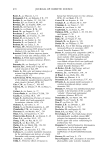
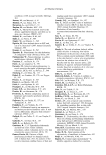
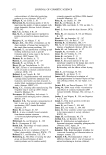
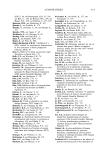
620 JOURNAL OF COSMETIC SCIENCE (17) P. J. Frosch and A. M. Kligman, The soap chamber test-A new method for assessing the irritancy of soaps,]. Am. Acad. Dermatol., l, 35-41 (1979). (18) S. W. Babulak, L. D. Rhein, D. D. Scala, A. F. Simion, and G. L. Grove, Quantitation of erythema in a soap chamber test using the Minolta chroma (reflectance) meter: Comparison of instrumental results with visual assessments,]. Soc. Cosmet. Chem., 37, 475-479 (1986). (19) S. Hornby, Personal Communication, Neutrogena Corporation, Los Angeles, CA. (20) H. Tagami, M. Ohi, K. Iwatsuki, Y. Kanamaru, M. Yamada, and B. Ichijo, Evaluation of the skin surface hydration in vivo by electrical measurement,]. Invest. Dermatol., 75, 500-507 (1980). (21) K. P. Anathapadmanabhan, C. L. Meyers, and M. P. Aronson, Binding of surfactants to stratum corneum,J. Soc. Cosmet. Chem., 47, 185-200 (1996). (22) L. D. Rhein, "In Vitro Interactions: Biochemical and Biophysical Effects of Surfactants On Skin," in Surfactants in Cosmetics, M. M. Rieger and L. D. Rhein, Eds. (Marcel Dekker, New York, 1997), pp. 397-426. (23) G. Imokawa, "Surfactant Mildness", in Surfactants in Cosmetics, M. M. Rieger and L. D. Rhein, Eds. (Marcel Dekker, New York, 1997), pp. 427-471. (24) K. P. Ananthapadmanabhan, D. J. Moore, K. Subramanyan, M. Misra, and F. Meyer, Cleansing without compromise: The impact of cleansers on the skin barrier and the technology of mild cleansing, Dermatologic Therapy, 17, 16-25 (2004). (25) J. Pinnagoda, R. A. Tupker, T.Anger, and J. Serup, Guidelines for transepidermal water loss (TEWL) measurement, Contact Dermatitis, 22, 164-178 (1990). (26) G. L. Grove, M. J. Grove, C. Zerwick, and E. Pierce, Comparative metrology of the evaporimeter and the DermaLab® TEWL probe, Skin Res. Tech., 5, 1-8 (1999). (27) G. L. Grove, M. J. Grove, C. Zerwick, and E. Pierce, Computerized evaporimetry using the Derma Lab® TEWL probe, Skin Res. Tech., 5, 9-13 (1999). (28) M. Obata and H. Tagami, A rapid in vitro test to assess skin moisturizers,]. Soc. Cosmet. Chern., 41, 235-241 (1990). (29) P. Moore, S. Puvvada, and D. Blankschtein, Challenging the surfactant monomer skin penetration model: Penetration of sodium dodecyl sulfate micelles into the epidermis,]. Cosmet. Sci., 54, 29-46 (2003). (30) J. W. Fluhr, M. Gloor, L. Lehmann, S. Lazzerini, F. Distance, and E. Berardesca, Glycerol accelerates recovery of barrier function in vivo, Acta Derrn. Venereol., 79, 418-421 (1999). (31) J. Bettinger, M. Gloor, A. Vollert, P. Kleesz, J. Fluhr, and W. Gehring, Comparison of different non-invasive test methods with respect to the different moisturizers on skin, Skin Res. Technol., 5, 21-27 (1999). (32) M. D. Batt and E. Fairhurst, Hydration of the stratum corneum, Int.]. Cosmet. Sci., 8, 253-256 (1986). (33) D.S. Orth and Y. Appa, "Glycerine: A Natural Ingredient for Moisturizing Skin," in Dry Skin and Moisturizers: Chemistry and Function, M. Loden and H. I. Maibach, Eds. (CRC Press, Boca Raton, FL, 2000), pp. 213-228. (34) C. L. Froebe, F. A. Simion, H. Ohlmeyer, L. D. Rhein, J. Mattai, R.H. Cagan, and S. E. Friberg, Prevention of stratum corneum lipid phase transitions in vitro by glycerol-An alternative mechanism for skin moisturization,J. Soc. CoS1net. Chern., 41, 51-65 (1990). (35) A. Rawlings, C. Harding, A. Watkinson, J. Banks, C. Ackermann, and R. Sabin, The effect of glycerol and humidity on desmosome degradation in stratum corneum, Arch. Dermatol. Res., 287, 457-464 (1995). (36) M. Hannuksela, "Glycols," in Dry Skin and Moisturizers: Chemistry and Function, M. Loden and H. I. Maibach, Eds. (CRC Press, Boca Raton, FL, 2000), pp. 413-419. (37) W. Abraham, "Surfactant Effects on Skin Barrier," in Surfactants in Cosmetics, M. M. Rieger and L. D. Rhein, Eds, (Marcel Dekker, New York, 1997), pp. 471-487. (38) C. A. Allen, The skin: A clinicopathological Treatise (Grune & Stratton, New York, 1967). (39) R. M. Adams, "Occupational Skin Disease," in Fitzpatrick's Dermatology in General Medicine. (McGraw Hill, New York, 1999). (40) C. K. S. Pease, I. R. White, and D. A. Basketter, Skin as a route of exposure to protein allergens, Clin. Exper. Derrnatol., 27, 296-300 (2002). (41) S. Ghosh and D. Blankschtein, Why is sodium cocoyl isethionate (SCI) mild to the skin barrier?-An in vitro investigation based on the relative sizes of the SCI micelles and the skin aqueous pores, ]. Cosrnet. Sci., 58, 229-244 (2007).

]. Cosmet. Sci., 58, 621-627 (November/December 2007) High-pressure differential scanning calorimetry of colorant products J.M. MARSH, C. J. CLARKE, K. MEINERT, and R. M. DAHLGREN, Procter & Gamble Technical Centers, Rusham Park, Egham Surrey, TW20 9NW1 UK U.M.M., CJ.C.), and Wella Service GmbH, Berliner Allee 65, D-64274, Darmstadt, Germany (K.M. 1 R.M.D.). Accepted for publication July 16, 2007. Synopsis High-pressure differential scanning calorimetry (HPDSC) can be used to gain information on both the degree of crystallinity in the intermediate filaments (IFs) and the structural rigidity of the surrounding matrix or intermediate filament associated proteins (IFAP) of the hair cortex (1-3). We have used HPDSC to measure changes in the denaturation temperature (T 0 ) and enthalpy (LlH0) of the crystalline components after multiple treatments with permanent hair colorant products. We have observed that after three repeat treatments both the denaturation enthalpy and peak temperature are significantly decreased vs the untreated starting substrate. However, on dialysis of the fibers in deionized water this decrease is shown to be completely reversible, returning the enthalpy and temperature to that of the untreated hair. It is proposed that the decrease is due to the incorporation of formulation components such as the alkalizer and surfactants etc. and metal ions such as calcium and magnesium from the tap wash water. These components are predicted to have a non-permanent effect on the salt bridges and hydrogen bonds and hence the rigidity or viscosity of the matrix. We have compared the denaturation temperature with the tensile properties of the fiber after treatment both before and after removal of actives from the fiber. INTRODUCTION In a previous article (4), the authors investigated the denaturation performance of hair fibers that had been subjected to a number of treatments with bleach products. That study was conducted by applying high-pressure differential scanning calorimetry (HPDSC) for temperatures up to 180°C in excess water and under conditions of equi librium water vapor pressure. W ortmann and Deutz (5) have proposed that the dena turation enthalpy (L�H 0 ) is dependent on the structural rigidity of the ex-helical material in the intermediate filaments of the keratin fiber and that the peak temperature (T 0) is dependent on the cross-link density and viscosity of the matrix in which the interme diate filaments are embedded. Our original studies of the effect of multiple bleach treatments on these two parameters showed a decrease in both �H 0 and T 0 as the treatment number was increased. The work by the present authors confirmed the de- 621
Purchased for the exclusive use of nofirst nolast (unknown)
From: SCC Media Library & Resource Center (library.scconline.org)