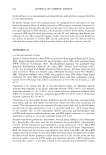
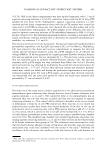
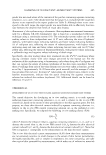
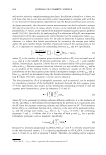
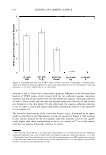
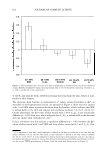
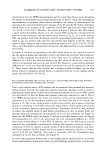
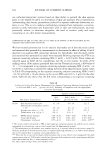
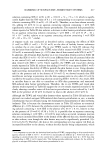
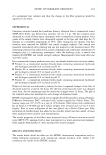
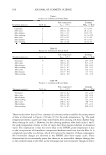
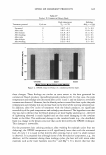
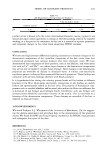
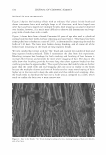
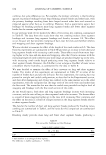
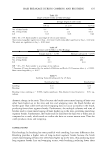
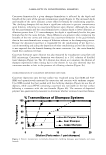
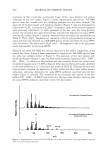
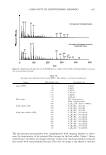
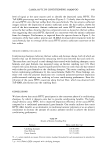
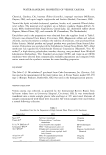
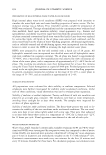
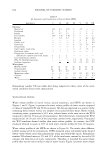
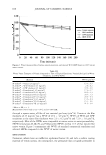
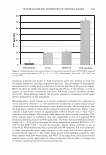
624 Treatment protocol Untreated After color After dialysis After washing After color After dialysis After washing Treatment protocol Untreated After color After dialysis After washing After color After dialysis After washing Treatment protocol Untreated After color After dialysis After washing After color After dialysis After washing JOURNAL OF COSMETIC SCIENCE Table I Product A: Commercial Blonde Shade Peak temperature Cycle no. TD±s (°C) 0 149.7 ± 0.2 145.8 ± 1.0 152.1 ± 0.2 1 144.6 ± 0.1 3 137.2 ± 0.5 3 149.0 ± 0.2 3 142.1 ± 0.4 Table II Product B: Commercial Blonde Shade Peak temperature Cycle no. TD±s (°C) 0 149.7 ± 0.2 146.6 ± 0.3 1 151.7 ± 0.7 1 145.6 ± 0.7 3 142.4 ± 0.4 3 151.6 ± 0.4 3 144.9 ± 0.9 Table III Product C: Commercial Brown Shade Peak temperature Cycle no. TD±s (°C) 0 149.7 ± 0.2 146.2 ± 0.3 150.3 ± 0.1 1 146.1±0.4 3 138.9 ± 0.2 3 150.8 ± 0.4 3 142.7 ± 0.5 Enthalpy .:iHD ± s (J/g) 13.7 ± 0.4 10.1 ± 0.1 15.8 ± 0.5 12.2 ± 0.05 11.3 ± 0.2 14.5 ± 0.2 10.3 ± 0.3 Enthalpy .:iH D ± s (J/g) 13.7 ± 0.4 10.7 ± 0.3 14.3 ± 0.6 12.3±0.5 12.9 ± 0.5 15 ± 0.1 11.3±0.6 Enthalpy .:iHD ± s (J/g) 13.7 ± 0.4 11.2 ± 0.6 14.7 ± 0.3 11.1±0.7 8.8 ± 0.4 13.7 ± 0.2 10.8 ± 0.4 These results show that all four commercial colorant products exhibit the same pattern of data as illustrated in Figure 2 (Product C) for the peak temperature, T0 . The peak temperature shows a significant drop immediately after coloring and then a further drop after coloring for cycle 3. However, for the coloring products, after both cycles 1 and 3 the peak temperature returns to that of virgin hair after repeated dialysis in deionized water. The implication is that the entire drop in the HPDSC peak temperature is due to the incorporation of formulation components/hardness metal ions into the fiber. It is completely reversible via dialysis, which will remove the majority of these components. No irreversible changes are observed in the HPDSC after three repeat cycles. These observations do not necessarily prove that there are no irreversible changes taking place in the covalent bonds in the fiber, as the technique may not be sensitive enough to detect

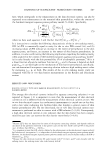
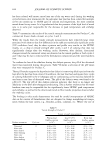
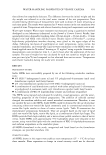
Treatment protocol Untreated After color After dialysis After washing After color After dialysis After washing u ! 149 ! E 144 • D. U 139 D. ::c 134 HPDSC OF COLORANT PRODUCTS Table IV Product D: Commercial Brown Shade Peak temperature Cycle no. 0 1 3 3 3 Untreated Cycle 1 T0 ± s (°C) 149.7 ± 0.2 146.1 ± 0.3 151.0 ± 0.7 144.9 ± 0.2 141.8 ± 0.2 150.8 ± 0.4 143.3 ± 0.4 I ■After Coloring ■After Dialysis □After washing I Cycle 3 Figure 2. HPDSC Data for Product C: commercial brown shade. 625 Enthalpy �HD ± s Q/g) 13.7 ± 0.4 12.8 ± 0.3 16.1 ± 0.2 12.0 ± 0.3 9.5 ± 0.4 16.1 ± 0.3 9.5 ± 0.4 these changes. These findings are similar to some extent to the data generated for commercial bleach products (persulfate/peroxide products) (4). In that case, the peak temperature and enthalpy also decreased after cycles 1 and 3, and on dialysis a reversible increase was observed. However, for the bleach products treated for three cycles the peak temperature and enthalpy did not increase back to the level of the starting substrate hair. In addition, after five cycles of treatment with the bleach products, no significant reversibility of the peak temperature and enthalpy was observed. The hypothesis was that this was due to the fact that the bleach products are more highly oxidizing (i.e., the level of lightening observed is much higher) and are thus more damaging to the covalent bonds in the fiber. This additional damage to the covalent bonds (e.g., the disulfides) leads to a change in the keratin structure that can be detected by the HPDSC technique. This damage is irreversible. For the permanent hair coloring products, after washing for multiple cycles (but not dialyzing), the HPDSC temperature is still significantly lower than with the untreated hair. At cycle 1 it is equal to that directly after c·oloring, but at cycle 3 a small increase is observed. It is proposed that although some of the formulation components, e.g., the alkalizer, will be removed during these washing cycles, the hair will still retain other materials such as the water hardness ions (Ca2 + and Mg2 + ). It is known that hair that
Purchased for the exclusive use of nofirst nolast (unknown)
From: SCC Media Library & Resource Center (library.scconline.org)