CASSIA HPTC IN CONDITIONING SHAMPOO 639 MOLECULAR WEIGHT DETERMINATIONS The samples of cassia polymer were prepared in the following manner: 10 ml of a 1 % acetic acid solution was added to a 20-ml vial. Approximately 10 mg of polymer was added to this solution. The vial was then put on a wrist-action shaker and allowed to shake overnight. Each sample was then filtered into a 2-ml autosampler vial through a 0.45-µm syringe filter prior to analysis. The molecular weight was determined using size-exclusion chromatography with multi angle laser light scattering and refractive index detection (SEC-MALLS-RI). The chro matographic system consisted of a 2695 Alliance HPLC equipped with an autosampler (Waters, Milford, MA). The injector was fitted with a 100-µl injection loop. All sepa rations were performed on 2 PL aquagel-OH mixed-size exclusion columns in series, 8 µm, 7.5 mm x 300 mm (Polymer Laboratories, Amherst, MA), using a mobile phase of 0.1 M triethylamine, 0.1 M sodium nitrate in 1 % glacial acetic acid/0.02% sodium azide at a flow rate of 0.9 ml/min. Both the MALLS detector and RI detector (DAWN EOS and OptiLab Rex, Wyatt Technologies, Santa Barbara, CA) use a 690-nm laser. Samples were run in triplicate. PERCENT TRANSMITTANCE MEASUREMENTS The percent transmittance of the shampoo formulas was measured using a Gretag Macbeth, Model Color i 5 UV/VIS spectrophotometer (Gretag Macbeth, New Windsor, NY). A light wavelength of 600 nm was used to characterize the degree of clarity of the cosmetic compositions, using a blank of de-ionized water. TREATMENT OF HAIR SAMPLES Virgin hair (International Hair Importers, New York) was bundled into ponytails prior to treatment. The hair was wetted, lathered with treatment product or control (0.1 g product/g hair), and rinsed for 30 seconds. The lathering and rinsing process was repeated a second time. Then this entire cycle was run two additional times, with the hair dried in a hot box (150°F) between cycles. Before analysis, hair samples were allowed to equilibrate at 73°F and 45% relative humidity for a minimum of 16 hours. POLYMER ANALYSIS Treated hair was weighed into sterile polypropylene tubes. Ten milliliters of 60% v/v sulfuric acid was added, and the tubes were shaken on a wrist-action shaker. After 30 minutes, a 3.5-ml aliquot was mixed with 1.5 ml of anthrone reagent (3 mg/ml in concentrated sulfuric acid) and heated in a 95°C water bath for 15 minutes. A Model 845 3 UV spectrophotometer (Agilent, Santa Clara, CA) was used to record the absor bence of the cooled samples at 630 nm. The amount of polymer deposited onto the hair was calculated using a 30-µg/ml cassia HPTC standard prepared in 60% sulfuric acid as a single point calibration. Analyses were run in quadruplicate and results were adjusted for the response of untreated hair.

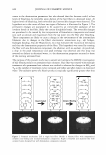
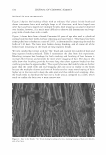
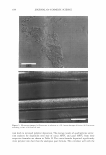
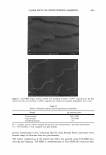
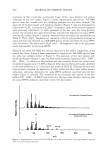
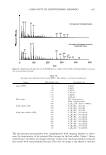
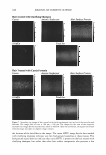
640 JOURNAL OF COSMETIC SCIENCE FLOW-CELL MICROSCOPY DIC microscopy images of a 10: 1 distilled water:shampoo dilution flowing across mul tiple strands of hair were obtained using a Zeiss Axioskop 2 microscope (Carl Zeiss, Inc., Thornwood, NY) coupled with a MTI 3CCD camera (DAGE-MTI, Michigan City, IN). Metamorph software (Molecular Devices Corporation, Sunnyvale, CA) journals were created to obtain one image per second. CR YO-SCANNING ELECTRON MICROSCOPY (CRYO-SEM) Cryo-SEM was performed using a Hitachi S-4700 FE scanning electron microscope (Hitachi High Technologies America, Inc. Pleasanton, CA) fitted with a Gatan Alto 2500 cryostage. Samples were cryo-preserved in liquid nitrogen and defrosted for ten minutes at -95°C. After being lightly coated with platinum, the samples were cooled to -150°C and observed under the following microscope conditions: 2 kV, 10 µA, 10° tilt angle. TIME-OF-FLIGHT SECONDARY ION MASS SPECTROMETRY (ToF-SIMS) Positive and negative ToF-SIMS spectra and images were obtained using an Ion-ToF IV instrument (Ion-ToF GmbH, Munster, Germany) equipped with a 25 keV Bi 3 + primary ion source for analysis and a low-energy pulsed electron flood gun for charge neutral ization. The primary ion source was operated in the high-current, bunched mode for acquisition of spectra and the burst-alignment mode for acquisition of images. These operating conditions provide high mass resolution for spectral acquisition (m/ Lim 4000 at m/z = 41) and high lateral resolution for image acquisition (primary ion beam diameter ::::: 0.3 µm). All spectra and images were obtained using a primary ion dose below 10 12 ions/cm2 to maintain static conditions (9). Hair fibers were mounted directly onto an aluminum sample holder using tape to affix the ends of the hair fibers to the sample holder. For acquisition of spectra and images, ten hair fibers from each treatment or control bundle were analyzed, with one positive ion and one negative ion spectrum and one image obtained for each fiber. A 50-µm x 50-µm area was analyzed in spectroscopy mode, resulting in the entire secondary ion signal being generated from the hair fiber surface. A 100-µm x 100-µm area was analyzed in the imaging mode to fully capture the hair diameter. Any contributions in each image from the sample holder were cropped from the image before further pro cessing. INSTRON COMBING TEST FOR WET HAIR Hair swatches for Instron combing were prepared as follows: Dry swatches were brushed with a stiff plastic brush (Purse Flare Brush, Goody Products Inc., Atlanta, GA) and wetted with water for ten seconds. Shampoo was applied to the swatch, brushed for 30 seconds, and then rinsed for 30 seconds. The treatment process was repeated on the same swatch, followed by a 60-second rinse and a 30-second brush. Finally, the swatches were rinsed for 60 seconds followed by a final 30-second brush. Samples were run in triplicate.
Purchased for the exclusive use of nofirst nolast (unknown)
From: SCC Media Library & Resource Center (library.scconline.org)