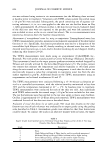
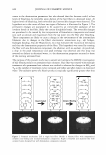
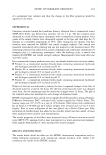
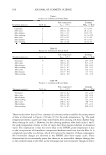
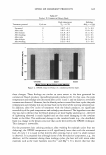
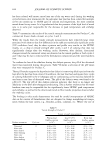
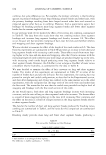
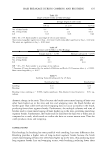
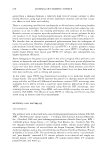
CASSIA HPTC IN CONDITIONING SHAMPOO 641 The hair swatches were combed in a 73°F/45% relative humidity-controlled environ ment, using an Instron Model 5 542 single-column frame with Instron Merlin/Series IX software, an Instron 2530-437 50N tension/compression load cell, and Instron 1701- 004 screw action grips (Instron, Norwood, MA). Formulas were ranked for wet condi tioning properties by mean comb force. RES UL TS AND DISCUSSION CASSIA CHARACTERIZATION Cassia is typically selected from Cassia tora, Cassia obtusifolia! or a combination thereof. In nature, Cassia tora and Cassia obtusifolia coexist in the same field and are typically co-harvested. In order to obtain the desired highly purified form of cassia, the endosperm of cassia seeds is soaked in water and solvent and minced in order to remove undesired components such as sennosides, anthraquinone derivatives, and fibrous materials. This is followed by separation and final wash steps to yield the desired galactomannan. For ease of handling, the galactomannan is often dried and ground into a fine powder. To promote resistance to rinsing from hair or other surfaces, cassia galactomannan is modified with co-reactive quaternary ammonium compounds containing an epoxy group specifically, this is glycidyltrimethylammonium chloride in an aqueous alkaline solution to yield 2-hydroxy-3-(trimethylammonium)propyl cassia (INCI: cassia hydroxypro pyltrimonium chloride). The reaction is schematically represented in Figure 1 (10). Charge density of a cationic polymer affects coacervate formation (11), and both charge density and molecular weight are known to impact the deposition of cationic polymers on hair (1). Cassia HPTC (3.0 mEq/g) was found to have a higher charge density than the quaternized guar (0.7 mEq/g) comparator. The molecular weight of the cassia polymers was between 300,000 D and 900,000 D. Table I lists the molecular weights and polydispersity for four samples of cassia HPTC, as determined by SEC-MALLS-RI. These polymers are of similar polydispersity to traditional cationic polymers (e.g. polyquaternium-10, quaternized guar) used in hair care products. Polydispersity is a measure of the distribution of molecular weights in a given polymer sample and is defined as the weight average molecular weight divided by the number average mo lecular weight. It is an important consideration, as it factors into polymer adsorption equilibrium (12). The lower-molecular-weight polymers have higher diffusion coeffi cients than higher-molecular-weight polymers and are first to adsorb onto hair. FORMULA CHARACTERIZATION TO PREDICT CONDITIONING PERFORMANCE Conditioning shampoos are designed to clean the hair and improve its appearance by providing conditioning appropriate to the hair type and desired end look. Fragrances and conditioning agents, such as deposition polymers and silicones, contribute most to the cost of a shampoo formulation. These ingredients must therefore be used judiciously to maximize benefits to hair while avoiding prohibitive costs. Upon shampoo dilution during rinsing, cationic polymers interact with anionic surfactants to form the coacer vate, which deposits on the hair. Since the water-insoluble coacervate affects the tur bidity of the diluted shampoo solution, percent transmittance is an appropriate means

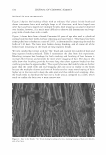
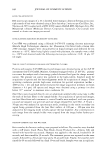
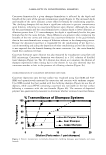
642 JOURNAL OF COSMETIC SCIENCE LH o�O� HO ) :z l • Figure 1. Reaction scheme and structure of cassia HPTC. Table I Molecular Weight and Polydispersity Determined for Four Samples of Cassia HPTC Cassia samples 2 3 4 Molecular weight 0.9014 X 10 6 (3%) 0.3054 X 10 6 (3%) 0.8890 X 10 6 (3%) 0.6357 X 10 6 (4%) Polydispersity 1.506 (4%) 2.117 (5%) 1.729 (4%) 1.970 (5%) N = 3 values reported are means. Percent relative standard deviation for each measurement is provided in parentheses. of measuring the conditioning contribution of deposition polymers in clear shampoo systems. A percent transmittance curve was generated over dilutions from 1: 1 to 20: 1 water:shampoo, encompassing the key regions of coacervate insolubility that quickly occur in the real-life shampooing process.
Purchased for the exclusive use of nofirst nolast (unknown)
From: SCC Media Library & Resource Center (library.scconline.org)