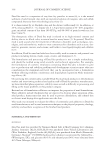
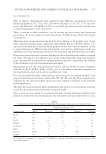
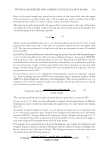
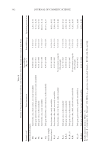
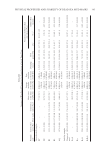
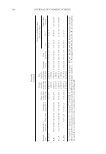
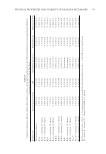
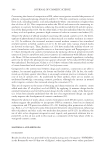
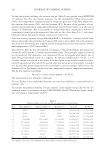
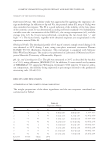
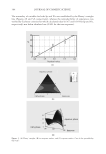
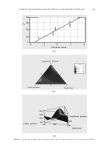
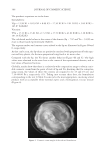
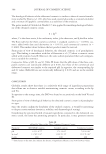
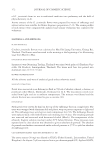
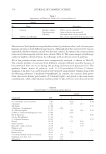
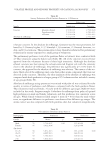
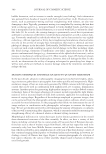
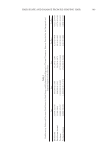
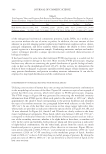
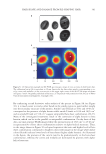
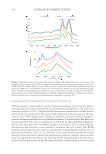
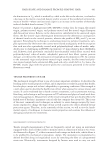
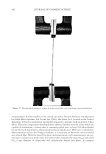
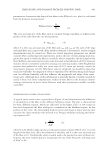
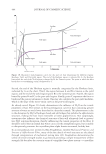
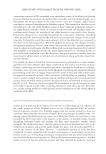
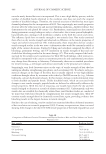
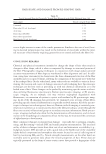
Table II Results of Visual Assessment, Spreadability, and Separation Tests for Formulations at Initial Time Point Formula code a Visual assessment Spreadability (Kg cm·s-1 ) Extrudability (g) Separation percent (w/w) Over-the-shelf samples RV Faint brown color, thick texture, not easily extrudable 0.008 ± 0.001 4.10 ± 0.17 4.20 ± 0.35 BL Dark gray and brown (nonhomogenous color), not easily extrudable 0.082 ± 0.011 3.45 ± 0.12 6.31 ± 0.29 NC Dark gray color, easily extrudable 0.181 ± 0.006 6.02 ± 0.33 9.84 ± 0.45 BS Faint brown color, easily extrudable 0.679 ± 0.186 4.75 ± 0.30 10.13 ± 0.11 AQ Dark gray and brown (color variation), easily extrudable 0.963 ± 0.064 7.94 ± 0.54 13.57 ± 0.27 Stability samples Untreated mud Gray-brown color, easily extrudable 0.053 ± 0.008 6.63 ± 0.12 8.85 ± 0.02 K 15 G Gray-brown color, thick, not easily extrudable 0.025 ± 0.003 5.40 ± 0.16 2.98 ± 0.41 K10 Gray-brown color, very thick, not easily extrudable No movement using the 100 g weight 6.61 ± 0.23 2.45 ± 0.49 B 10 G Dark gray color, easily extrudable 0.217 ± 0.043 9.17 ± 0.38 8.02 ± 0.52 K5BG5 Dark gray color, easily extrudable 0.099 ± 0.010 5.61 ± 0.27 4.99 ± 0.36 K7.5B 7.5 G Dark gray color, easily extrudable 0.054 ± 0.007 14.25 ± 0.53 5.34 ± 0.47 K5B5 Gray-brown color, thick, and not easily extrudable No movement using the 100 g weight 6.52 ± 0.21 4.26 ± 0.95 N 0.05 G Dark gray, gritty texture, acceptable extrudability 0.180 ± 0.022 7.66 ± 0.34 7.03 ± 0.88 K10B2G Dark gray color, thick, and not easily extrudable 0.041 ± 0.004 5.63 ± 0.21 4.05 ± 0.45 Results represent mean ± SD (n = 3). a K = kaolin, B = bentonite, N = Natrosol250 ® HHX, G = glycerin, over-the-shelf brands = RV, NC, BL, BS, and AQ. JOURNAL OF COSMETIC SCIENCE 342

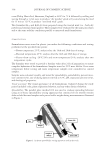
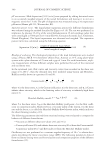
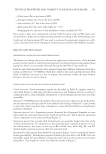
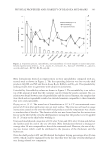
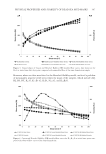
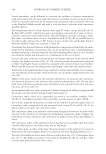
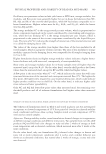
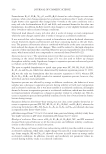
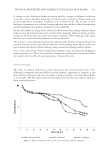
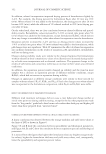
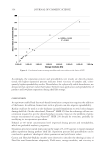
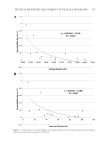
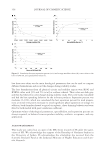
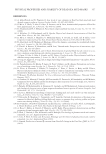
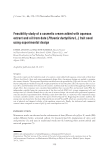
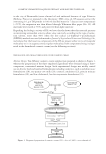
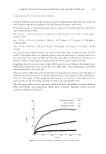
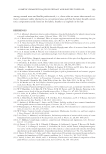
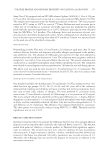
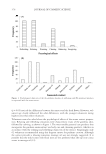
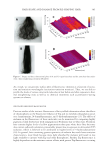
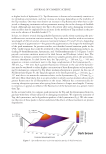
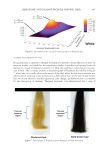
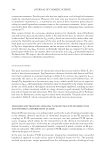
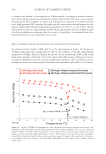
PHYSICAL PROPERTIES AND STABILITY OF DEAD SEA MUD MASKS 343 Most formulations showed an improvement in their spreadability compared with un- treated mud as shown in Figure 2. The best spreading behavior was for over-the-shelf products AQ, BS, and NC and the in-house B10G, K5B5G, and N0.05G. The spreadability ranking results were in agreement with subjective assessments. Extrudability. Extrudability values are shown in Figure 2. The extrudability is an indica- tor of the amount of mud that the customer can eject from the pouch container. No cor- relation was found between ease of spreadability and the ejected amount the samples that were thick and not spreadable resulted in extruded amounts comparable to those formulas that were easily spreadable. Drying rate at 32 °C. The water loss of formulations at 32° ± 1°C was monitored over a period of 20 min after application onto an inert surface. The time was set based on usage instructions stated on the over-the-shelf mud products and the temperature was chosen to simulate that of the skin. The duration of the test was chosen based on the instructions for use in the label of the over-the-shelf products stating that the product is to be applied for 15–20 min on the skin before washing it. Untreated mud showed a mass loss of 10% after 5 min and 20% after 10 min and did not dry further until the end of the test (20 min). Most formulations showed a drying per- centage after 20 min comparable to that of the untreated mud. However, the rate of dry- ing was slower, which could be attributed to the presence of the thickeners and the humectant. Over-the-shelf products RV and BS showed the highest drying percentage after 20 min (28%), which could be explained by the fact that they were the only over-the-shelf prod- ucts listing ethanol as a component. Figure 2. Separation percent, spreadability, and extrudability of tested samples at initial time point. Results represent mean ± SD (n = 3). K = kaolin, B = bentonite, N = Natrosol® 250 HHX, G = glycerin, over-the-shelf mud = RV, NC, BL, BS, and AQ.
Purchased for the exclusive use of nofirst nolast (unknown)
From: SCC Media Library & Resource Center (library.scconline.org)