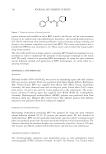
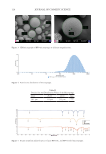
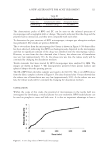
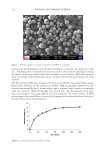
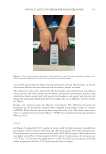
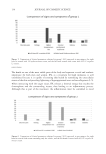
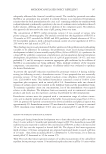
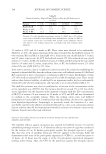
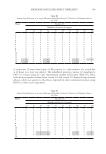
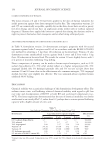
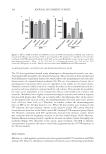
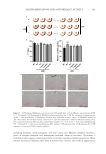
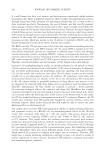
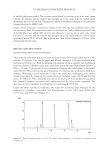
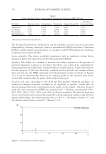
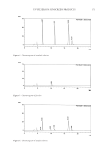
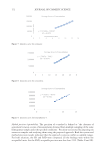
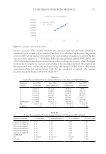
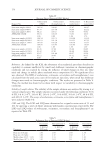
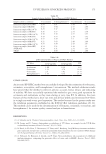
122 JOURNAL OF COSMETIC SCIENCE structure on which makeup can be applied. In addition, a structure was designed in this way, considering that it would prevent situations such as the patient’s scratching or causing the spread by playing, which makes the treatment of acne difficult. BPO microsponges were successfully prepared through a quasi emulsion solvent diffusion method for drug delivery. The EE and DL of BPO were as high as 60.879% and 38.929%, respectively. These values showed the efficiency of the production method. SEM micrographs showed that the obtained microparticles had a porous surface and a spherical shape, which is compatible with the literature. SEM micrographs also proved that the microsponges keep their structural integrity after being applied to textile materials. The release studies of BPO microsponges and treated fabrics continue by changing the dissolution medium, because of the low release rate of the formulation. Figure 7. SEM micrographs of treated cotton fabric with BPO microsponges. Figure 8. In vitro drug release of the fabric sample.

123 A New Alternative for Acne Treatment The results revealed that microsponges have promising potential in the textile field, and this could be successfully transferred to textile materials. In this study, HPMC, which is widely used to delay drug release in pharmacology, was also used in the textile field as a binder. Despite their particle sizes of around 110 µm, microsponges were fixed on the fabric surface with an acrylic binder, particularly with HPMC used to keep the particles at a large size. ACKNOWLEDGMENTS This work was supported by the TUBITAK Scientific and Technological Research Council, Project 117M350. REFERENCES (1) H.C. Williams, R.P. Dellavalle, and S. Garner, Acne vulgaris, Lancet., 379(9813), 361–372 (2012). (2) A. Vyas, A.K. Sonker, and B. Gidwani, Carrier-based drug delivery system for treatment of acne, ScientificWorldJournal, 276260 (2014). (3) R. Kubba, A.K. Bajaj, D.M. Thappa, R. Sharma, M. Vedamurthy, S. Dhar, S. Criton, R. Fernandez, A. J. Kanwar, U. Khopkar, M. Kohli, V.P. Kuriyipe, K. Lahiri, N. Madnani, D. Parikh, S. Pujara, K.K. Rajababu, S. Sacchidanand, V.K. Sharma, and J. Thomas, Combination therapy, Indian J. Dermatol. Venereol., 75(1), 5–9 (2009). (4) E. Makrantonaki, R. Ganceviciene, and C. Zouboulis, An update on the role of the sebaceous gland in the pathogenesis of acne, Dermatoendocrinol., 3(1), 41–49 (2011). (5) E.A. Tanghett, The role of inflammation in the pathology of acne, J. Clin. Aesthet. Dermatol., 6(9), 27–35 (2013). (6) A. Yarpuz, E. Saadet, H. Şanlı, and H. Özgüven, Akne vulgaris hastalarında sosyal kaygı düzeyi ve bunun klinik değişkenler ile ilişkisi, Türk psikiyatri dergisi, 19(1), 29–37 (2008). (7) J.J. Leyden, A review of the use of combination therapies for the treatment of acne vulgaris, J. Am. Acad. Dermatol., 49(3), S200–S210 (2003). (8) C. Brammann and C.C. Müller-Goymann, An update on formulation strategies of benzoyl peroxide in efficient acne therapy with special focus on minimizing undesired effects, Int. J. Pharm., 30(578), 119074 (2020). (9) V. Nierstrasz, “Textile-based drug release systems,” in Smart Textiles for Medicine and Healthcare, L. Van Langenhove. Ed. (Woodhead, Cambridge, 2007), p. 50. (10) K.E. Uhrich, S.M. Cannizzaro, R.S. Langer, and K.M. Shakesheff, Polymeric systems for controlled drug release, Chem. Rev., 99(11), 3181–3198 (1999). (11) A.A. Date, B. Naik, and M.S. Nagarsenker, Novel drug delivery systems: potential in improving topical delivery of antiacne agents, Skin Pharmacol. Physiol., 19(1), 2–16 (2006). (12) T. Gabriel, Topical antiacne drugs delivery systems, The Open Dermatology Journal, 10, 85–95 (2016). (13) E. Yazıcı, S.H. Kaş, and A.A. Hıncal, Microsponges, Fabad J. Pharm. Sci., 19(3), 121–128 (1994). (14) T. Çomoğlu and N. Gönül, Microsponge delivery systems, Ankara Univ. Eczacilik Fak. Derg., 29(2), 75–86 (2000). (15) S.H. Kaş, “İlaç taşıyıcı partiküler sistemler,” in Kontrollü SalımSsistemleri, A. Zırh-Gürsoy. Ed. (Kontrollü Salım Sistemleri Derneği, İstanbul, 2017), pp. 94–99. (16) S. Subhash and S. Nacht, “Polymeric porous delivery systems,” in Delivery System Handbook for Personal Care and Cosmetic Products, M. Rosen. Ed. (William Andrew Inc., New York, 2005), pp. 338–344. (17) S. Feldman, R.E. Careccıa, K.L. Barham, and J. Hancox, Diagnosis and treatment of acne, Amerıcan Famıly Physıcıan, 69(9), 2123–2130 (2004).
Purchased for the exclusive use of nofirst nolast (unknown)
From: SCC Media Library & Resource Center (library.scconline.org)