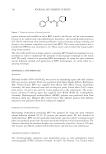
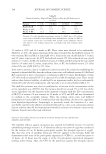
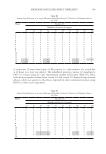
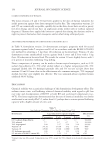
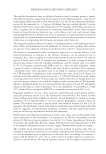
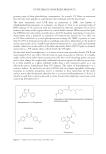
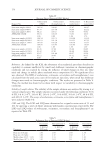
168 JOURNAL OF COSMETIC SCIENCE Avobenzone (butyl methoxydibenzoylmethane) is an oil-soluble ingredient used in sunscreen products to absorb the full spectrum of UVA rays and offers protection from both UVA and UVB rays. The maximum absorption wavelength of avobenzone is 357 nm, and it can absorb UV light over a wider range of wavelengths than many other sunscreen agents. When avobenzone is exposed to the sun for 30 minutes, it completely degrades, providing very little protection to persons who are exposed to the sun for long periods of time. As a result, it is combined with octocrylene, which is exceptionally stable and gives hours of sun protection when combined with avobenzone. Octocrylene, also known as octocrilene, is an organic UV filter that absorbs mostly UVB and short UVA wavelengths. However, the amount of this component in most recipes is kept to no more than 10% or 12%. Octocrylene is a photo stable UVB filter that is oil-soluble, liquid, and has excellent dissolving characteristics. UVB and short-wave UVA photons with wavelengths in the range of 280–320 nm are absorbed by the conjugated acrylate component, protecting (11– 12) the skin from direct DNA damage. There are many methods reported for UV filters in sunscreen such as spectrophotometry (11), high performance thin layer chromatography (13), HPLC (14–18) (this method is less time consuming), and single run analysis. EXPERIMENTAL MATERIALS AND REAGENTS Working reference standards of avobenzone, octinoxate, octocrylene and benzophenone-3 and HPLC grade methanol and chloroform were purchased from Merck Limited (Merck Life Science Private Limited, Mumbai, India). The 0.45 μm PTFE and nylon syringe filter were procured from AXIVA (Axiva Sichem Pvt. Ltd., Sonipat, Haryana -131028, India). Water for HPLC was generated using a Milli-Q water purification system (Merck Millipore, Milford). CHROMATOGRAPHIC CONDITIONS AND EQUIPMENT Equipment used consisted of a UFLC-SHIMADZU system (Lab Solutions, Shimadzu Analytical (India) Pvt. Ltd., Mumbai, India), XS105 dual range balance (Mettler Toledo India Pvt. Ltd., Mumbai, India), a 20 µL injection loop and Nexera liquid chromatograph LC-30AD and SPD-M20A Prominence diode array detector, column oven CTO-20A, and degassing unit DGU-20A 3R . All chromatographic experiments were performed in the isocratic mode. Separation was achieved on a stationary phase of Baker bond Q2100 C 18 (250 × 4.6 mm, 5 µm in particle size) column by using a mixture of methanol and water (90:10 vol/vol) as the mobile phase. The run time was 25 min at room temperature and the mobile phase was pumped at a flow rate of 0.7 mL/min, while the eluents were monitored at 303 nm. The column was equilibrated by pumping the mobile phase through the column for 20 minutes before the injection. PROCEDURE Standard solution preparation. Twenty-five mg each of the following reference standards were weighed into a 100-ml volumetric flask: avobenzone, octinoxate, octocrylene and benzophenone-3. Two mL of chloroform were added to dissolve the analytes and 20 mL

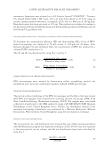
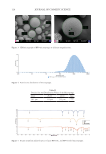
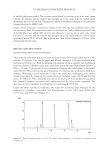
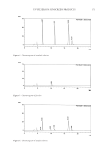
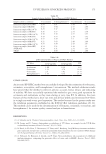
169 UV FILTERS IN SUNSCREEN PRODUCTS of mobile phase were added. The mixture was allowed to sonicate on an ultra-sonic water bath for 10 minutes and the volume was brought up to the mark with the mobile phase (methanol: water 90:10 vol/vol). The prepared solution was filtered through a 0.45 μm nylon syringe filter for the HPLC vials. Sample solution preparation. A sunscreen sample of 350–400 mg was transferred into a 100- ml volumetric flask. The sunscreen sample was dissolved in 2 mL of chloroform and 20 mL of mobile phase was added. The solution was allowed to sonicate on an ultra-sonic water bath for 10 minutes and the volume was brought up to the mark with the mobile phase (methanol: water 90:10 vol/vol). The solution was then filtered through a 0.45 μm nylon syringe filter for the vials. RESULTS AND DISCUSSION METHOD DEVELOPMENT AND OPTIMIZATION The method development was started with methanol: water (70:30) with a flow rate of 1 mL/ min for 20 minutes. The mobile phase was filtered through a 0.45 µm membrane filter and sonicated before use. Peak broadening and merging of the octinoxate and avobenzone peak was observed. Further trials were carried out using the same Baker bond Q2100 C 18 (250 × 4.6 mm, 5 µm in particle size) column but changing the mobile phase to methanol: water (80:20). There still was not good separation of octinoxate and avobenzone with these changes. Obtaining a good separation of these two peaks was challenging, and another attempt was made by changing the mobile phase to methanol: water (90:10) and the flow rate to 0.7 mL/min. This caused the run time to increase to 25 minutes but the separation was observed between octinoxate and avobenzone and the other peaks improved. The detection of each component was monitored at a wavelength of 303 nm. Under the above optimized conditions, the respective retention times obtained for the avobenzone, octinoxate, octocrylene and benzophenone-3 were 17.907 min, 16.619 min, 11.373 min, and 6.827 min (Figure 2). Figure 2. Typical chromatogram of four UV filters (benzophenone-3, octocrylene, octinoxate, and avobenzone).
Purchased for the exclusive use of nofirst nolast (unknown)
From: SCC Media Library & Resource Center (library.scconline.org)