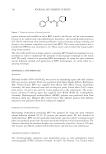
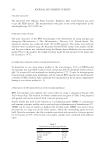
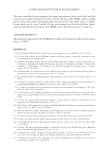
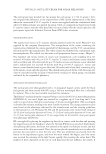
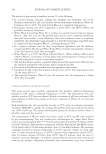
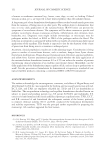
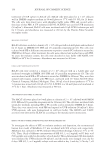
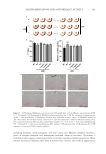
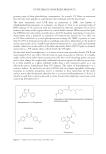
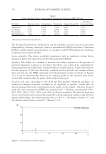
116 JOURNAL OF COSMETIC SCIENCE organic solvents and insoluble in water. BPO is used as an effective tool for acne treatment because of its antibacterial, anti-inflammatory, keratolytic, and wound-healing properties (19). On the other hand, skin irritation problems—such as burning, itching, crusting, and dryness—are common complaints associated with BPO. This causes some patients not to benefit from BPO for acne treatment (1,21). These claims can be reduced by using modern drug release systems. The aim of this study was to design a plaster containing BPO-loaded microsponges for acne treatment in order to understand the potential of microsponge technology in the textile field. The study consisted of preparing BPO microsponges by using the quasi emulsion solvent diffusion method and application of BPO microsponges on cotton fabric by a spraying technique. MATERIALS AND METHODS MATERIALS Polyvinyl alcohol (9,000–10,000 M w ) was used as an emulsifying agent, and ethyl cellulose (EC) was used as a polymer. Both were purchased from Sigma (Sigma-Aldrich, Burlington, MA, United States). BPO was supplied from Merck (The Merck Group, Darmstadt, Germany). All other chemicals were used at analytical grade. Cotton fabric (100% cotton, plain weave, 115 g/m2) was used for textile application in the experiments. The acrylic- based commercial linking agent was supplied from BASF (BASF SE, Ludwigshafen, Germany). Hydroxypropyl methylcellulose (HPMC) polymer was purchased from Dow Chemical (Dow Inc., Midland, MI, United States). The adhesive plasters with different properties were purchased from local commercial suppliers. PREPARATION OF MICROSPONGES Microsponge formulation–containing BPO was prepared by using the quasi emulsion solvent diffusion method (22,23). To prepare the internal phase, EC was dissolved in dichloromethane. BPO was then gradually added under agitation, and the resulting internal phase was gradually poured into the polyvinyl alcohol solution in water (external phase). The solution containing the emulsion droplets was continuously stirred for 3 hours at 500 rpm. The mixture was filtered, washed with distilled water, and dried at room temperature. CHROMATOGRAPHIC CONDITIONS The chromatographic conditions were determined using an ultra performance liquid chromatography (UPLC) (Thermo Scientific Accela™, San Ramon, CA, United States) Figure 2. Chemical structure of benzoyl peroxide.

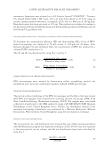
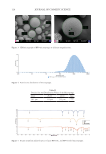
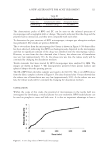
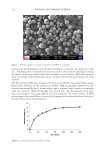
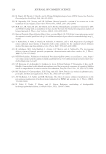
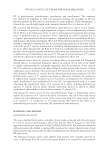
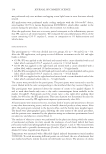
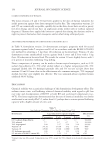
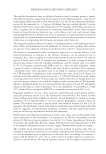
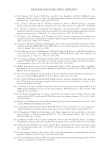
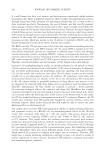
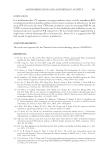
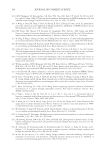
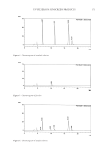
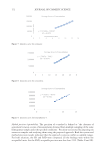
117 A New Alternative for Acne Treatment instrument. Separation was achieved on a GL Sciences Inertsil® (INERTSIL®, Torrance, CA, United States) ODS-3 HP (3 µm, 150 x 2.1 mm) C18 column at 25 °C by using an isocratic elution method with water: acetonitrile (15:85, v/v) at a flow rate of 200 µL/min. Photodiode-array detection was made at 225 nm. This method was validated according to the International Council for Harmonisation of Technical Requirements for Pharmaceuticals for Human Use guidelines (24). ENCAPSULATION EFFICIENCY AND DRUG LOADING OF BPO-LOADED MICROSPONGES To determine the encapsulation efficiency (EE) and drug loading (DL), 0.01 g of BPO- loaded microsponge was dissolved in 50 mL acetone at 200 rpm for 48 hours. After filtration through 0.22 µm membrane filter, the concentration of BPO was analyzed by a validated UPLC method (n = 5). The EE and DL was determined by using Eq. 1 and Eq. 2: EE% Experimental drug content Theoretical drug content = ×100 (1) DL% Drug amount in microsponge Amount of microsponge = ×100 (2) CHARACTERIZATION OF THE BPO MICROSPONGES BPO microsponges were assessed by determining surface morphology, particle size distribution, pore structure, and Fourier transform infrared (FTIR) spectroscopy. PARTICLE SURFACE MORPHOLOGY The particle surface morphology of the BPO microsponges and the fabrics that were treated with BPO microsponges were visualized by scanning electron microscopy (SEM) (Carl Zeiss, Carl-Zeiss-Stiftung, Oberkochen, Germany, 300VP). The samples were coated with a thin layer of gold prior to the SEM analysis by using a QUORUM Q150 RES (Quorum Technologies, Lewes, United Kingdom) device. Particle size distribution analysis of the optimum microsponge formulation was performed by a Malvern Mastersizer (Malvern Instruments, Worcestershire, United Kingdom) using the wet dispersion technique. PARTICLE SIZE AND DISTRIBUTION The mean particle size and distribution were measured by laser diffraction measurements with the Mastersizer using the wet dispersion technique (25,26). Dv(50) value was expressed as the mean particle size by volume, and the size distributions (span) were calculated by using Eq. 3: Span= Dv(90)- Dv(10) Dv(50) (3)
Purchased for the exclusive use of nofirst nolast (unknown)
From: SCC Media Library & Resource Center (library.scconline.org)