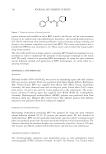
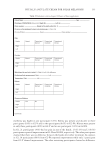
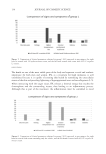
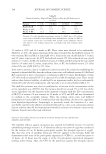
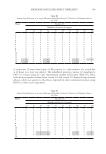
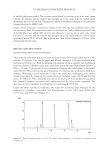
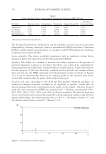
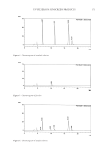
144 JOURNAL OF COSMETIC SCIENCE The method of preparation of repellent version 2.0 is the following: • In a heated mixing container, combine the emollient, the emulsifiers, two of the thickeners (polyamide-3 and cetyl alcohol), and the film former dimethicone (Phase A). Commence heat to 90°C. Stir until melted Phase A is completely homogenous. • Discontinue heating, and when temperature is below 80°C, add IR3535 (Phase A1) gradually, stirring to incorporate. • While Phase A (including Phase A1) is cooling, in a separate heated container, prepare Phase C. Add citric acid into the purified water and stir until completely solubilized, then add the trisodium citrate (dihydrate). Once the trisodium citrate is completely solubilized, the pH should be approximately 6.2. Add the final amount of purified water to complete the final weight of Phase C, and begin heating to 50°C. • In a separate container mix the (dry) encapsulation ingredients and the thickener carrageenan (Phase B), then add Phase B into Phase A slowly and gradually, stirring to avoid local freeze-out of gel. Mix thoroughly. • When Phase C is at 50°C, add Phase A/B into Phase C. When all Phase A/B has been added to Phase C, recommence stirring. Shear hard and homogenize. Continue to shear with the homogenizer to form creamy white emulsion. • Add the film former acrylates copolymer (Phase D) and the preservatives (Phase E) into the emulsion sequentially with stirring, while cooling the product. • If required, add additional purified water for appropriate final weight. • Check that the pH of the final emulsion is between 6.0 and 6.5. For composition version 2.0, the target pH is 6.2. • Add (optional) fragrance (Phase F) into the emulsion once the temperature is below 40°C, Mix thoroughly. TESTING OF STABILITY AND PHYSICAL ASPECTS This study focused upon repellent compositions that manifest stabilized formulation properties at RT and/or accelerated temperature at 40°C. The formulations were also stability tested at 50°C (data not shown). Weekly assessments of pH were performed. The linear regressions of the time in weeks to arrive at a reduction in pH loss of 1.0 units were determined. Each formulation was also assessed for viscosity at 25°C using an analogue rotationary viscometer (PCE RVI 1, spindle #4, 12 rpm). The preferred viscosity range for the lotion was 3,000–10,000 cps. The texture and fluid flow pattern of a lotion, as well as a white to off-white color, were also assessed. The concentration of IR3535 within the lotions stored at 40°C and RT were analyzed by gas chromatography. This was conducted by Stillmeadows Inc. (Sugar Land, Texas) using a gas chromatograph Trace™ 1310 with autosampler, Chromeleon™ (Thermo Fisher Scientific, Waltham, Massachusetts) integration software, Phenomenex ZB-FFAP column (30 m length times 0.32 mm inner diameter times 0.5 µm film thickness). The operating conditions included an injector temperature of 220°C injection volume of 1.0 µL split ratio 25 flame ionization detector at 260°C column (oven) temperatures (initial 100°C, hold 1.0 minute, increase 20°C/min, final 250°C, hold 6.5 minutes, total run time 15 minutes) carrier gas hydrogen, 3.0 mL/min constant flow (by electronic flow control) and make-up gas nitrogen. Integration parameters were measurement type area retention

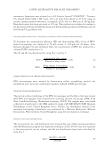
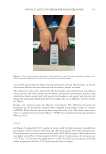
145 MICROENCAPSULATED INSECT REPELLENT time(s) internal standard methyl undecanoate at 4.3 minutes and the active ingredient 3-[n-N-butyl-N-acetyl]-aminopropionic acid ethyl ester at 7.4 minutes. ARM-IN-CAGE MOSQUITO EFFICACY TESTING ON HUMAN SUBJECTS Repellency efficacy tests (arm-in-cage) were conducted for version 2.0 and prototype version 1.0 against the mosquito species Aedes aegypti at Laboratorios Ecolyzer LTDA (Sao Paulo, Brazil). These tests were performed according to the OPPTS 810.3700 methodology (July 7, 2010), which is one of a series of test guidelines established by the Office of Chemical Safety and Pollution Prevention of the EPA, for use in testing pesticides and chemical substances to develop data for submission to the agency. The arm-in-cage procedure for testing of LivFul Inc.’s (Cheshire, United Kingdom) microencapsulated emulsions of 20% IR3535 was approved (May 22, 2018) by the Institutional Review Board for experiments on human subjects. Mosquitos. There were host-seeking females of A aegypti 55 mosquitos per cage (1 mosquito/1,160 cc) in acrylic cages 40 × 40 × 40 cm (64,000 cc). Number of subjects. There were 10 subjects. The same volunteer subjects were used as an untreated group (to validate the study and as a mosquito attractiveness control) and as treated volunteer subjects with the repellent lotion group using a different arm. An attractiveness test to the participants was performed before the application of the repellent product at each time point. This procedure was performed to verify whether the participants were suitable for the study. At least five landings/bites were needed to be recorded for acceptance. Dose applied. The dose was 1 g lotion/600 cm2 of skin (forearm). The area of the forearm of each participant was calculated according to the formula {[(M1 + M2 + M3 + M4 /4) × C]/600}, where M1 was the forearm circumference at wrist height (cm), M2 and M3 were two equidistant measurements of the forearm circumference between elbow and wrist (cm), M4 was the forearm circumference at the elbow, and C was the forearm length (cm). Methodology. Before each evaluation with the forearm treated with repellent, mosquito activity evaluations were performed in all test cages. The exposure time of the forearm without treatment was 1 minute inside the cage or until 5 landings or bites. The treated group exposed their arm for 5 minutes starting after 30 minutes from the application of the product and every hour until evidence of first bite. The CPT is the number of minutes (or hours) elapsed between topical application and the first landing and/or probing (biting) of the insect. CFB is the second incidence of an insect probing (biting). IN VITRO ANTI-INFECTIVE TESTING To determine whether versions 1.0 and/or 2.0 have anti-infective properties, the bacteriological standard test methodology BS EN 1276:2019 was used at Melbec Microbiology Ltd. (Haslingden, United Kingdom). In brief, BS EN 1276:2019 uses a quantitative suspension of Pseudomonas aeruginosa (ATCC 15442), Escherichia coli (ATCC 10536 and/or K12 NCTC 10538), Staphylococcus aureus (ATCC 6538), and Enterococcus hirae (ATCC 10541), with an acceptance criterion of a 5 log10 reduction in viable bacterial counts. An aliquot of the lotion was directly added to a series of test suspensions of P aeruginosa, E coli, S aureus, and E hirae respectively. The suspension was mixed with bovine albumin
Purchased for the exclusive use of nofirst nolast (unknown)
From: SCC Media Library & Resource Center (library.scconline.org)