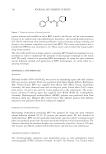
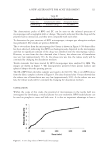
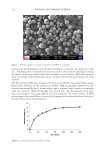
142 JOURNAL OF COSMETIC SCIENCE ethanol or an emulsion) versus sustained-release formulations that are intended to enhance long-duration repellency efficacy. The repellency of DEET can be greater than that of IR3535. However, the latter has several distinct advantages over DEET for use on human or nonhuman mammalian skin Most notably, IR3535 lacks DEET’s strong odor and produces a nonoily/nongreasy feel for preferred cosmetic appeal to consumers. Still, a repellent formulation containing IR3535 with high mosquito repellency (e.g., 12+ hours on human skin) has not been disclosed in prior studies or for commercial products. A major goal while developing a topical consumer product (e.g., insect repellent lotion) is the establishment of a stable composition with a “formal” and/or “imputed” shelf life of at least 12 months, preferably 18 months, and more preferably 24 or 36 months at ambient room temperature (RT) (20°–25°C). Inherent within this shelf life are multiple relevant parameters, such as: (a) overall chemical stability, an example of which is pH stability, preferably exhibiting no more than 1.0 pH unit variance (decrease or increase) during the imputed or formal shelf life and (b) active ingredient stability with a variance of no more than 5% to 6% loss of the active ingredient during the imputed or formal shelf life. In other words, if there is an initial nominal active ingredient concentration of 20% w/w, then the loss over time must not exceed 0.05 x 20% w/w or 0.06 x 20% w/w. Thus, a loss greater than 1.0% or 1.2% respectively of the nominal concentration of the product label is unacceptable (i.e., a concentration less than 19.0 or 18.8% w/w respectively). Whenever sufficient time does not permit the formal establishment of a shelf life, extrapolations of linear regression slopes obtained over shorter time periods at accelerated temperatures—such as 40°C and/or 50°C—can be used as surrogates to establish an “imputed” shelf life. When comparing RT of approximately 20°–25°C to 40°C, the shortened time interval’s result at elevated temperature is extrapolated or multiplied by a factor based upon empirical results. One may observe that 40°C accelerates the instability or other failure aspect(s) of the formulation (e.g., reduction in active ingredient, phase separation, flocculation, viscosity changes, etc.) over RT by a factor of, for instance, 3 times. Thus, in this example, if it does not fail at 6 months at 40°C, but fails shortly thereafter, then the imputed RT shelf life would be limited to 6 months times 3, or 18 months. International regulatory agencies state the allowed tolerances or variances for the content of the active ingredient to be maintained during the entire shelf life of insect repellents or pesticides. WHO guidelines declare an allowed tolerance of 6% for repellent products with a declared nominal content of active ingredient at 20°C ± 2 of 10% to 25% w/w or w/v (16). This 6% tolerance is also accepted by the European Chemicals Agency and most of the other regulatory authorities. However, the US Environmental Protection Agency (EPA) specifies an active ingredient tolerance of only 5%. Thus, the variance from the nominal label amount or concentration of the active ingredient should not exceed 5% or 6% over the designated shelf life of the repellent product. As an example, a product with a nominal concentration of 20% w/w of active ingredient should not have a concentration greater than 21% w/w or less than 19% w/w using the EPA tolerance standard, or a slightly higher tolerance in most jurisdictions outside of the United States. The authors describe the formulation development and properties of a repellent lotion consisting of 20% w/w IR3535 in a Lewis acid–Lewis base adduct for microencapsulation and carefully selected cosmetic ingredients.

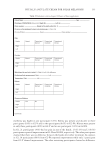
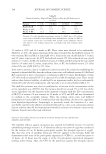
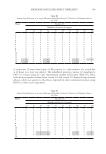
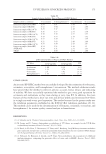
143 MICROENCAPSULATED INSECT REPELLENT METHODS FORMULATION DEVELOPMENT IR3535 was selected as the active ingredient because it has multiple advantages over DEET. Most notably, those advantages include the lack of odor, lack of oily feel on skin, and better toxicological profile. The selected concentration was 20% w/w. In view of decades of expertise by our scientists in topical formulation development, careful consideration was given to the chemical properties for the selected excipients for inclusion within the microencapsulated emulsions. Consideration was given to the selection of and preferences for cosmetically acceptable fluidic carriers (e.g., water, ethanol, glycerol) suspending and emulsifying agents (e.g., sorbitan oleate, polysorbate 20, lecithin, sodium lauryl sulfate) hydrophobic oils or lipids (e.g., isoeicosane, isopropyl myristate, isopropyl palmitate) viscosity agents (e.g., polyamide-3, cetyl alcohol, carrageenan, cellulose, methyl cellulose, polyethylene glycols, or carbomer homopolymer type A) film formers (e.g., dimethicone, acrylates copolymer) preservatives (e.g., phenoxyethanol, ethylhexylglycerin, parabens) stabilizing agents such as antioxidants (e.g., butylated hydroxytoluene, butylated hydroxyanisole, citric acid) and Lewis acids and Lewis bases for microencapsulation of emulsions (e.g., chitosan, algin, xanthan gum). The International Nomenclature of Cosmetic Ingredients served as a guide during selection of excipients. Fragrance was optional. From these possible excipients, a “generic ingredients list” for IR3535-containing microencapsulated formulations was compiled, including the target concentrations of the ingredients. The list was utilized to conceive a formulation referred to as prototype version 1.0 (Table I). As described in the results section, successive derivatives of version 1.0 resulted in formulations 2.0 and 2.55. Table I Generic Ingredients List to Generate Sustained-Release Repellent Formulation Prototype Version 1.0 Category Chemical name or class % (w/w) Active IR3535 20 Emollient Acyclic alkane ∼2 Emulsifier Sorbitan fatty acid ester ∼1 “ Polysorbate 1 Encapsulation Algin + cellulose 1 “ Chitosan 1 “ Xantham gum 1 Thickener Polyamide ∼1 “ Cetyl alcohol 1 “ Carrageenan 1 Film former Silicone ∼ 1 “ Nonsilicone ∼ 1 pH/antioxidant Citric acid (optional) 1 Preservatives Preservatives 1 Fragrance Fragrance (optional) 1 Active + excipients ∼30 water ∼70
Purchased for the exclusive use of nofirst nolast (unknown)
From: SCC Media Library & Resource Center (library.scconline.org)