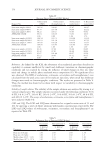
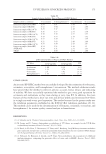
166 J. Cosmet. Sci., 73, 166–177 (May/June 2022) Address all correspondence to Ranjan Mitra, ranjan.mitra@dabur.com Development and Validation of HPLC Method for Determination of Four UV Filters in Sunscreen Products SUMIT TIWARI, VISHAL SAREEN, YAMINI SHARMA, DEEPALI PRASHAR, S.K. LUTHRA, PRASUN BANDYOPADHYAY AND RANJAN MITRA Dabur Research and Development Centre, Dabur India Limited, Sahibabad, Uttar Pradesh, India Accepted for publication June 22, 2022. Synopsis Sunscreen lotions, creams, and sprays are used by millions of individuals to protect their skin from sunburn and subsequent damage. UV filters are compounds that are added to sunscreens to absorb or prevent the sun’s UV rays from doing damage. UV filters can shield an individual’s skin from both UV-A and UV-B rays. A simple, validated, and precise reverse phase high-performance liquid chromatography (HPLC) method has been developed for the determination of UV filters in sunscreen cream. Experiments were carried out on a sunscreen formulation containing the following UV filters: avobenzone, octyl methoxycinnamate (octinoxate), benzophenone-3, and octocrylene. The separation of avobenzone and octyl methoxycinnamate (OMC) was challenging, as they eluted at very close RT, but the separation and quantitation of all four UV filters were successful. The chromatographic separation was achieved with a stationary phase of Baker bond Q2100 C18 column A C18 and a mobile phase of methanol and water (90:10), which were used with a flow rate of 0.7 mL/ min. UV measurements were carried out at 303 nm. The method was successfully validated in accordance with ICH guidelines and criteria for all validation parameters were within the acceptance range. INTRODUCTION Sunlight is one of the primary detrimental external variables that causes the development of reactive oxygen species, and the human skin serves as the first line of defense against damaging external elements such as UV rays. Sunscreens (1) with UVB filters are commonly applied to the skin to protect against UV-induced damage. The most extensively used UVB filter in sunscreens is OMC. UV light (with a wavelength below 400 nm) is included in the sunlight spectrum (2). UV radiation can be further classified as UVC (200–290 nm), UVB (290–320 nm), and UVA (320–400 nm), from lowest to highest energy level. However, because UVC radiation cannot penetrate the earth’s atmosphere, photo-biological effects in humans are mostly caused by UVB and UVA radiation exposure. UVB radiation accounts for only 5–10% of total UV radiation reaching the earth’s surface, while UVA accounts for the remaining 90–95% of radiation. Sunburn, pigmentation issues, vitamin D3 production, immunosuppression, carcinogenesis, and damage to DNA and other cellular structures are all photo-biological impacts of both types of radiation. In humans, UVB radiation is the

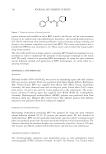
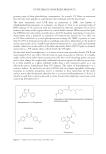
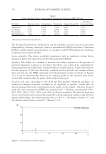
167 UV FILTERS IN SUNSCREEN PRODUCTS primary cause of these photobiologic consequences. As a result, UV filters in sunscreens have become more popular as a photoprotection technique over the last decade. The most extensively used UVB filter in sunscreens is OMC, also known as ethylhexylmethoxycinnamate or octinoxate (see Figure 1). Due to its potential risks of DNA damage (3–4) associated with the demonstrated endocrine disruptor effects (5) in humans, the safety of this organic filter is a current health concern. When exposed to light, the UVB filter becomes photo unstable due to the UV-absorbing ingredients of sunscreen. Antioxidants have a potential to neutralize UV-induced free radicals (6–7) so their use as UV filter stabilizers is a novel photoprotective strategy (8). OMC is present in more than 85–95% of personal care products, including sunscreens. Depending on the mode of action, sunscreens can be classified into physical sunscreens (i.e., zinc oxide and titanium dioxide, which stay on the surface of the skin and mainly deflect [9] UV light) or chemical sunscreens (i.e., UV organic filters, which absorb the UV light). On the other hand, benzophenone-3 is a chemical sunscreen agent that absorbs UV-B and short-length UV-A rays (280–350 nm) with its peak protection at 288 nm. It is highly stable, unlike many other chemical sunscreens (10), but its UV-absorbing powers are poor and it must always be coupled with additional sunscreen agents for effective protection. It is often utilized as a photo stabilizer rather than a true sunscreen agent, as it can effectively protect formulations from UV damage. The safety of benzophenone-3 is a sensitive subject. Its molecules are tiny (228 Da) and exceedingly lipophilic (oil-loving), resulting in excellent absorption, and it is optimal to have sunscreens on the skin’s surface, not in the bloodstream, therefore this is a concern for Benzophenone-3. In fact, it absorbs so well that it may be detected in urine 4 hours after applying a sunscreen cream containing benzophenone-3. Figure 1. Chemical structures of four UV filters (19).
Purchased for the exclusive use of nofirst nolast (unknown)
From: SCC Media Library & Resource Center (library.scconline.org)